
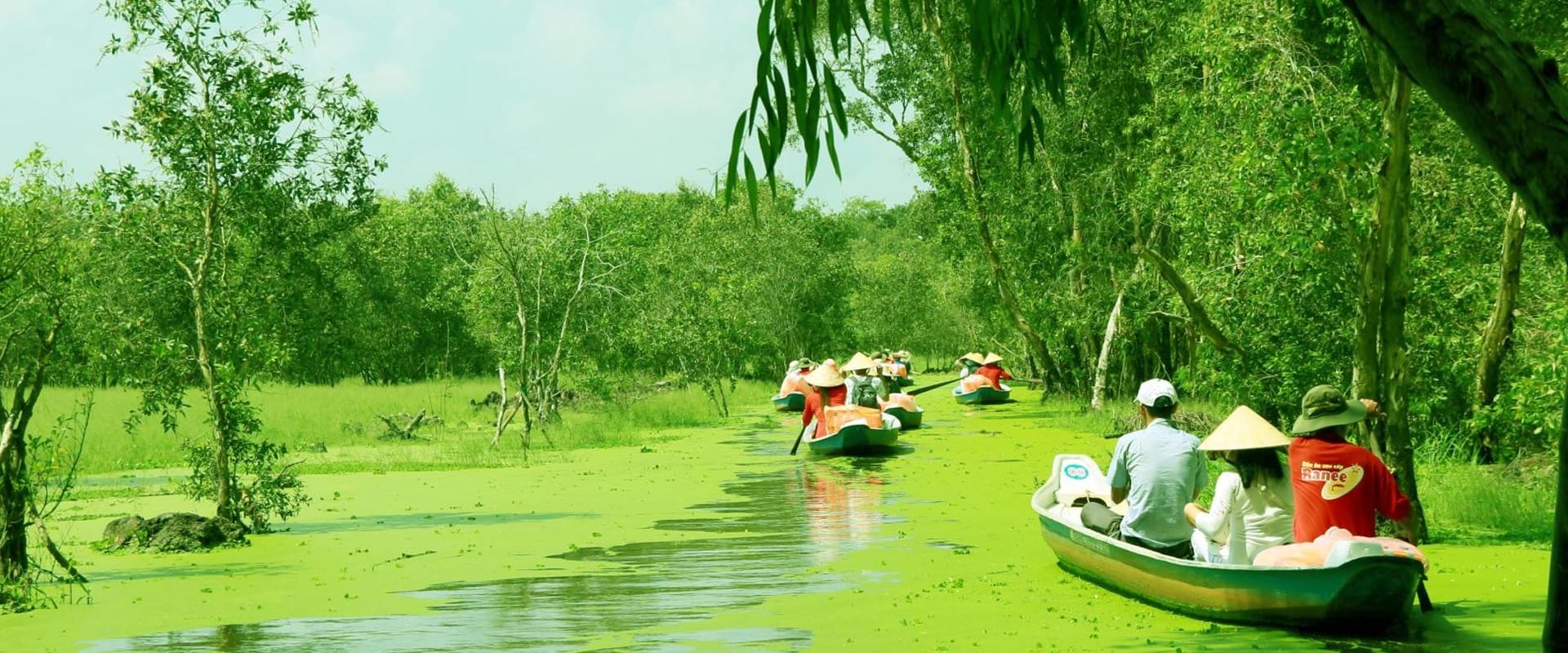
Southern Vietnam’s great river region, where canals, orchards, wetlands, food and everyday life are shaped by the Mekong.
Mekong Delta
A Great choice for Central VietNam Tour
Share your details and our travel experts will call you back with personalized packages.
We'll call you soon


QUICK FACTS
Understanding the Mekong Delta
The Mekong Delta is a region rather than a single destination. The Mekong River divides into major branches and a dense network of smaller waterways before reaching the sea, creating a broad lowland landscape shaped by agriculture, fishing, transport and seasonal water.
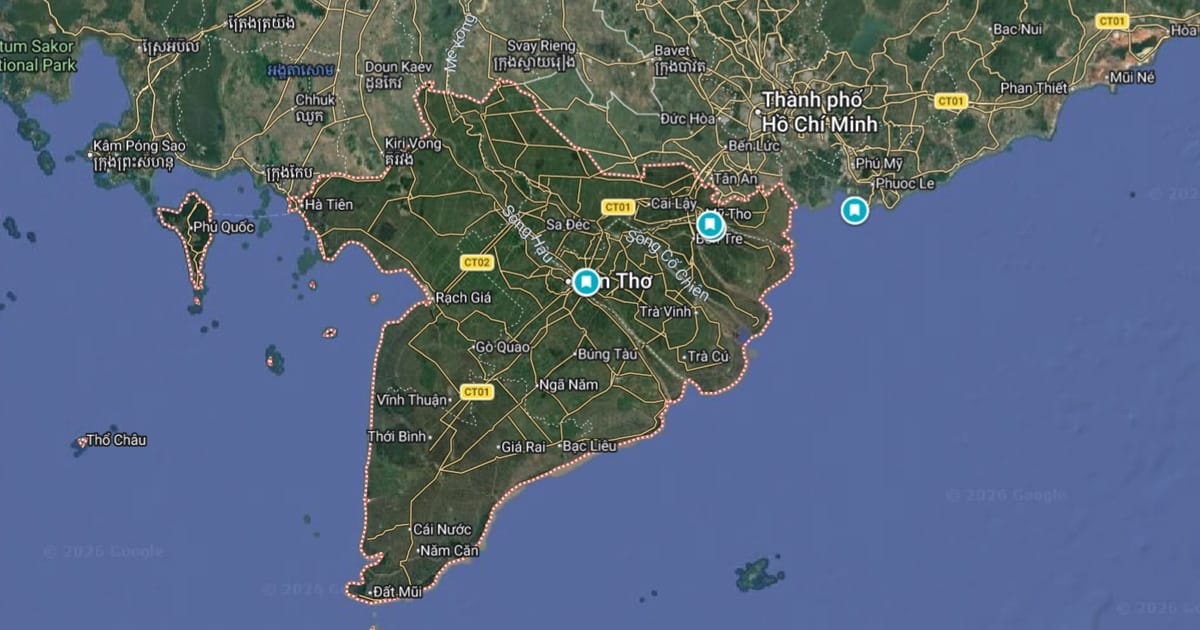
This explains why two trips described simply as “Mekong Delta tours” can feel completely different. One may spend the day in coconut-lined canals around Ben Tre, another may wake beside the Hau River in Can Tho, while a longer journey can continue toward Chau Doc’s wetlands and cultural landscape or the mangrove country around Ca Mau.
The 2025 administrative reform makes this distinction even more important. Many province names traditionally used in travel planning changed or were absorbed into larger units. Former Ben Tre and Tra Vinh are now within Vinh Long Province; former Tien Giang is part of Dong Thap; former Soc Trang and Hau Giang are part of the enlarged Can Tho; former Kien Giang and An Giang form the current An Giang Province; and former Bac Lieu is part of Ca Mau. Former Long An is now within Tay Ninh.
These changes affect addresses and administrative terminology, but they do not erase the travel geography. Names such as Ben Tre, Cai Be, Chau Doc, Can Tho and Soc Trang still describe recognizable places and cultural landscapes for visitors.
The key planning decision is therefore which version of the Mekong Delta you actually want to experience: a convenient day trip, an orchard-and-homestay stay, an urban river base, a wetland and cultural journey, or a deeper route toward the far south.
What Defines the Mekong Delta
- Water is part of everyday infrastructure: rivers and canals have historically supported transport, trade, fishing, farming and settlement rather than functioning only as scenery.
- Agriculture shapes the landscape: rice, tropical fruit, coconuts and vegetables change from one part of the Delta to another and are closely connected with local food.
- No single town represents the whole region: Can Tho, Ben Tre, Cai Be, Chau Doc and Ca Mau each reveal different relationships between people, land and water.
- Cultural diversity increases toward the western Delta: Kinh, Khmer, Hoa and Cham communities contribute different religious traditions, foods, architecture and festivals across the region.
- Floating markets are only one layer of river culture: Cai Rang remains a working wholesale market, but canals, orchards, ferries, fish farming and riverside neighborhoods reveal a much broader picture.
- The Delta rewards slower travel: its strongest experiences often come from moving through a landscape rather than arriving at a single landmark.
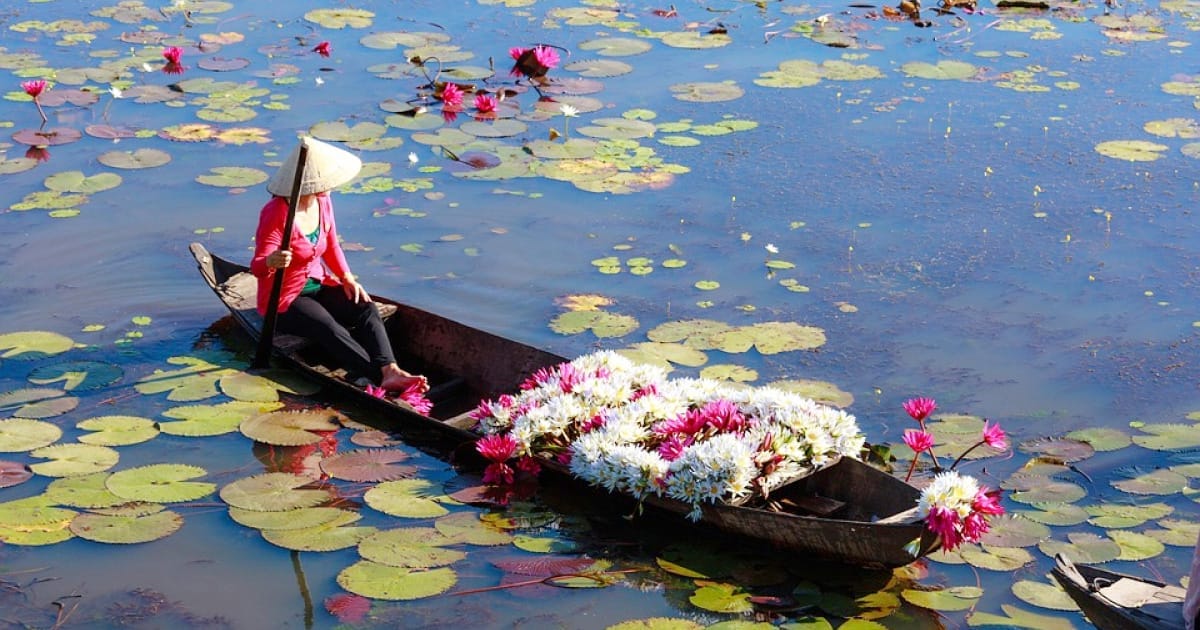
The Mekong Delta Is a Region, Not a Single Stop
Many first-time visitors underestimate the size and variety of the Mekong Delta because it is often sold from Ho Chi Minh City as a one-day excursion.
A day trip can provide a useful first taste, particularly around the eastern Delta, but it cannot represent the whole region. The farther you move toward Can Tho, Chau Doc or Ca Mau, the more clearly the Delta changes in landscape, culture and daily rhythm.
This means the best itinerary is usually built around one or two complementary areas, not a checklist of province names.
Trying to combine several distant river towns simply because they all appear under the “Mekong Delta” label creates too much road travel and too little time near the water.
Start by Choosing the Right Base
Can Tho is the easiest first base for most travelers. It provides hotels, restaurants and urban services while remaining closely connected to the Hau River, canals, orchards, river islands and Cai Rang Floating Market.
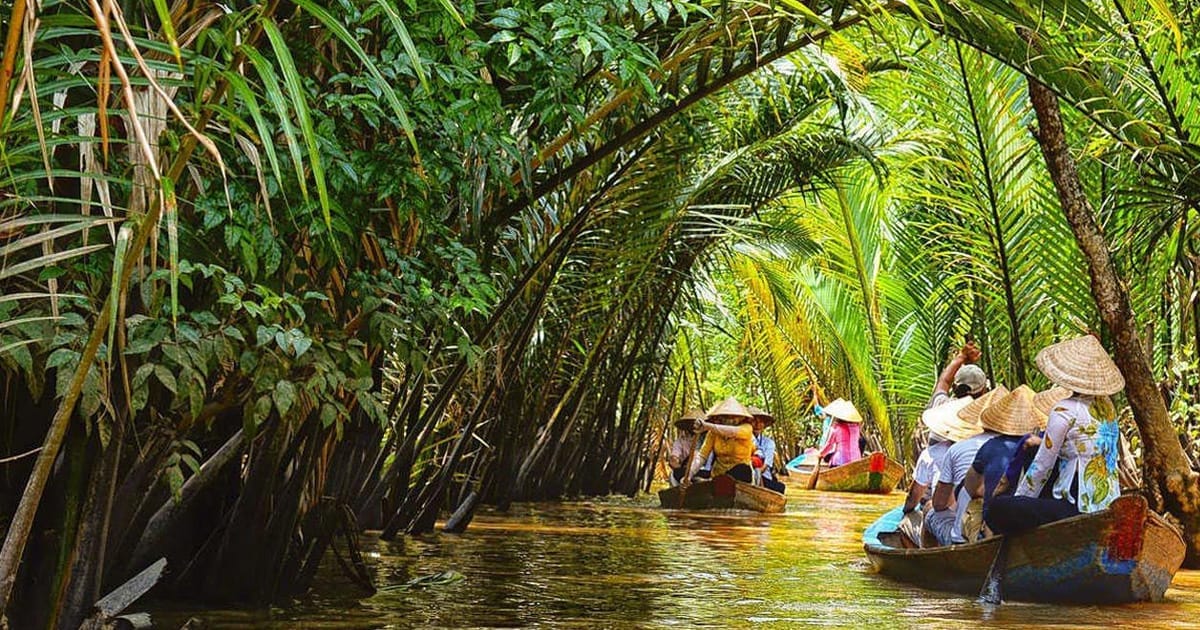
Ben Tre suits travelers who want a more rural first impression. Coconut groves, smaller canals, bicycles and homestay-style experiences create a softer landscape than central Can Tho. It is particularly useful when the Delta is being added to a short Ho Chi Minh City itinerary.
Cai Be works well for orchards, islands and slow river travel. The landscape is better understood through ferries, narrow lanes, fruit gardens and small waterways than by treating the town only as a floating-market stop.
Chau Doc belongs to a different kind of Mekong trip. The western border region combines the Hau River, wetlands, Sam Mountain, Cham communities and access toward Cambodia. It is especially valuable when cultural diversity or the high-water landscape is part of the reason for visiting.
Ca Mau works better in a longer itinerary. Its mangrove and wetland landscapes provide a very different ending to the Delta, but the distance makes it less practical as an add-on to a short first visit.
If your route includes My Tho and you want a cultural stop beyond the river, see Vinh Trang Pagoda.
How Long Should You Spend in the Mekong Delta?
One day is an introduction, not a regional journey. It can work when time is limited and the goal is simply to leave Ho Chi Minh City for canals, orchards and smaller settlements.
Two days and one night changes the experience significantly. Staying overnight allows the region to be experienced in the early morning and evening, when river towns feel less like excursion stops.
Three to four days is the strongest range for many first-time visitors. This is enough time to use Can Tho or another town as a genuine base and add a second contrasting area without spending every day transferring.
Five days or more makes sense for a cross-Delta route. Travelers can then combine the eastern orchard landscape, Can Tho and a western or southern area such as Chau Doc or Ca Mau while preserving a slower pace.
Day Trip or Overnight? This Is the Biggest Planning Decision
A Ho Chi Minh City day trip is convenient, but convenience changes what you see.
Most short excursions remain in the eastern side of the Delta because the purpose is to return to the city the same day. This works well for canals, coconut landscapes, small workshops and orchard-based experiences.
An overnight stay allows a completely different rhythm. River activity starts early, evenings become quieter, and the destination stops feeling like a sequence of tourism demonstrations.
If the Mekong Delta is one of the main reasons for traveling to Southern Vietnam, stay overnight. If it is only a contrast to Ho Chi Minh City within a very short trip, a carefully chosen day trip can be enough.
For the classic My Tho orchard-and-canal excursion, use the Thoi Son Islet guide to compare the itinerary with a slower visit.
Water Is Transport, Livelihood and Landscape
The most important thing to understand about the Mekong Delta is that water is not simply a sightseeing feature.
Rivers and canals support fishing, fish farming, agriculture, transport, commerce and everyday movement. Ferries, riverbanks, irrigation channels and houses built close to waterways make the relationship visible even when no formal boat tour is involved.
This is why a small canal, working ferry or riverside market can sometimes explain the region better than a highly packaged attraction.
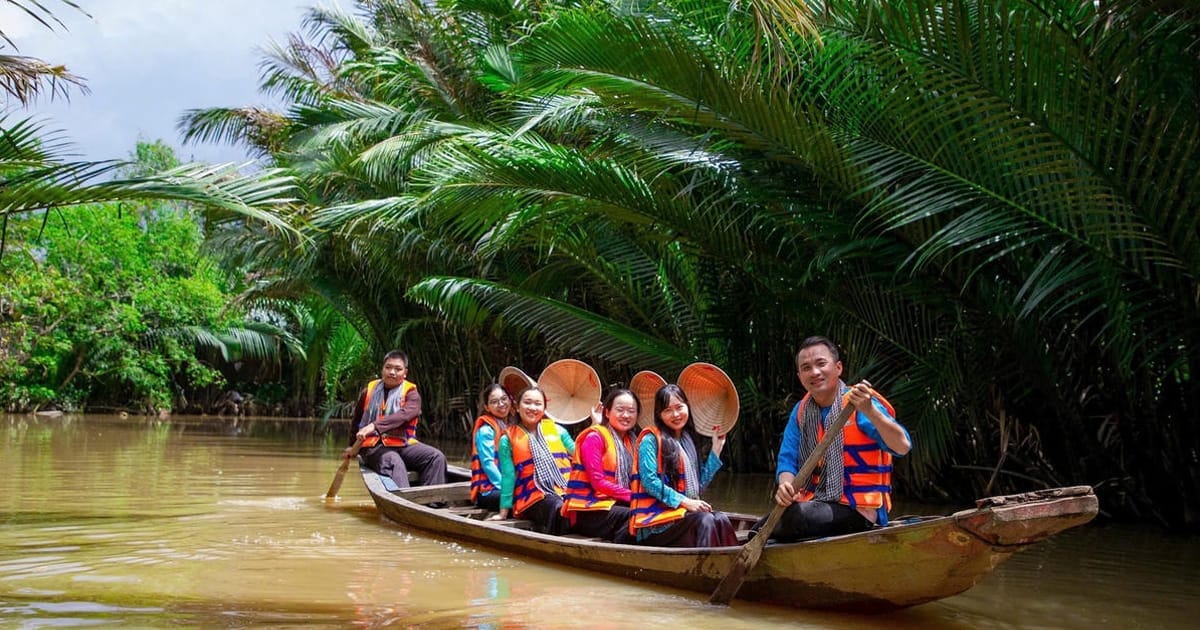
The most rewarding itineraries combine road and water rather than assuming every Delta experience needs to happen from a sampan.
Floating Markets Are One Layer, Not the Whole Delta
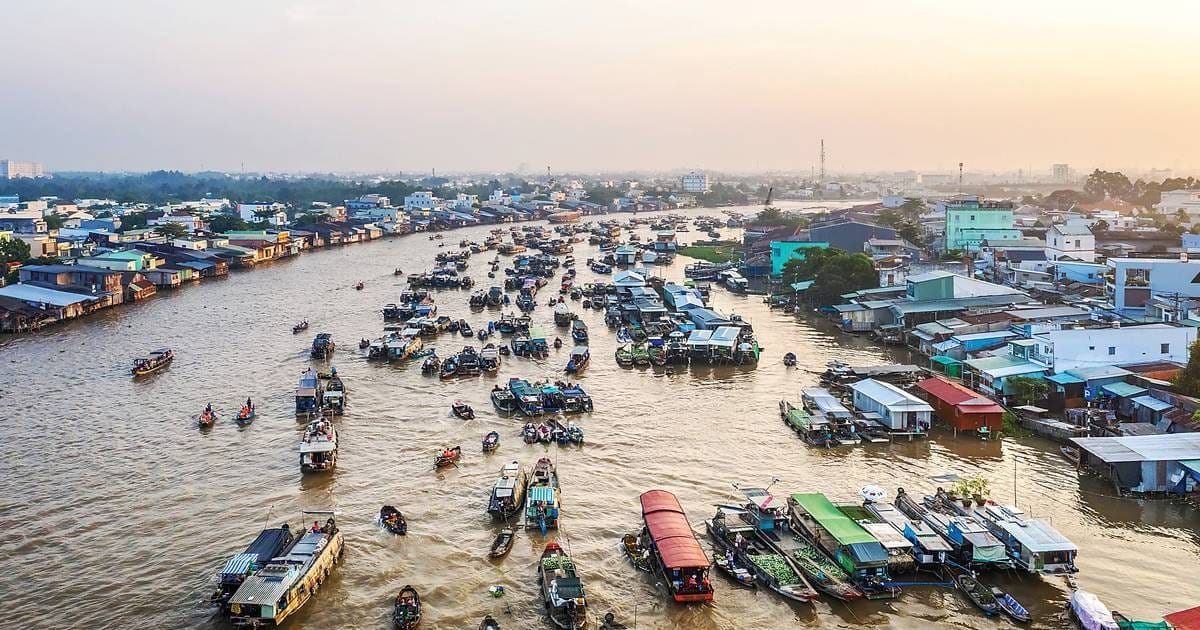
Cai Rang Floating Market is the Delta’s best-known river market and remains a working wholesale market as well as a major visitor attraction.
It is worth seeing because it explains how agricultural products have historically moved through the river network. Boats carrying produce, food sellers on the water and the surrounding river traffic all reveal a form of commerce that developed around the Delta’s geography.
But the Mekong Delta should not be reduced to floating markets. Road infrastructure, changing distribution systems and urban development continue to reshape river commerce. Orchards, canal settlements, fish farming, wetlands, religious communities and local food are equally important parts of the regional identity.
A traveler who sees no floating market can still have a strong Mekong Delta experience; a traveler who sees only a floating market has seen only one layer.
The Delta Changes from East to West
The eastern areas closer to Ho Chi Minh City are particularly associated with orchards, coconut landscapes and dense canal networks. They are easier to reach on short itineraries and provide a gentle introduction to rural river life.
Can Tho sits deeper in the Delta and works as the most practical urban anchor. The city combines a major river, wholesale trade, food, accommodation and access to nearby agricultural areas.
Farther west, the landscape becomes culturally and environmentally different. Around Chau Doc, wetlands, border trade, Cham communities and religious sites become more prominent.
Toward the far south, Ca Mau shifts the regional identity again toward mangrove forests, coastal wetlands and landscapes where river and sea begin to overlap.
These differences are why “seeing the whole Mekong Delta” is not a realistic goal for a short visit.
For an An Giang wetland rowing experience rather than a short My Tho river sampler, consider Tra Su Cajuput Forest.
Who Will Enjoy the Mekong Delta Most?
The Mekong Delta suits travelers who are curious about ordinary life, food, agriculture, river landscapes and the relationship between geography and culture.
It works particularly well for slow travelers who enjoy bicycles, boats, markets, homestays and meals that are part of the journey rather than simply breaks between landmarks.
Families can enjoy orchards and gentle boat experiences, while photographers often find the strongest scenes early in the day around rivers, fields and working communities.
Travelers focused primarily on monuments, nightlife or large-scale entertainment may prefer to keep the Delta as a shorter contrast to Ho Chi Minh City rather than allocating several days.
The Mekong Delta in a Southern Vietnam Journey
Ho Chi Minh City and the Mekong Delta form one of Southern Vietnam’s most natural combinations. The city provides metropolitan energy, history and dense urban food culture; the Delta shifts the journey toward agriculture, rivers and slower communities.
Phu Quoc creates another useful contrast. A route from Ho Chi Minh City through the Delta and onward to Phu Quoc moves from city life to river landscapes and finally to an island environment.
Chau Doc can also work as a transition toward Cambodia. This makes the western Delta useful for travelers continuing northwest rather than returning immediately to Ho Chi Minh City.
The right onward route depends on geography. Instead of returning automatically to the same gateway, consider where the Delta sits within the full journey.
Weather in the Mekong Delta
The Mekong Delta is warm throughout the year, with a broad dry season and wet season rather than the four-season pattern found farther north.
December through April is generally the drier period. This makes road travel, cycling and outdoor planning more predictable, although midday heat remains important.
May through November is broadly wetter. Rain often arrives in heavy tropical bursts rather than continuous all-day conditions, and the landscape becomes greener.
The high-water season is more specific than the general rainy season. Around Chau Doc and other upper Delta wetland areas, roughly late summer into autumn can bring distinctive flooded landscapes.
Do not assume conditions are identical across the entire Delta on the same date. The region is too large for one simple flood-season rule to describe every destination equally.
Nearby Attractions


Best Time to Visit the Mekong Delta
December through April is the easiest broad period for a first trip. Drier conditions make cycling, road transfers, markets and outdoor exploration simpler to organize.
That does not mean the wet season is a poor time to visit. The Delta remains active year-round, and wetter months bring greener vegetation, fuller canals and important fruit harvest periods in many orchard areas.
Late summer into autumn deserves special consideration for western wetland travel. The high-water period can transform parts of the upper and western Delta into a distinctly aquatic landscape.
The best time therefore depends on the version of the Delta you want: easier dry-season logistics, fruit and greener countryside, or the high-water landscapes of the western region.
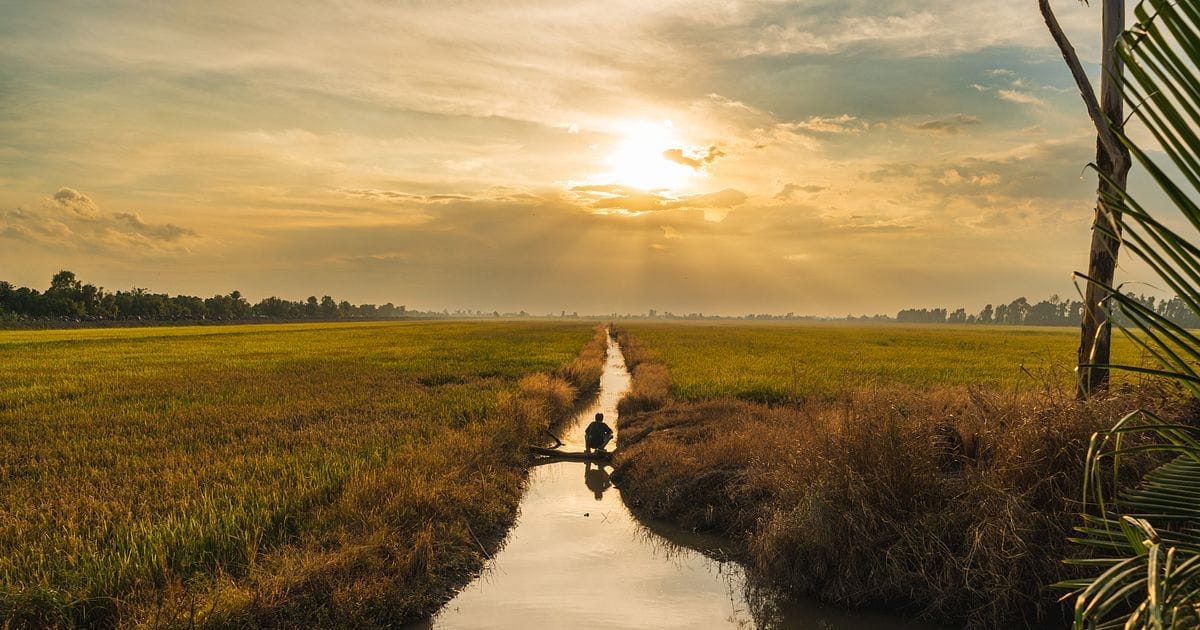
River Culture and the People of the Mekong Delta
Mekong Delta culture grew from adaptation to water, agriculture and trade. Settlements developed along rivers and canals, and boats, ferries, markets and agricultural cycles became part of everyday social life.
The region is culturally diverse. Kinh Vietnamese form the majority, while Khmer communities are especially important in parts of the southwest, Hoa communities have long contributed to commerce and urban culture, and Cham communities around the Chau Doc area add another distinctive religious and cultural layer.
Religious landscapes therefore change as visitors cross the region. Vietnamese temples and family shrines coexist with Khmer Buddhist pagodas, Chinese temples and mosques associated with Cham communities.
The most useful way to encounter this culture is not to treat communities as performances. Markets, food, architecture, local transport and normal public life often provide more context than a staged cultural stop.
Food in the Mekong Delta
Food is one of the clearest ways to understand the Mekong Delta because the cuisine is directly connected with the region’s agriculture and water.
Rice, tropical fruit, freshwater fish, shrimp, herbs, vegetables and coconut appear repeatedly, but combinations vary across the Delta.
Canh chua, a sweet-sour soup commonly prepared with fish or shrimp, captures the regional preference for herbs, acidity and fresh produce. Ca kho to and other caramelized fish dishes reflect the importance of freshwater fish. Hu tieu, banh xeo, fermented-fish dishes and numerous local cakes add further regional variation.
Coconuts become especially visible around the former Ben Tre area, while the western Delta has its own strong traditions around fermented fish, palm products and freshwater ingredients.
For travelers, one of the best food strategies is simply to eat where the journey already takes you: breakfast near a market, lunch in an orchard or family-run stop, and dinner in the town where you stay overnight.
How to Get to the Mekong Delta
Ho Chi Minh City is the main starting point for most international travelers. Road connections lead into the eastern Delta and continue toward Can Tho and the western region.
Can Tho is the most useful internal transport hub for a deeper Delta stay. It has a major road network, river access and an airport, although actual flight routes and frequencies should be checked when planning because aviation schedules can change.
Travel within the Delta usually combines buses, private vehicles, taxis, ferries and local boats. Boats are essential for some experiences, but roads now carry much of the longer-distance movement between towns.
When planning a multi-day route, organize transfers geographically. Moving from Ho Chi Minh City into the eastern Delta, continuing toward Can Tho and then farther west is usually more logical than repeatedly returning to the same city between stops.
Practical Tips for Visiting the Mekong Delta
- Decide what kind of Delta you want before choosing the route. Canals and coconut groves, Can Tho, western wetlands and Ca Mau are different travel experiences.
- Stay overnight if the Delta matters to your trip. Early mornings and evenings reveal a different rhythm from a same-day excursion.
- Do not try to collect too many towns. One good base plus one contrasting area is usually more rewarding than several long transfers.
- Use Can Tho for the simplest first multi-day visit. It provides the strongest balance between river access, food, accommodation and onward transport.
- Do not treat every boat ride as the same experience. A working river, orchard canal, floating market and wetland forest show very different relationships with water.
- Keep sun and rain protection together. The Delta is hot even during the wetter months, and tropical showers can arrive quickly.
- Respect working communities. Orchards, fish farms, markets and riverside homes are livelihoods first and visitor experiences second.
Why Travel With Us?
Tailored to You: Custom itineraries matching your exact pace and passions.
Go Local: Authentic experiences guided by native experts.
Zero Stress: We handle all logistics—transport, tickets, and stays.
24/7 Support: Round-the-clock local assistance, whenever you need it.
Exceptional Value: Premium quality at fair, transparent prices.
You may also like

A hundred years from now, no one in this world will remember you or me. We only come to this world once — to leave our footprints on new lands and to etch every moment deep into our memory.
Live for the experience. Start your journey today — book your tour and make memories that last a lifetime!
View Our Business & Travel Licenses
Book your holidayGallery
FAQ
Q: Is the Mekong Delta worth visiting?
Q: Is the Mekong Delta a province?
Q: How many days should I spend in the Mekong Delta?
Q: Where should first-time visitors stay in the Mekong Delta?
Q: Can I visit the Mekong Delta as a day trip from Ho Chi Minh City?
Q: Is Cai Rang Floating Market still part of the Mekong Delta experience?
Q: What is the best time to visit the Mekong Delta?
Q: What is the difference between Can Tho and Ben Tre for travelers?
Q: Is Chau Doc part of the Mekong Delta?
Q: Can I combine the Mekong Delta with Phu Quoc?

Phong Nha–Ke Bang Named Asia’s Leading National Park 2026
Phong Nha–Ke Bang won Asia’s Leading National Park 2026 and Vietnam’s Leading Nature Destination 2026. [...]
Sep

Hue to Dong Hoi by Train: Schedules, Tickets & Phong Nha Connection
Choose the right Hue–Dong Hoi train by arrival window, seat or berth, luggage, HQ2 vs [...]
Sep

Da Nang to Phong Nha: Bus, Train, Private Car & Best Route
Compare direct buses, train via Dong Hoi, private cars and Da Nang Airport connections by [...]
Sep

Hue to Phong Nha: Bus, Train, Private Car & Best Way to Travel
Compare direct buses, Hue Northern Bus Station coaches, the HQ1/HQ2 heritage train, Grab and private [...]
Sep

Da Nang vs Hue: Which City Should You Stay In?
Compare Da Nang and Hue by trip anchor, daily pace, usable nights and transfer friction [...]
Sep

Hoi An Lantern Festival Guide: 2026 Dates & Evening Plan
Plan Hoi An's monthly Lantern Festival around the 14th lunar night, verified 2026 dates, an [...]
Sep

Hoi An Tailor Guide: What to Make, Fittings & Buying Tips
Learn how to get clothes made in Hoi An: choose a tailor, compare fabrics and [...]
Sep

Where to Stay in Hue: Best Areas by Trip Style
Compare the best areas to stay in Hue, from the central south bank and Citadel [...]
Sep