

A working river market best understood in the 5–7 AM trading window, before tourism activity becomes more visible than wholesale commerce.
Cai Rang Floating Market
A Great choice for Central VietNam Tour
Share your details and our travel experts will call you back with personalized packages.
We'll call you soon


An amazing journey to explore local culture awaits you
QUICK FACTS
Rating Score: 4.1☆(8,106)GoogleMap
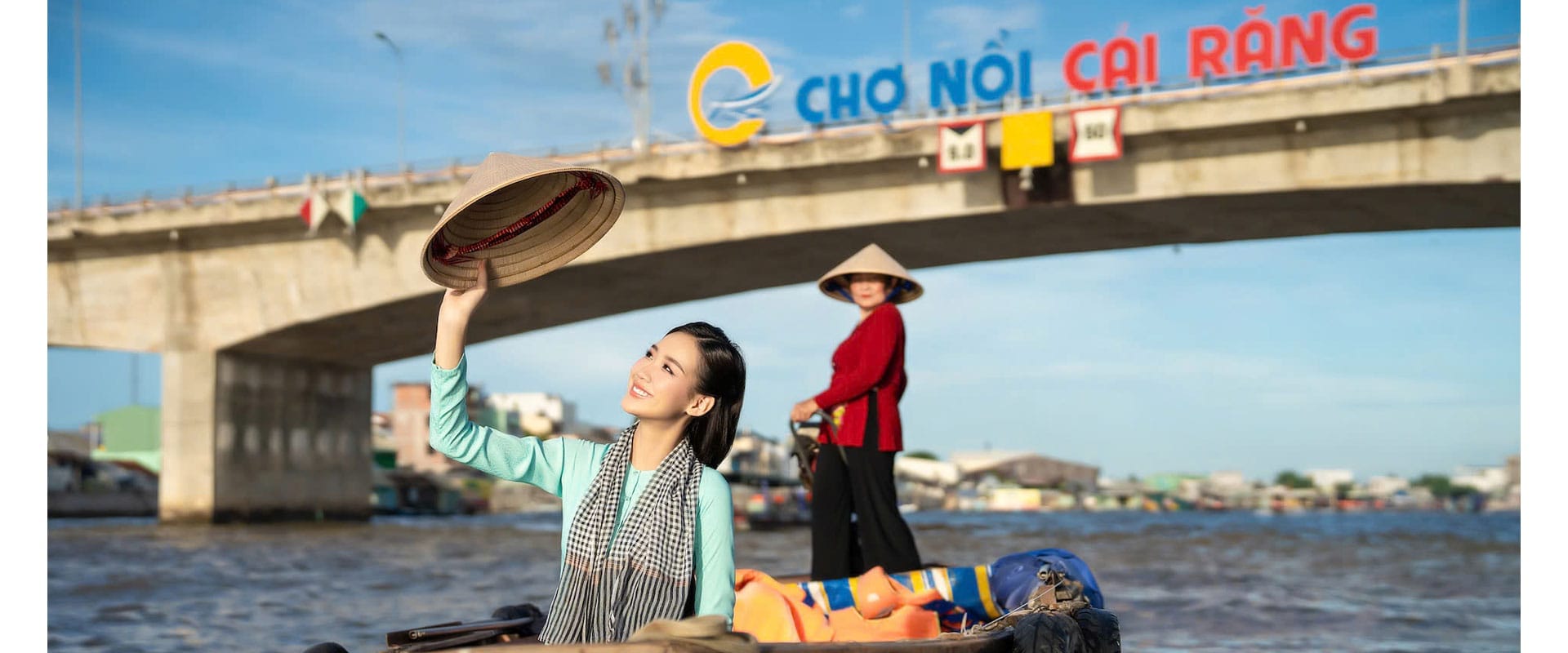
What to Notice Beyond the Sunrise Photos
- Wholesale trade: larger boats still sell produce to smaller buyers and resellers, which is the commercial activity that created the market in the first place.
- Cây bẹo: traders hang samples of their goods from tall poles so buyers can identify what each boat sells from a distance.
- Floating breakfast: small boats move between larger vessels selling noodle soup, coffee, fruit and other morning food.
- A market in transition: road transport and changing livelihoods have reduced the commercial fleet, while tourism now supports a growing share of activity on the river.
- National cultural heritage: the Culture of Cai Rang Floating Market has been listed as National Intangible Cultural Heritage since 2016.
Opening hours:
Early-Morning Market Activity, Not All-Day Attraction HoursCai Rang is a working river market without a gated visitor schedule. Official Can Tho tourism guidance identifies roughly 5:00–7:00 AM as the ideal visitor period, while market activity normally fades between 8:00 and 9:00 AM.The city tourism listing also carries 04:00 as an opening-time data point, reflecting the pre-dawn start of activity. It should not be interpreted as evidence that the same market experience continues throughout the day.For practical planning, aim to reach the trading area by about 5:30–6:00 AM. If departing from Ninh Kieu Wharf, leave around 5:00–5:30 AM and allow extra time on weekends, holidays or busy travel dates.Entrance Ticket:
Free admissionThe Market Is on the Can Tho River, Not the Hau River Proper
Cai Rang is often described online as a market on the Hau River. The more precise location is the Can Tho River, a major waterway connected to the Hau River system and the Xa No canal route.
This distinction matters when planning the boat trip. From central Can Tho, boats leave the Ninh Kieu riverfront and travel along the Can Tho River toward the market rather than crossing to a separate attraction somewhere on the main Hau River channel.
5:00–7:00 AM Is the Main Visitor Window
Cai Rang is not an attraction where arriving at any point during posted opening hours produces the same experience. The useful timetable is the trading cycle.
Boats begin gathering before sunrise. For visitors, roughly 5:00–7:00 AM gives the strongest combination of wholesale activity, food boats and early light. By 8:00 AM the market can already feel much thinner, and between 8:00 and 9:00 AM many traders are finishing for the morning.
If the market itself is your priority, protect this time. Do not schedule a workshop, floating shop or long breakfast stop before you have actually seen the trading boats.
Ninh Kieu Gives You the River Journey; a Near-Market Pier Saves Time
Most first-time visitors depart from Ninh Kieu Wharf. It adds about half an hour of river travel before reaching Cai Rang, but that journey shows Can Tho waking up along the water and is part of the experience.
There are also departure points closer to the market. These are useful when your goal is to reach the trading area as early as possible or when you do not want a longer boat ride.
Choose based on what you value: Ninh Kieu for the full river approach; a closer pier for efficiency. The destination is the same, but the morning feels different.
Admission Is Free — the Boat Is What You Pay For
There is no entrance ticket for Cai Rang Floating Market. The market is a working stretch of river, not a gated tourist complex.
The variable cost is transport. Shared boats, private boats and guided tours can have very different prices, and a quote may cover only the market or may include breakfast, canals, a rice-noodle workshop, an orchard or other stops.
Do not compare two offers only by the headline price. Ask for the total price for the whole boat or per person, departure point, departure time, approximate return time, market time and included stops before paying.
Separate Market Time from Optional Commercial Stops
A modern Cai Rang tour may include floating restaurants, souvenir platforms, rice-noodle workshops, orchards or small canals. Some are enjoyable, but none of them is required to understand the floating market itself.
This distinction has become more important as the wholesale market has become smaller. A three-hour tour can sound generous, yet the boat may spend surprisingly little of that time among working traders.
When booking, ask a simple question: How long will we actually stay in the trading area before other stops? For a first visit, see the market first and add the extras afterward.
The Market Is Smaller Than Old Photos — but It Is Not Simply a Tourist Set
Cai Rang has lost a substantial part of its old commercial scale. Better roads and bridges made trucking produce faster and easier, the pandemic accelerated changes in trading patterns, and younger generations increasingly choose work on land.
At the same time, real wholesale trade has not disappeared. Large produce boats still supply smaller buyers, while some boats remain both workplace and home.
The best way to judge the experience is therefore not by asking whether it is “authentic” or “touristy” as if only one can be true. Cai Rang is now a working market with a large tourism layer. Arriving early makes the commercial layer much easier to see.
Read the Cây Bẹo Before You Start Photographing
The tall bamboo advertising pole, or cây bẹo, is one of the clearest pieces of river-trading logic still visible at Cai Rang. A trader hangs samples of the produce being sold high above the boat so buyers can identify the cargo from across a noisy, moving river.
Look for the pole first, then look at the cargo and the smaller boats approaching the wholesaler. That sequence tells you more about how the market works than a wide sunrise photograph alone.
Breakfast Boats Belong to Today’s Market Experience
Breakfast on the water is not the same thing as wholesale produce trading, but it is now an established part of the visitor experience. Small boats sell hủ tiếu, bún riêu, coffee, fruit and drinks directly alongside larger vessels.
If eating on the river matters to you, order after you have reached the main trading area. Confirm the price before ordering, especially when there is no printed menu.
The food is best understood as part of the morning atmosphere rather than a reason to spend most of the market window tied to one tourist platform.
Use a Regulated Boat and Treat Life Jackets as Essential
Recent tourism-management issues around Cai Rang have included complaints about unposted prices, aggressive touting and safety at some floating service businesses. These problems are not a reason to avoid the market, but they are a reason to choose the boat carefully.
Use a proper passenger boat or a reputable operator, check that life jackets are available, and agree the price and route before boarding. A cheap informal boat without basic safety equipment is not a worthwhile saving.
Also remember that a floating restaurant or shopping raft is a separate business. You do not need to disembark at every stop offered in order to visit Cai Rang Floating Market.
Dry Season Is Easier, but Rainy Months Can Show More Produce
For comfort, roughly December to April is the easiest period: early mornings are usually drier and the boat ride is less likely to be interrupted by heavy showers.
The wetter months are not a closed season. May through the middle of the year also overlaps with abundant tropical-fruit production, so the cargo mix can be interesting even when the weather is less predictable.
If visiting in the rainy season, keep the market window flexible and bring a light rain layer rather than expecting the boat to provide complete protection from wind-driven rain.
Stay in Can Tho the Night Before if the Market Is the Main Goal
A same-day departure from Ho Chi Minh City is a poor match for Cai Rang’s real schedule if seeing active trading is the purpose of the trip. By the time a normal road journey reaches Can Tho, the main market window is usually over.
Sleeping in Can Tho and leaving for the river before dawn is the more reliable plan. From Ninh Kieu, allow roughly 2–3 hours for the round-trip boat journey plus useful market time. Longer half-day tours should be understood as the market plus separate canal, workshop or orchard experiences.
Explore more travel information about Mekong Delta.
Prioritize Time of Day Before Season
The single most important decision is arrival time: 5:00–7:00 AM gives the best chance of seeing both working traders and the early-morning river atmosphere.
For weather, December to April is the easiest default because mornings are generally drier. The rainy season can still be worthwhile, especially when more tropical fruit is moving through the region, but rain and cloud make sunrise and open-boat comfort less predictable.
On busy weekends and holidays, arrive earlier or pre-arrange a reputable boat so queuing at the pier does not consume the market’s strongest trading window.
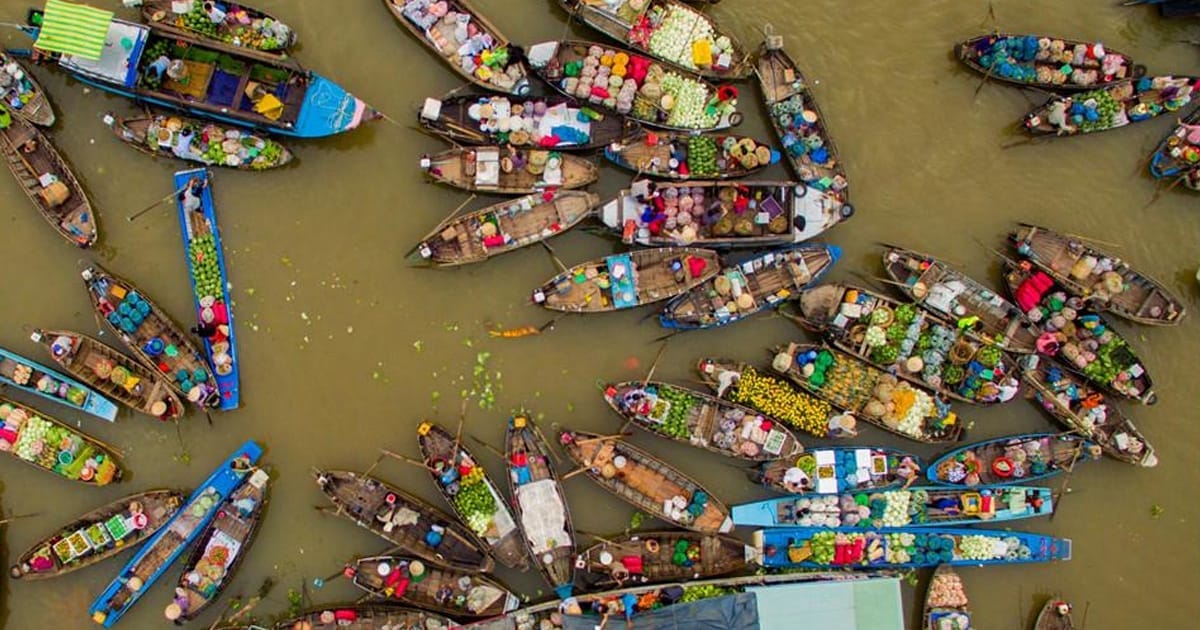
A River-Trading Culture Shaped by the Mekong Delta
Cai Rang Floating Market developed in the early twentieth century, when waterways were the most practical transport network for moving agricultural goods through the Mekong Delta. Boats gathered where important channels connected, allowing larger wholesalers and smaller traders to exchange produce directly on the river.
The market’s cultural value extends beyond buying and selling. Houseboats, the cây bẹo advertising system, floating meals and the routines of merchant families created a distinct river-based way of life.
On 10 March 2016, Vietnam’s Ministry of Culture, Sports and Tourism added the Culture of Cai Rang Floating Market to the national intangible cultural heritage list under Decision 829/QD-BVHTTDL.
This is a Vietnamese national heritage designation for the living culture associated with the market. It is not a UNESCO World Heritage designation for a physical market site.
Practical Choices That Make the Morning Better
- Protect the 5–7 AM window. See the wholesale boats before agreeing to spend time at optional workshops or floating shops.
- Confirm one total price before boarding. Ask whether the quote is per boat or per person and whether breakfast or side stops cost extra.
- Use a boat with life jackets. Do not choose an informal vessel solely because it is cheaper.
- Start from Ninh Kieu if the river journey matters. Use a closer pier only when saving time is more important than the approach through central Can Tho.
- Expect a changed market. Look for wholesale transactions and cây bẹo rather than expecting the tightly packed boat scenes seen in older tourism photographs.
- Keep valuables protected from spray. A small waterproof pouch is useful for phones and passports on an open boat.
Why Travel With Us?
Tailored to You: Custom itineraries matching your exact pace and passions.
Go Local: Authentic experiences guided by native experts.
Zero Stress: We handle all logistics—transport, tickets, and stays.
24/7 Support: Round-the-clock local assistance, whenever you need it.
Exceptional Value: Premium quality at fair, transparent prices.
Nearby Attractions


Let's plan your next vacation
A hundred years from now, no one in this world will remember you or me. We only come to this world once — to leave our footprints on new lands and to etch every moment deep into our memory.
Live for the experience. Start your journey today — book your tour and make memories that last a lifetime!
View Our Business & Travel Licenses
Book your holidayGallery
FAQ
Q: Is Cai Rang Floating Market free to visit?
Q: What is the best time to visit Cai Rang Floating Market?
Q: How do I get to Cai Rang Floating Market from Can Tho?
Q: Is Cai Rang Floating Market still authentic in 2026?
Q: How long should I allow for Cai Rang Floating Market?
Q: Do I need a guided tour?
Q: Is Cai Rang Floating Market a UNESCO site?
Q: What is cây bẹo at Cai Rang Floating Market?
BOOKING

Phong Nha–Ke Bang Named Asia’s Leading National Park 2026
Phong Nha–Ke Bang won Asia’s Leading National Park 2026 and Vietnam’s Leading Nature Destination 2026. [...]
Sep

Hue to Dong Hoi by Train: Schedules, Tickets & Phong Nha Connection
Choose the right Hue–Dong Hoi train by arrival window, seat or berth, luggage, HQ2 vs [...]
Sep

Da Nang to Phong Nha: Bus, Train, Private Car & Best Route
Compare direct buses, train via Dong Hoi, private cars and Da Nang Airport connections by [...]
Sep

Hue to Phong Nha: Bus, Train, Private Car & Best Way to Travel
Compare direct buses, Hue Northern Bus Station coaches, the HQ1/HQ2 heritage train, Grab and private [...]
Sep

Da Nang vs Hue: Which City Should You Stay In?
Compare Da Nang and Hue by trip anchor, daily pace, usable nights and transfer friction [...]
Sep

Hoi An Lantern Festival Guide: 2026 Dates & Evening Plan
Plan Hoi An's monthly Lantern Festival around the 14th lunar night, verified 2026 dates, an [...]
Sep

Hoi An Tailor Guide: What to Make, Fittings & Buying Tips
Learn how to get clothes made in Hoi An: choose a tailor, compare fabrics and [...]
Sep

Where to Stay in Hue: Best Areas by Trip Style
Compare the best areas to stay in Hue, from the central south bank and Citadel [...]
Sep
Let's get in touch!