

A working river-farming community where the colorful 165-raft visitor route is only one part of a much larger floating aquaculture landscape.
Chau Doc Floating Village
A Great choice for Central VietNam Tour
Share your details and our travel experts will call you back with personalized packages.
We'll call you soon


An amazing journey to explore local culture awaits you
QUICK FACTS
Rating Score: 4.8☆(34)GoogleMap
What Makes the Village Worth Seeing
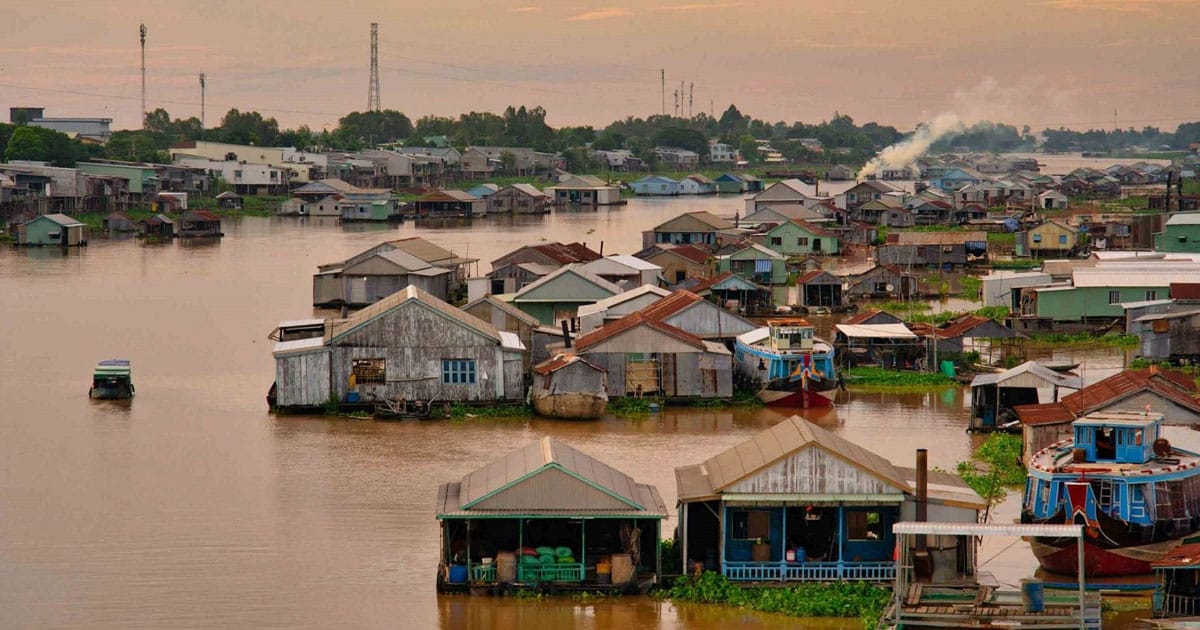
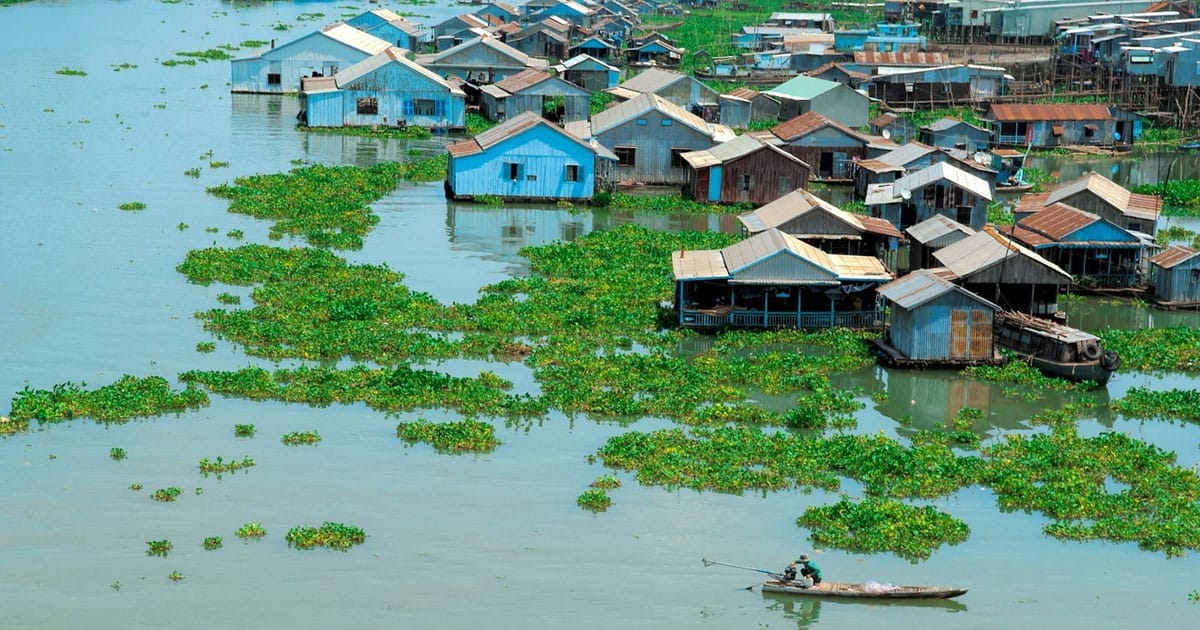
- A working fish-farming landscape: homes and aquaculture cages share the same floating structures, so the river is both living space and workplace.
- The 165-raft colorful route: the 2024 tourism project turned one section of the village into a highly visible six-color river corridor.
- Fish-farm access: participating households may let visitors see cages below the floating houses and feed fish, giving context to Chau Doc’s long relationship with freshwater aquaculture.
- Strong photography from two levels: a boat gives close views of floating homes, while the Con Tien bridge area provides a broader elevated perspective over the river settlement.
- Easy cultural pairing: the village sits close to Cham communities on the opposite side of the river, although those villages are separate cultural attractions and should not be treated as part of the fish farm itself.
Opening hours:
Official Visitor Hours: 07:00–18:00The current An Giang tourism portal lists the Colorful Floating Village open for visitors from 07:00 to 18:00.This is a working river settlement rather than a fenced attraction, so the published hours refer to the normal tourism-service period. Individual boat operators and participating fish farms may use shorter schedules.For a reliable visit, begin well before 17:00. Sunset or evening trips should be arranged specifically with an operator rather than assumed from the village's existence on the river after normal visitor hours.Entrance Ticket:
The 165 Colorful Rafts Are Not the Whole Floating Village
The most useful distinction for first-time visitors is scale. The official visitor-facing project contains 165 painted rafts over nearly 1 km, but provincial reporting describes a much larger working aquaculture area with around 500 fish rafts and 200 households around the wider Chau Doc river junction.
This means the bright red, orange, yellow, green, blue and purple houses seen in current tourism photos are a curated section inside a much broader river economy.
If you want more than colorful photographs, ask the boat operator whether the route includes a working fish farm where you can see the cages and learn how the household actually raises fish.
The Colorful Village Is New; Floating Fish Farming Is Not
Floating freshwater fish farming around Chau Doc developed strongly from the 1960s, long before the colorful tourism project existed. Families built homes directly over or beside submerged cages and used the river both for transport and aquaculture.
The visual transformation is much newer. The Colorful Floating Village tourism product was officially launched on 18 January 2024, giving the existing fish-farm settlement a new visitor-facing identity.
That timeline matters because the attraction is neither a newly constructed theme village nor an untouched historic settlement. It is a working aquaculture community that has recently added a deliberately designed tourism layer.
Take a Boat for the Fish Farms; Use the Bridge for the Big Picture
A boat is the most useful way to experience Chau Doc Floating Village because it brings you alongside the homes and fish cages rather than leaving you to view the settlement from a distance.
For an elevated overview, the Con Tien bridge area is useful for seeing the village as a pattern across the river. The tourism project was designed to create a strong visual effect when viewed from above as well as from the water.
The two perspectives answer different questions: the bridge shows scale and color; the boat shows how a floating household and fish farm actually function.
Do Not Confuse Chau Doc Floating Village with a Floating Market
The floating village is a fish-farming community, not a wholesale produce market. Older travel pages often mix Chau Doc’s former floating-market activity with the nearby floating houses and fish farms because both were part of the same river landscape.
If your goal is to see sellers trading fruit and vegetables from boat to boat, do not book a Floating Village trip expecting that experience. Visit this attraction for floating aquaculture, river housing and working-waterfront culture.
This distinction also protects your itinerary: the village can be visited during normal daytime tourism hours and does not require a pre-dawn market schedule.
Fish Feeding Is an Optional Household Experience, Not the Entire Attraction
The current An Giang tourism portal specifically notes that visitors can feed fish at participating rafts, shop for souvenirs and learn about household life on the water.
Fish feeding is useful because it reveals what lies below the floating house: large cages suspended in the river where freshwater species are raised. But access depends on the participating household and your boat itinerary.
Do not assume every raft is open to visitors. Many are working homes and farms rather than tourism businesses.
The Boat Price Is Not an Entrance Fee
The official An Giang tourism portal currently lists the attraction price as being updated, so there is no verified universal admission tariff to publish for the village itself.
Your main visitor cost is usually the boat or tour. As one current market reference, a 2026 Mekong operator lists an optional Chau Doc Floating Village cruise at 200,000 VND per person. Other private and shared boats use different pricing based on group size, route length and included stops.
Before boarding, confirm whether the quoted amount covers only a pass through the colorful rafts or also includes fish-farm access, fish feeding, a guide or a Cham village stop.
Visit in Daylight; Early Morning and Late Afternoon Are More Comfortable
The current official tourism listing shows 07:00–18:00. Unlike a gated monument, however, the river settlement continues to exist outside visitor-service hours; the timetable is best understood as the normal tourism operating window.
For a normal visit, 07:00–09:00 avoids the strongest midday heat. Late afternoon also gives softer light and more comfortable temperatures, but leave enough time to complete the boat route before the 18:00 visitor closing time.
If you specifically want a sunset or evening boat, arrange it with a licensed operator rather than assuming the daytime tourism service automatically runs after 18:00.
Allow 45–90 Minutes for the Village Alone
A focused boat visit through the colorful route with one fish-farm stop can fit into roughly 45–90 minutes, depending on the boat, river traffic and how long you spend at a raft.
Many commercial river itineraries are longer because they add a Cham village, mosque, small canals or other Chau Doc sights. Those additions can be worthwhile, but they should not be counted as time spent inside the Floating Village itself.
If you only have a short stay in Chau Doc, a village-only trip is enough to understand the fish-farm landscape without turning the morning into a multi-stop excursion.
Pair the Floating Village with a Cham Village Only If You Want the Cultural Contrast
The floating fish farms and nearby Cham communities are geographically close and are frequently sold in the same river tour. They are not the same entity.
The floating village explains aquaculture and river housing. A Cham village adds a different cultural layer through Muslim religious life, stilt houses, weaving and community history.
Combining them makes sense if you have two to three hours. If your priority is photography or fish-farm life, a shorter floating-village route keeps the visit more focused.
The Experience Is Better When You Treat It as a Workplace
The colorful paint makes Chau Doc Floating Village highly photogenic, but the people on the rafts are still working and living there.
Ask before taking close portraits, keep clear of feeding and farm work, and do not step onto a private raft unless your boat operator or the household invites you.
This simple distinction makes the visit more respectful and usually more interesting: instead of collecting only exterior photos, you begin to notice how homes, boats, cages and river traffic form one working system.
Explore more travel information about Mekong Delta.
Morning for Comfort; Late Afternoon for Softer Light
For most travelers, 07:00–09:00 is the easiest time to visit: temperatures are lower, river activity is already underway and the light is less harsh than at midday.
Late afternoon can be better for photography, especially when the colored rafts reflect on calmer sections of water. Allow enough margin to finish before the official 18:00 visitor closing time.
The village is a year-round attraction. Seasonal water levels change the river’s appearance, but you do not need to wait for the Mekong flood season to understand the floating fish-farm community.
From River Aquaculture to a New Tourism Identity
Freshwater fish farming on floating rafts around Chau Doc expanded strongly from the 1960s, creating a settlement where families lived directly above or beside their aquaculture cages.
Over time, changes in fish farming, water conditions and the local economy reduced and reshaped parts of the industry, but floating aquaculture remained a defining feature of the Chau Doc river landscape.
In the 2020s, An Giang developed a new visitor-facing project at the river junction. The Colorful Floating Village officially launched on 18 January 2024 with 165 painted rafts stretching for nearly 1 km.
The project added tourism and visual identity to an existing working community rather than creating the floating-village tradition from scratch.
Practical Decisions Before You Board
- Confirm the route, not just the price. Ask whether your boat includes a fish-farm stop, fish feeding or a Cham village.
- Use a boat with life jackets. The attraction is entirely river-based and boarding can involve uneven steps.
- Go early or late in the day. Midday heat and glare make the open-water section less comfortable.
- Use Con Tien bridge for overview photos. Then take the boat if you want to understand the fish farms at close range.
- Do not board private rafts without permission. Many structures are homes and workplaces, not visitor platforms.
- Keep the Floating Village and Floating Market separate. This page is about aquaculture and river housing, not produce trading.
Why Travel With Us?
Tailored to You: Custom itineraries matching your exact pace and passions.
Go Local: Authentic experiences guided by native experts.
Zero Stress: We handle all logistics—transport, tickets, and stays.
24/7 Support: Round-the-clock local assistance, whenever you need it.
Exceptional Value: Premium quality at fair, transparent prices.
Nearby Attractions


Let's plan your next vacation
A hundred years from now, no one in this world will remember you or me. We only come to this world once — to leave our footprints on new lands and to etch every moment deep into our memory.
Live for the experience. Start your journey today — book your tour and make memories that last a lifetime!
View Our Business & Travel Licenses
Book your holidayGallery
FAQ
Q: What is Chau Doc Floating Village?
Q: How much does Chau Doc Floating Village cost?
Q: What are the opening hours for Chau Doc Floating Village?
Q: How long should I spend at Chau Doc Floating Village?
Q: Is Chau Doc Floating Village the same as Chau Doc Floating Market?
Q: Can I see the floating village without taking a boat?
Q: Can I feed the fish?
Q: Can I combine Chau Doc Floating Village with a Cham village?
BOOKING

Phong Nha–Ke Bang Named Asia’s Leading National Park 2026
Phong Nha–Ke Bang won Asia’s Leading National Park 2026 and Vietnam’s Leading Nature Destination 2026. [...]
Sep

Hue to Dong Hoi by Train: Schedules, Tickets & Phong Nha Connection
Choose the right Hue–Dong Hoi train by arrival window, seat or berth, luggage, HQ2 vs [...]
Sep

Da Nang to Phong Nha: Bus, Train, Private Car & Best Route
Compare direct buses, train via Dong Hoi, private cars and Da Nang Airport connections by [...]
Sep

Hue to Phong Nha: Bus, Train, Private Car & Best Way to Travel
Compare direct buses, Hue Northern Bus Station coaches, the HQ1/HQ2 heritage train, Grab and private [...]
Sep

Da Nang vs Hue: Which City Should You Stay In?
Compare Da Nang and Hue by trip anchor, daily pace, usable nights and transfer friction [...]
Sep

Hoi An Lantern Festival Guide: 2026 Dates & Evening Plan
Plan Hoi An's monthly Lantern Festival around the 14th lunar night, verified 2026 dates, an [...]
Sep

Hoi An Tailor Guide: What to Make, Fittings & Buying Tips
Learn how to get clothes made in Hoi An: choose a tailor, compare fabrics and [...]
Sep

Where to Stay in Hue: Best Areas by Trip Style
Compare the best areas to stay in Hue, from the central south bank and Citadel [...]
Sep
Let's get in touch!