
Quick answer: Most first-time visitors do not need to rent a motorbike to get around Da Nang. The simplest setup is to walk within the area you are exploring, use Grab, Xanh SM or a taxi between city zones, and switch to a motorbike or private car only when the itinerary genuinely benefits from it.
A useful local rule is: walk within a zone → ride between zones → use a car for complicated days. Transport should follow the shape of your itinerary, not the other way around.
Start With Four Practical Da Nang Zones
You do not need to memorise every ward. For transport planning, four travel zones are more useful:
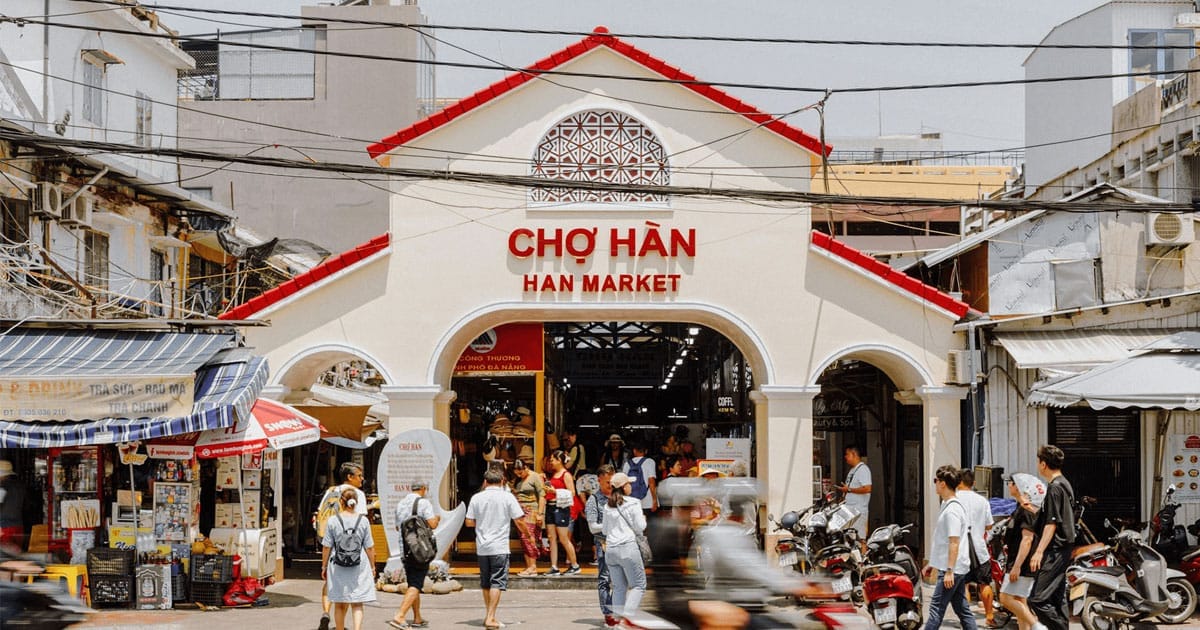
- Han River and central Da Nang: markets, restaurants, shopping streets and riverfront areas where walking works well once you are in the zone.
- My Khe and An Thuong: the main beach neighbourhood, where hotels, cafés, restaurants and the beach are often close enough for short walks.
- Son Tra Peninsula: the city’s northern nature edge, where roads become steeper and vehicle choice matters much more.
- Southern corridor: the route toward Non Nuoc, Marble Mountains and onward toward Hoi An.
The wider Da Nang travel guide uses the same geographic logic because it is easier for trip planning than treating the entire city as one uniform area.
Which Transport Should You Use?
- Walking: best inside compact neighbourhoods such as My Khe, An Thuong and parts of the Han River centre.
- Grab, Xanh SM or taxi: the easiest default for moving between the beach and central city or for simple attraction-to-attraction trips.
- GrabBike: useful for solo short rides when the weather is good and you are comfortable riding as a passenger.
- Public bus: useful when the current route and timetable match where you actually need to go.
- Geared motorbike: useful for experienced, legally qualified riders who want more flexibility, especially when a route genuinely benefits from self-driving.
- Private car: increasingly practical when a day includes several distant stops, children, seniors, luggage or difficult weather.
If you have not yet decided what you want to see, choose the itinerary first using the things to do in Da Nang guide. A transport choice is much easier once the day has a clear shape.

Grab, Xanh SM and Taxi: The Default for Most Visitors
For normal city trips, ride-hailing and taxis solve most transport needs without requiring you to rent, park or legally operate a vehicle yourself.
They are particularly practical for My Khe to Han River trips, evening restaurant rides, Marble Mountains transfers and days when the heat makes a long walk inefficient.
Do not rely on a fixed fare table in an evergreen guide. App prices can change with distance, demand, weather and time of day. Check the current fare before confirming the ride.
The practical difference is simple: an app ride gives you the pickup point, destination and quoted fare before the trip; a taxi is a convenient fallback when an identifiable vehicle is already waiting at your hotel or attraction.
Walking: Best Within a Zone, Not Across the Whole City
Walking works well around My Khe and An Thuong, along parts of the Han River riverfront, and inside individual sightseeing clusters.
What does not work well is treating Da Nang as one continuous walking destination. A route that looks manageable on a map can become inefficient when it crosses major roads or is attempted in strong midday heat.
Use walking when the walk itself is part of the experience. Use a short ride when the walk is only a hot or time-consuming connection between two separate zones.
Cycling: Useful in the Right Area and Time of Day
Cycling can work well along flatter coastal and riverside areas, especially early in the morning or later in the afternoon. It is less attractive in strong midday heat, heavy rain or on busier roads where the ride becomes more stressful than useful.
For most visitors, a bicycle is a local-area option rather than the main transport mode for an entire Da Nang itinerary.
Do You Need to Rent a Motorbike in Da Nang?
Usually not for a first visit. A motorbike becomes useful only when you are already comfortable riding, your licence is valid for the vehicle class in Vietnam, and your itinerary benefits from the freedom to stop or change route independently.
Do not simplify the legal question to “I have an IDP, so I am fine.” Before renting, confirm that your international permit and corresponding national licence are actually recognised in Vietnam for the correct vehicle class under the rules that apply to you. Also check your travel-insurance requirements.
If you are not legally or confidently able to ride, Grab, taxi or a car with driver is usually a much easier solution than learning on Vietnamese roads during a holiday.
Son Tra: Use a Geared Motorbike, Not an Automatic Scooter, for Higher Routes
Son Tra is the main exception to generic advice such as “just rent a scooter and explore.”
If your goal is only Linh Ung Pagoda and the Lady Buddha, a car or ride-hailing trip is straightforward. If you want to ride farther into the peninsula and use the steeper upper sightseeing roads, a manual or semi-automatic geared motorbike is the better local choice for an experienced and legally qualified rider.
The reason is practical as well as regulatory. Son Tra has steep gradients, and automatic scooters can struggle or stall on steeper sections. A geared motorbike gives the rider more direct control on climbs and descents. Official access rules also restrict automatic scooters on some controlled upper routes.
This does not mean every visitor should rent a geared bike. It means choose the Son Tra route first, then choose the vehicle. Current access hours, road direction, weather and vehicle restrictions matter, so check the detailed Son Tra Peninsula guide before riding deeper into the peninsula.
Public Bus: Good When the Route Fits
Da Nang has a public-bus network, but a bus is useful because the route matches your trip, not simply because the fare is low.
If a current route passes near both your accommodation and destination, the bus can be an efficient budget option. If you need a long walk to the stop, a connection and another walk at the other end for a short cross-city journey, a Grab or taxi may save enough time and effort to justify the higher cost.
The network and operating plans can change, so do not build your trip around a static bus map saved from an old blog. Check the current DanangBus information before travel.
Related Tours
 10 Hours
 3 Hours
Transport Operating Hours That Actually Matter
Da Nang does not have one citywide “transport opening hour”. Different routes and services operate on different schedules.
- Ride-hailing and taxis: on-demand services rather than a fixed city timetable; availability can vary by area and time.
- Airport-linked Route 12: current verified operating window 05:30–19:00.
- Airport-linked Route 06: current verified operating window 05:30–19:00.
- Controlled Son Tra sightseeing routes, March–September: current visitor operating window 07:30–18:30.
- Controlled Son Tra sightseeing routes, October–February: current visitor operating window 07:30–17:30.
Other bus routes have their own timetables. Treat these hours as operational information that should be rechecked when planning a future trip, especially for Son Tra or public transport.
Marble Mountains: A Good Example of Transport Following the Itinerary
For a simple visit to Marble Mountains, Grab, taxi or a car is usually straightforward. You do not need to rent a motorbike for the whole day just to reach one attraction.
The decision changes if Marble Mountains is only one stop on a longer southern route. If you continue toward Non Nuoc, Hoi An or several other stops, the value of having one vehicle for the day increases.
This is the central rule of the article: transport should follow the itinerary.
When Does a Private Car Make More Sense Than Several Grab Rides?
A private car is unnecessary for a simple dinner ride from My Khe to the Han River. It becomes more useful when the day includes several separated stops, children or seniors, substantial luggage, waiting time between attractions, or a route outside the compact urban core.
A day combining Son Tra, city stops and Marble Mountains is a different transport problem from two short urban rides. If your itinerary reaches that level of complexity, a private driver in Da Nang can be a practical next step.
If your day only needs two or three short city transfers, there is no reason to turn an informational transport guide into a private-car sales pitch.
Event Nights: Walk Out of the Crowd Before Booking Pickup
On normal evenings, ride-hailing around the Han River is straightforward. On Dragon Bridge show nights or major city events, crowd concentration and temporary traffic controls can make the exact pickup point more important than the app you use.
The practical rule is simple: walk away from the immediate event crowd before requesting your ride. The current Dragon Bridge Fire Show guide explains that evening movement in more detail.
Heat and Rain Can Change the Best Transport Choice
The best transport mode can change with the weather.
A 20-minute walk that feels pleasant at 7:00 AM can become inefficient in strong midday heat. A GrabBike may be quick in dry weather but unattractive during heavy rain. A multi-stop day may be more comfortable in an air-conditioned car when repeated roadside pickups would leave you waiting outside.
Do not choose one transport mode for the entire holiday before you know the weather and the shape of each day.
Nearby Attractions



Common Transport Mistakes in Da Nang
- Renting a motorbike because travel blogs describe it as “freedom”: if you are not licensed, confident or actually travelling on routes that benefit from self-driving, it adds more friction than freedom.
- Taking an automatic scooter onto higher Son Tra routes without checking access: some controlled routes restrict automatic scooters, and steep gradients make a geared bike the more suitable choice for experienced legal riders.
- Walking between separate zones just to save one short ride: walking is best when it contributes to the experience.
- Memorising an old bus map: check current routes and hours instead.
- Using a private car for every short urban trip or, at the opposite extreme, booking many separate rides for a complicated full-day route: match the mode to the shape of the day.
- Requesting pickup inside the densest event crowd: walk to a clearer street first.
What Is the Best Way to Get Around Da Nang?
For most first-time visitors, walking plus Grab, Xanh SM or taxi is the simplest everyday combination.
You do not need a motorbike unless you are legally qualified, experienced and your itinerary genuinely benefits from self-driving. If Son Tra’s higher routes are part of that plan, prefer a suitable geared motorbike rather than an automatic scooter and check the current route rules first.
Use the bus when the route fits. Use a private car when the day becomes geographically complicated.
If you remember one rule, make it this: walk within the area you are exploring, ride between city zones, and only choose a more complicated transport option when it makes the day easier.
Frequently Asked Questions
Q: Do I need to rent a motorbike in Da Nang?
Q: Is Grab a good way to get around Da Nang?
Q: Should I use an automatic scooter on Son Tra Peninsula?
Q: Does Da Nang have public buses?
Q: What time does public transport stop in Da Nang?
Practical travel planning and local operations knowledge for Central Vietnam.
About our local teamRelated Travel Guides


Planning a Da Nang trip?
Tell us your travel dates, destinations and group size. Our local team can help you plan the next practical step.
Plan My Trip