
Quick answer: if you only have a few meals in Da Nang, do not try to complete a list of 15 dishes. Protect the meals that show you something different: Mi Quang for Quang-style noodles, banh trang cuon thit heo for the local wrapping-and-dipping style, banh xeo with nem lui for a slower shared meal, bun cha ca for an easy coastal noodle soup, and one carefully ordered seafood dinner.
The useful skill is not memorising more dish names. It is knowing which meals deserve your limited appetite, how each dish is meant to be eaten, how to choose a venue, and what to confirm before you order.
If You Only Have 1, 3 or 5 Meals in Da Nang
One meal: choose Mi Quang. It is one of the clearest introductions to the culinary tradition shared by Quang Nam and Da Nang.
Three meals: choose one noodle meal, one wrap/shared meal and one seafood meal. A practical combination is Mi Quang or bun cha ca → banh trang cuon thit heo → seafood.
Five meals: keep those three, then add banh xeo with nem lui and either bun mam nem or a market/snack stop. Try goi ca Nam O only if raw fish and stronger flavours genuinely appeal to you.
This is decision compression, not a food challenge. If a dish does not suit your appetite, dietary needs or schedule, skip it.
Five Meals Worth Protecting
- Mi Quang: best as breakfast or lunch. Expect relatively little broth; mix the noodles, herbs, peanuts and rice cracker rather than treating it like pho.
- Bun cha ca: an easier breakfast or lunch if you want a fuller bowl of broth and a coastal fish-cake flavour.
- Banh trang cuon thit heo: best when you have time to assemble each roll. The vegetables and mam nem are part of the dish, not optional decoration.
- Banh xeo + nem lui: better for a slower lunch or dinner, especially when sharing. Tear, wrap, add herbs and dip rather than eating the pancake by itself.
- Seafood: best as a deliberate dinner. The important part is ordering control: price, weight, cooking method and total cost should be clear before the kitchen starts.

Mi Quang: Do Not Expect a Bowl Full of Broth
Mi Quang is a traditional Quang Nam–Da Nang dish, and its format is different from a typical noodle soup. The broth or sauce is added in a relatively small amount, with noodles, herbs, toppings, peanuts and rice cracker doing much of the work.
If your first bowl looks “too dry” compared with pho, that does not mean something is missing. Break some rice cracker into the bowl, add herbs, mix the noodles and sauce, then eat.
This is also why Mi Quang is a useful first meal: it gives you a clearer sense of Quang-style food than simply choosing the most familiar noodle soup on the menu.
Banh Trang Cuon Thit Heo: The Sauce Changes the Dish
A proper plate is more than sliced pork and rice paper. The experience comes from assembling pork, rice paper, thin rice sheets and fresh vegetables, then dipping the roll into mam nem, a fermented fish sauce with a noticeably stronger aroma and flavour than ordinary fish sauce.
If mam nem is new to you, start with a small amount rather than removing it immediately. If you avoid fermented fish products, ask before the plate is served so the restaurant can explain what alternatives are possible.
Banh Xeo and Nem Lui: Choose It When You Have Time to Sit Down
Banh xeo is better treated as a wrapping meal than as a pancake eaten on its own. Tear off a piece, add herbs and vegetables, wrap it and dip it. Nem lui fits the same shared-meal rhythm.
This makes the combination good for couples, families or small groups, but less useful when you have 20 minutes before a tour departure. The dish benefits from time at the table; do not choose it just because it appears on every “must-eat” list.
Seafood: Control the Order Before It Reaches the Kitchen
Seafood is where travelers are most likely to lose control of the bill because many items are sold by weight. Before anything is cooked, use this sequence:
- Confirm the price per kilogram.
- Confirm the actual weight of the seafood you selected.
- Choose the cooking method.
- Ask whether any cooking or service fee is separate if the menu is not clear.
- Estimate the total before agreeing.
A useful Vietnamese question is “Bao nhiêu một ký?” — “How much per kilogram?”
The point is not to bargain aggressively. It is to make a weight-based transaction clear before the item is prepared.
Con Market or Han Market?
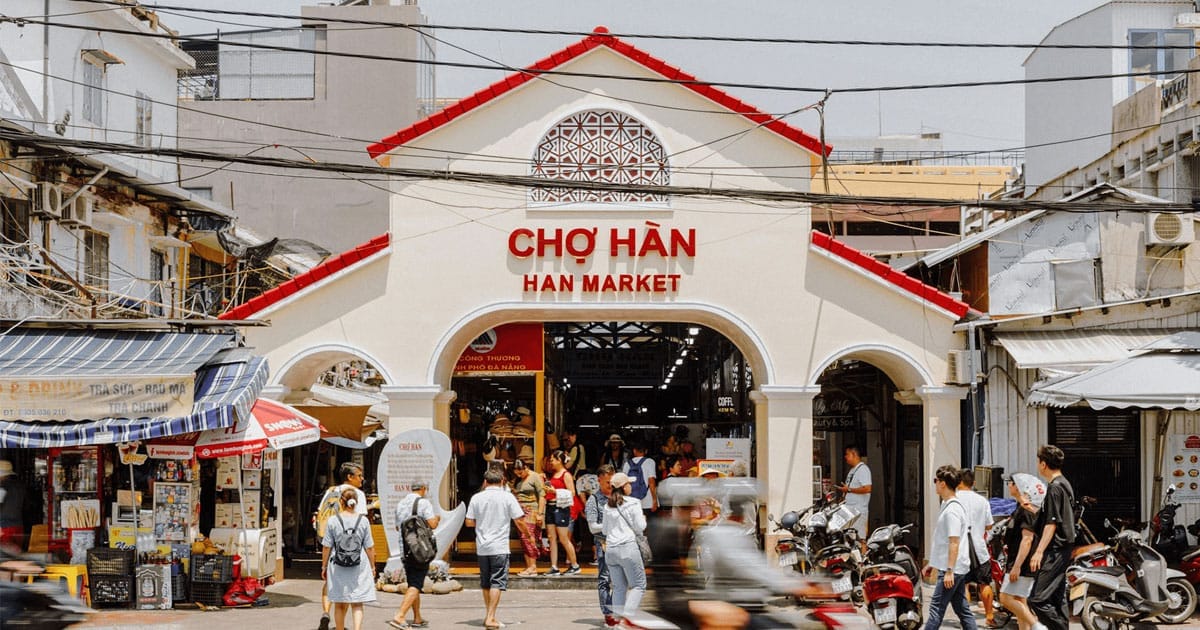
If your main goal is eating, choose Con Market. If shopping, dry specialties and souvenirs are more important, choose Han Market.
Con Market is the stronger food-first stop for travelers who want to sample several small portions such as noodles, banh xeo, nem lui, bun mam nem, cakes or sweet soups without committing to one long restaurant meal.
Han Market is more useful when food is part of a broader central-market visit that also includes dried products, gifts and shopping.
You do not need to visit both markets simply because both appear on sightseeing lists.
Food Opening Hours That Actually Matter
- Con Market: current official listing is 07:00–19:30 daily. Individual food stalls may keep different hours.
- Han Market: current official listing is 06:00–19:00 daily. Individual stalls may vary.
- Specialist noodle and street-food shops: many trade around specific breakfast, lunch or evening periods rather than all day. Check the exact venue on the day you go.
- Seafood restaurants: hours are business-specific; do not assume the entire coastal strip follows one closing time.
Market hours are not the same as stall hours. If you are travelling for one specific vendor, verify that vendor rather than relying only on the building’s opening time.
How to Choose a Place to Eat Without Chasing One Viral Address
A famous restaurant is not automatically the best use of a limited meal. When choosing between nearby options, look for four practical signals:
- Specialist menu: a place known for one dish or a small family of dishes is often easier to evaluate than a menu trying to serve everything.
- Steady turnover: regular customer flow is more useful than an empty dining room with an enormous menu, although popularity alone is never a guarantee.
- Transparent pricing: prices should be clear before you order; this matters especially for seafood sold by weight.
- Orderly food handling: if storage, preparation or serving conditions make you uncomfortable, choose another venue rather than forcing the experience because the place is “local”.
Do not cross the city just because one address is viral if your current area has a busy specialist shop serving the same dish well. Food should fit the day rather than create unnecessary transport.
Related Tours
 10 Hours
 3 Hours
Where to Eat by Area
Central Da Nang and the Con Market area: a strong choice for noodles, bun mam nem, wrapped dishes, market snacks and desserts.
Hai Chau / Hoang Dieu side: useful for specialist local eateries when you are already spending time in the city centre.
My Khe and the coastal corridor: practical for seafood, coffee, casual dinners and international options near beach hotels.
Man Thai and the northern coastal side: more closely connected with fishing-community and seafood culture.
If you are planning a full sightseeing day, use the things to do in Da Nang guide first, then place meals near the areas you will already visit instead of building the day around unnecessary cross-city restaurant trips.
Food Budget: Use Decision Rules, Not a Price List That Goes Stale
This guide deliberately avoids hard-coding a long table of dish prices. Prices vary by venue, portion, location and ingredient, and seafood can change considerably by species, size and weight.
For normal planning, treat specialist noodle shops and market snacks as a different spending category from weighed seafood, hotel dining or resort restaurants. The important checks are:
- look for a visible menu or confirm the price before ordering;
- for seafood, calculate price per kilogram against the actual weight;
- ask about extra preparation charges when the pricing format is unclear;
- compare the total meal, not only the lowest unit price.
If you need a strict daily food budget, check current menus for the venues you shortlist close to your travel date rather than relying on an old citywide price range.
Dietary Restrictions: Ask Before the Sauce Is Mixed In
Da Nang food uses sauces and broths as part of the dish, not simply as optional condiments. A vegetable or noodle dish can still contain fish sauce, fermented fish sauce, animal-based broth or peanuts.
- Không cay — not spicy.
- Ít cay — less spicy.
- Không đậu phộng — no peanuts.
- Ăn chay — vegetarian.
- Không mắm nêm — no fermented fish sauce.
For a serious allergy, these phrases are not enough on their own. Use a clear translation card describing the ingredient and cross-contact risk, and choose a restaurant that can confirm what is in the dish.
If your main need is Indian food rather than local Vietnamese cuisine, use the dedicated Indian restaurant guide for Da Nang instead of mixing a separate restaurant-search intent into this local-food page.
Da Nang Food Does Not Mean Every Dish Was Invented in Da Nang
Good food writing does not need to turn every regional dish into a city-exclusive claim. Mi Quang belongs to the wider Quang Nam–Da Nang culinary tradition, and Da Nang is one of the easiest urban places to experience that food today.
The same discipline applies after administrative boundary changes. Cao Lau, White Rose dumplings and other foods strongly associated with Hoi An should not suddenly be presented as generic “Da Nang must-eats” simply because municipal geography changed.
For travelers, culinary identity should follow the real destination experience, not an SEO shortcut.
Goi Ca Nam O: An Optional Stronger-Flavour Choice
Goi ca Nam O is worth considering if you actively enjoy raw fish, herbs and stronger sauces. It is not a compulsory first-time dish.
If raw seafood is outside your comfort zone, skip it without feeling that you have missed the essential Da Nang food experience. A useful food guide should help you choose, not pressure you to complete a checklist.
Nearby Attractions



A Very Short Food-Day Framework
Breakfast: Mi Quang or bun cha ca.
Lunch: Con Market for grazing, or banh trang cuon thit heo for a proper sit-down meal.
Afternoon: coffee, che or kem bo as a break rather than another full meal.
Dinner: choose either banh xeo with nem lui or seafood according to appetite. You do not need both on the same night.
The 1/3/5-meal framework matters more than following a fixed food itinerary exactly.
If you prefer a guided sequence of local tastings over ordering everything independently, compare the Private Da Nang Food Tour with a self-guided food crawl.
Common Food Mistakes in Da Nang
- Trying to finish every “must-eat” list: protect the meals that show you different formats and flavours instead.
- Driving across the city for one viral restaurant: a good specialist venue near your existing route can be the better decision.
- Complaining that Mi Quang has too little broth: the relatively small amount of sauce is part of the dish.
- Removing mam nem before tasting it: try a small amount first unless you avoid fermented fish products.
- Ordering seafood without confirming price and weight: settle the transaction before cooking.
- Treating Con and Han markets as identical stops: Con is the stronger food-first choice; Han is more useful for a mixed shopping-and-market visit.
- Assuming market opening hours apply to every food stall: individual vendors may open and close at different times.
- Calling every Quang-style dish “invented in Da Nang”: regional accuracy is more useful than a marketing claim.
What Should You Eat First in Da Nang?
Start with Mi Quang. Then use the rest of your limited meals to create contrast rather than repetition: a wrapped pork meal, a broth-based fish-cake noodle soup, a slower banh xeo meal and one controlled seafood dinner.
The advantage of Da Nang is not that you need a huge food checklist. It is that noodles, markets, wrapped dishes and seafood can fit naturally into the same city trip.
For the wider question of how many days to stay and how food fits around beaches, Son Tra, Marble Mountains and the rest of the destination, return to the Da Nang travel guide. This food guide should do one job well: help you avoid wasting the meals you have.
Frequently Asked Questions
Q: What food should I try first in Da Nang?
Q: Should I go to Con Market or Han Market for food?
Q: What are the opening hours for Con Market and Han Market?
Q: How should I order seafood in Da Nang?
Q: Is Da Nang food suitable for vegetarians?
Q: How much should I budget for food in Da Nang?
Practical travel planning and local operations knowledge for Central Vietnam.
About our local teamRelated Travel Guides


Planning a Da Nang trip?
Tell us your travel dates, destinations and group size. Our local team can help you plan the next practical step.
Plan My Trip