

A confronting wartime memorial where reconstructed prison scenes, archival evidence and surviving traces need to be read differently.
Phu Quoc Prison
A Great choice for Central VietNam Tour
Share your details and our travel experts will call you back with personalized packages.
We'll call you soon


An amazing journey to explore local culture awaits you
QUICK FACTS
Rating Score: 4.3☆(7,965)GoogleMap
What Is Actually Worth Understanding
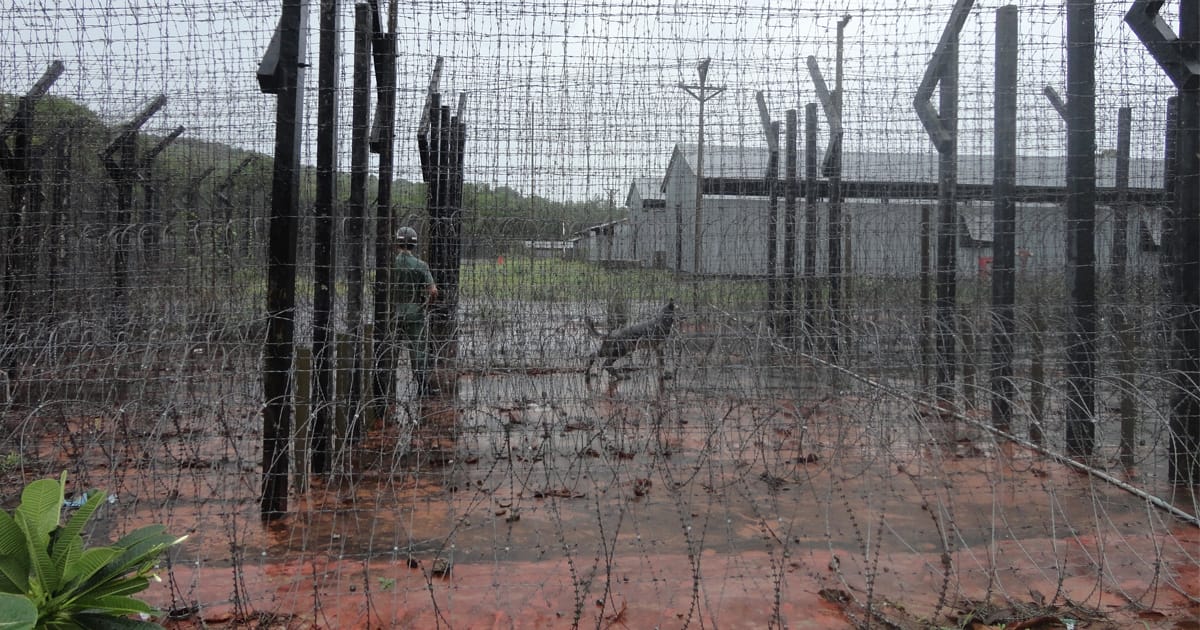
- B2 is a reconstruction: the best-known visitor compound recreates watchtowers, barbed-wire fences, detention huts, isolation spaces and tiger cages rather than presenting an untouched camp frozen in 1973.
- The exhibition house provides the context: official heritage records describe 43 artifacts and more than 100 documentary images covering the camp’s formation, detention practices and prisoner resistance.
- The tiger cages were a real disciplinary system: contemporary ICRC archives include 1968 photographs of punishment wire fencing at the Phu Quoc POW camp, giving independent wartime evidence beyond today’s mannequins.
- The site is larger than the B2 photo stops: memorial structures, cemetery areas, military-police gates and other traces belong to the wider historical landscape.
- The visit is deliberately uncomfortable: the strongest value is understanding detention conditions and the human cost of war, not collecting dramatic photographs.
Opening hours:
Current 2026 sources conflict. The current An Giang tourism listing shows 08:00–17:00, while Tripadvisor and Trip.com show 07:00–17:00; several current local guides publish split sessions with a midday closure around 11:30–13:30. For reliable planning, visit in the morning or verify locally before arriving around lunch.Entrance Ticket:
Free admissionStart with the Exhibition House Before the Mannequins
The easiest mistake at Phu Quoc Prison is walking directly into B2 and treating the life-size scenes as the history itself.
Begin with the exhibition material. Vietnam’s Department of Cultural Heritage records a two-room exhibition with 43 artifacts and more than 100 documentary images, including a site model, material on the camp’s development, detention and torture practices, prisoner resistance and personal objects.
This order makes the reconstructed compound much easier to interpret. You first learn the scale and structure of the prison system, then see how those conditions have been recreated spatially.
B2 Is Reconstructed — That Does Not Make It Historically Meaningless
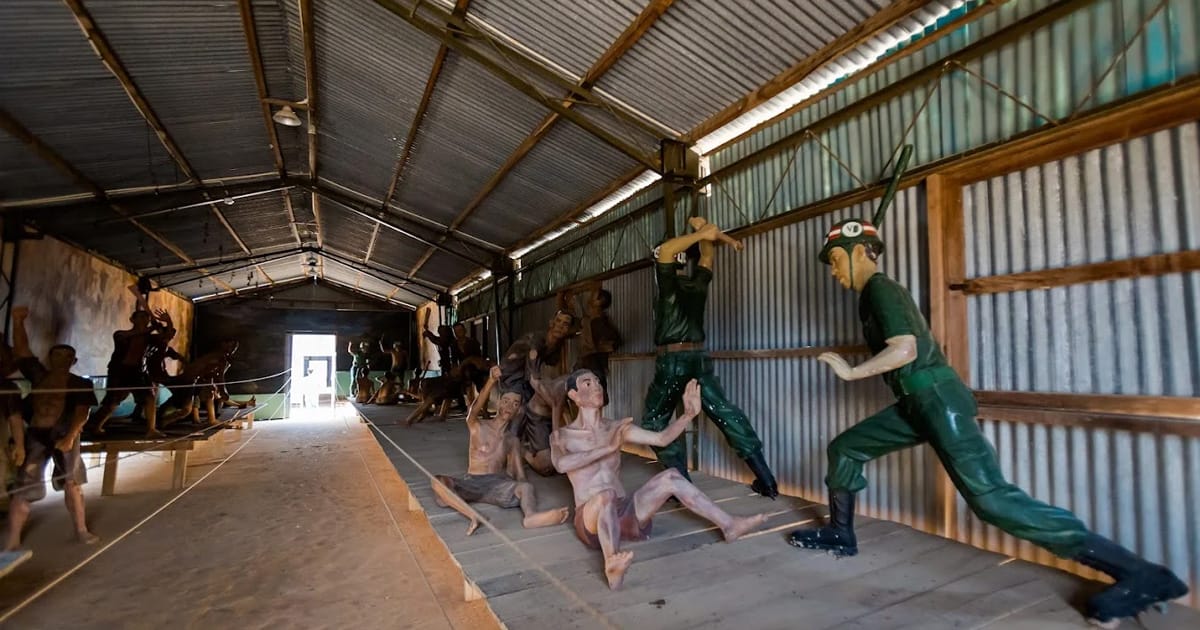
The famous B2 subdivision covers about 17,693 square metres and has been reconstructed with watchtowers, layered barbed-wire fencing, corrugated-metal buildings, kitchens, detention areas, isolation cells and tiger cages.
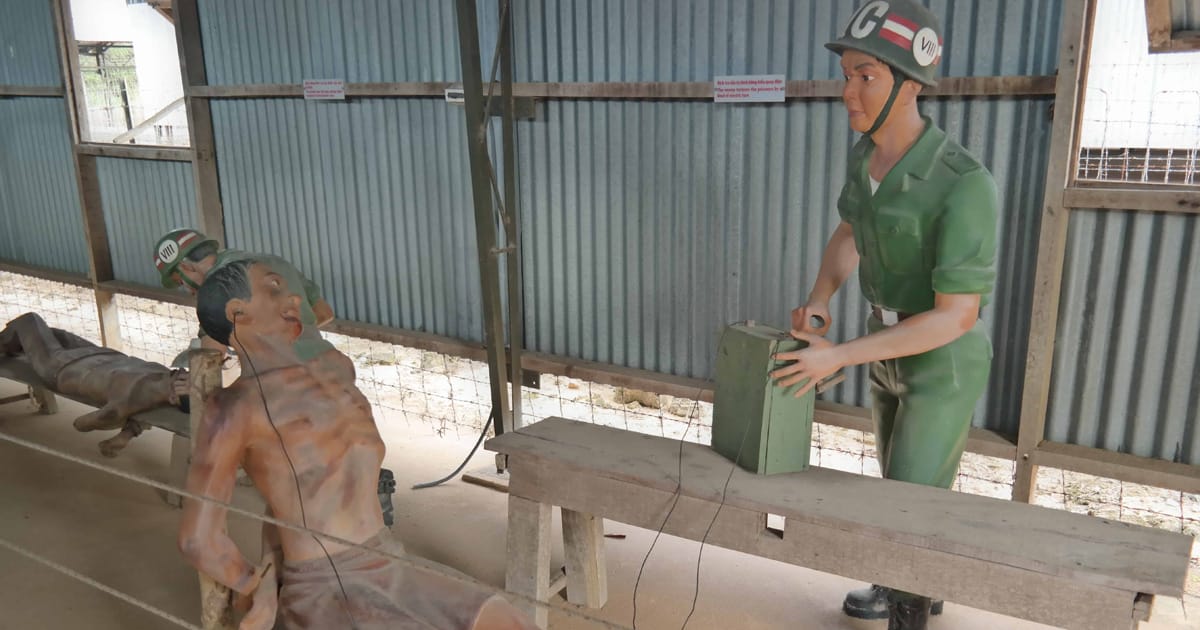
The mannequins inside are modern interpretive devices. They should not be read as preserved original scenes or as archaeological evidence by themselves.
The more useful approach is to separate three things in your mind: the historical events, the surviving documentary and material evidence, and the later reconstruction designed to help visitors visualize them.
The Camp Is Documented Beyond the Museum’s Own Narrative
Phu Quoc Prison is presented today through Vietnam’s official commemorative perspective, focused on revolutionary prisoners and their suffering and resistance. International visitors should recognize that framing rather than assume the museum is a neutral military-history institution.
At the same time, the existence and harsh character of the POW camp are not supported only by post-war displays. The International Committee of the Red Cross visited Phu Quoc during the war, and its archive preserves photographs from 1968 showing the camp, barbed-wire compounds and punishment fencing.
Recent academic work using ICRC archives also documents serious concern over conditions at Phu Quoc in the early 1970s. That independent record is useful context when viewing today’s reconstructed tiger cages and detention scenes.
The Graphic Displays Are the Main Family-Planning Issue
Several huts contain life-size figures depicting torture, restraint and severe physical abuse. The scenes are not subtle, and recent international visitors continue to describe them as shocking or emotionally difficult.
For adults and mature teenagers studying twentieth-century history, this directness may make the visit more understandable. For younger children, the same scenes can be frightening without adding much educational value.
If visiting as a family, one adult can preview the B2 displays first. Children who skip the most graphic huts can still see the fences, watchtowers, camp layout and documentary areas.
Free Entry Does Not Mean You Need to Rush
There is currently no admission charge. That makes Phu Quoc Prison easy to add to a southern-island route, but it also encourages some visitors to treat it as a quick photo stop.
Allow about 45–60 minutes for the essential route. If you read the exhibition photographs carefully or visit more of the wider memorial landscape, 60–90 minutes is more realistic.
A 20-minute visit is possible, but it will mostly show you the reconstructed visual layer rather than explain why the camp mattered.
Do Not Trust One Published Opening Time Around Lunch
Current opening-hour information is unusually inconsistent. The An Giang tourism listing currently shows 08:00–17:00. Tripadvisor and Trip.com display 07:00–17:00. Other 2026 local guides publish split sessions with a midday closure around 11:30–13:30.
The practical solution is not to choose whichever number is most convenient. Visit between roughly 08:00 and 11:00 if you can, or check locally before planning an arrival around lunchtime.
This is a better strategy than building a tight south-island itinerary around an uncertain 12:00–13:30 entry window.
Morning Also Makes the Outdoor Sections Easier
Much of the visit involves walking between open compounds and corrugated-metal structures. Phu Quoc heat can make the site physically tiring even though the walking distance is modest.
Morning therefore helps for two reasons: it avoids the most uncertain lunch-period access and usually makes the outdoor route more comfortable.
Bring water and sun protection. In wet weather, a light rain layer is more useful than trying to wait for a completely dry historical-site visit.
The Wider Site Is Easy to Miss If You Only Follow the Tour-Group Flow
B2 is the visual center of most visits, but official heritage documentation lists other components including the Military Police Battalion gates, prisoners’ cemetery, exhibition house, Kien Van Church ruins and memorial areas.
The prisoners’ cemetery lies about a kilometre from the B2 subdivision, so do not assume every memorial component sits inside one compact fenced compound.
If you have limited time, prioritize the exhibition house and B2. If the historical context matters more than checking off another attraction, add the memorial elements rather than spending extra time photographing every mannequin scene.
Pair It with One South-Island Stop, Not a Packed Checklist
Phu Quoc Prison sits naturally in a southern-island itinerary. Sao Beach, Ho Quoc Pagoda and the Hon Thom cable-car area are all in the broader south, but they serve completely different purposes.
The most balanced combination is one historical visit plus one lighter stop. For example, the prison followed by Sao Beach creates more breathing room than squeezing the prison between several entertainment attractions simply because they appear close on a map.
The emotional tone matters here. Give yourself enough transition time before moving directly from graphic torture displays into a high-energy leisure experience.
Morning Is the Most Reliable Choice
Plan the visit between roughly 08:00 and 11:00 when possible. This avoids the disputed lunch-period opening schedule and makes the open-air parts of the relic more comfortable before the strongest heat.
There is no meaningful seasonal reason to postpone the site to Phu Quoc’s dry season. Rain mainly affects the walking experience between buildings; historical interpretation remains the same year-round.
If Phu Quoc Prison is part of a south-island day, place it before a beach or leisure stop rather than arriving tired at the end of a long afternoon.
From Cay Dua Prison to the Phu Quoc POW Camp
A detention camp known as Cay Dua Prison existed on Phu Quoc during the final years of French colonial rule. The much larger wartime prison most closely associated with today’s memorial developed under the Republic of Vietnam during the 1960s.
Vietnamese official tourism records state that the camp expanded dramatically from 1966 and, between 1967 and 1973, held more than 40,000 prisoners over time. Official Vietnamese sources also record more than 4,000 deaths and tens of thousands of injuries or disabilities among detainees.
The prison was primarily used for captured communist and North Vietnamese personnel during the Vietnam War. ICRC delegates visited the Phu Quoc POW camp during the conflict, and surviving ICRC photographs independently document its fenced compounds and detention environment.
After the war, parts of the former camp landscape were preserved, reconstructed and interpreted as a historical memorial. Phu Quoc Prison received national historical recognition in the 1990s and was formally honored as a Special National Relic in 2015.
Practical Choices That Improve the Visit
- Go in the morning. It avoids the most uncertain lunch-period schedule and reduces heat on the outdoor route.
- Read before entering B2. The exhibition house gives the reconstructed scenes the historical framework they otherwise lack.
- Prepare children before entering. Several displays depict torture with life-size figures and may be disturbing.
- Remember that B2 is reconstructed. Photograph it as an interpretation of the camp, not as an untouched original scene.
- Allow 45–90 minutes. Shorter visits tend to become a sequence of graphic displays without enough context.
- Dress for heat and outdoor walking. Water and sun protection matter more here than formal museum clothing.
- Keep photography respectful. This is a national memorial to prisoners and people who died in detention, not a themed photo set.
Why Travel With Us?
Tailored to You: Custom itineraries matching your exact pace and passions.
Go Local: Authentic experiences guided by native experts.
Zero Stress: We handle all logistics—transport, tickets, and stays.
24/7 Support: Round-the-clock local assistance, whenever you need it.
Exceptional Value: Premium quality at fair, transparent prices.
Nearby Attractions


Let's plan your next vacation
A hundred years from now, no one in this world will remember you or me. We only come to this world once — to leave our footprints on new lands and to etch every moment deep into our memory.
Live for the experience. Start your journey today — book your tour and make memories that last a lifetime!
View Our Business & Travel Licenses
Book your holidayGallery
FAQ
Q: Is Phu Quoc Prison free to enter?
Q: What are the current Phu Quoc Prison opening hours?
Q: How long should I spend at Phu Quoc Prison?
Q: Is Phu Quoc Prison suitable for children?
Q: Is the prison preserved exactly as it was during the war?
Q: What are the tiger cages at Phu Quoc Prison?
Q: What should I visit first at Phu Quoc Prison?
BOOKING

Phong Nha–Ke Bang Named Asia’s Leading National Park 2026
Phong Nha–Ke Bang won Asia’s Leading National Park 2026 and Vietnam’s Leading Nature Destination 2026. [...]
Sep

Hue to Dong Hoi by Train: Schedules, Tickets & Phong Nha Connection
Choose the right Hue–Dong Hoi train by arrival window, seat or berth, luggage, HQ2 vs [...]
Sep

Da Nang to Phong Nha: Bus, Train, Private Car & Best Route
Compare direct buses, train via Dong Hoi, private cars and Da Nang Airport connections by [...]
Sep

Hue to Phong Nha: Bus, Train, Private Car & Best Way to Travel
Compare direct buses, Hue Northern Bus Station coaches, the HQ1/HQ2 heritage train, Grab and private [...]
Sep

Da Nang vs Hue: Which City Should You Stay In?
Compare Da Nang and Hue by trip anchor, daily pace, usable nights and transfer friction [...]
Sep

Hoi An Lantern Festival Guide: 2026 Dates & Evening Plan
Plan Hoi An's monthly Lantern Festival around the 14th lunar night, verified 2026 dates, an [...]
Sep

Hoi An Tailor Guide: What to Make, Fittings & Buying Tips
Learn how to get clothes made in Hoi An: choose a tailor, compare fabrics and [...]
Sep

Where to Stay in Hue: Best Areas by Trip Style
Compare the best areas to stay in Hue, from the central south bank and Citadel [...]
Sep
Let's get in touch!