

A protected island forest best planned by access type — scenic road, short forest walk or guided trek — rather than by searching for one 'national park entrance'.
Phu Quoc National Park
A Great choice for Central VietNam Tour
Share your details and our travel experts will call you back with personalized packages.
We'll call you soon


An amazing journey to explore local culture awaits you
QUICK FACTS
Rating Score: 4.2☆(1,103)GoogleMap
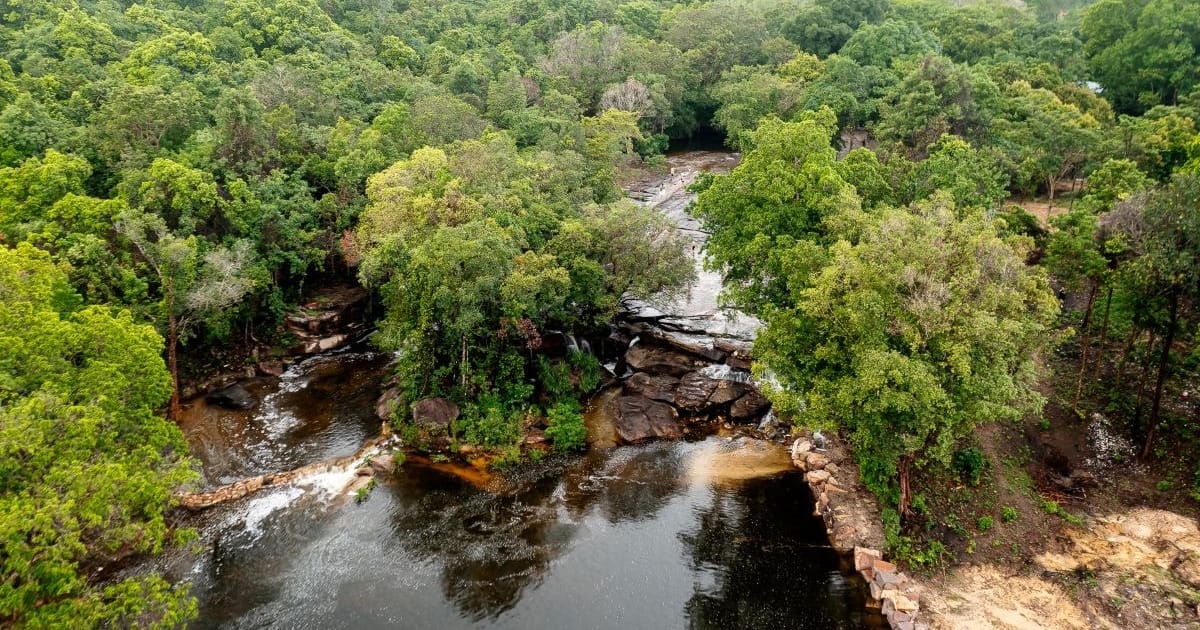
What Makes the Park Different from the Rest of Phu Quoc
- A large functioning forest system: the park authority says forest cover occupies about 97% of the area it currently manages.
- Three major forest ecosystems: evergreen broadleaf forest, melaleuca forest and mangrove forest occur across different elevations and wetland conditions.
- Mount Chua: at about 603 m, the island’s highest point lies within the protected landscape, although it should not be treated as a simple walk-up tourist trail.
- Real biodiversity rather than captive wildlife: the current park inventory records 480 animal species and more than 1,397 vascular plant species, but sightings are never guaranteed.
- A UNESCO biosphere context: the park forms part of a much larger landscape recognized for balancing biodiversity conservation with sustainable development.
Opening hours:
06:00–17:30/18:00Entrance Ticket:
Free admissionThe most useful thing to understand before leaving your hotel is that Phu Quoc National Park is geographically dispersed. The official park website lists an administrative headquarters and a representative office, but those addresses should not automatically be treated as the start of a tourist trail.
Google, Tripadvisor and travel blogs also attach different pins and “entrances” to the park. Some visitor listings are even marked closed while the park authority itself remains active and forest roads and arranged ecotourism access continue to exist.
Instead of asking “Where is the entrance?”, decide whether you want a scenic drive, a short organized forest walk, or a proper guided trek. Those are different products with different access points.
The Current 36,262-Hectare Figure Is More Useful Than the Old 31,422-Hectare Number
Many current travel pages still quote 31,422 hectares. That number comes from the 2001 decision that established Phu Quoc National Park.
The park authority’s current management overview now reports 36,262 hectares: 29,596 hectares of special-use forest plus 6,666 hectares of protection forest. It also states that forested land accounts for about 63% of Phu Quoc’s total natural area.
This is why broad claims that “the national park covers 70% of the island” should be treated cautiously. The protected and managed landscape is enormous, but the exact percentage depends on which legal or management boundary a source is using.
UNESCO Status Belongs to the Wider Biosphere Reserve
Another common shortcut is to call Phu Quoc National Park “a UNESCO Biosphere Reserve.” More precisely, the national park forms part of the Kien Giang Coastal and Marine Biosphere Reserve, recognized in 2006.
A biosphere reserve is not the same designation as a UNESCO World Heritage Site. UNESCO’s Man and the Biosphere Programme recognizes large living landscapes where strict conservation, buffer areas and places of human activity are managed together.
For travelers, that distinction explains why roads, villages, tourism and protected forest can appear close together without the entire area functioning like a sealed wilderness reserve.
Choose a Forest Drive if You Want Nature Without a Trek
For many visitors, the most realistic introduction is simply to travel through the northern forest landscape by motorbike or car. Road corridors around Bai Thom, Ganh Dau, Cua Can and the northern interior pass through long stretches of protected or buffer-zone forest.
This option works well for travelers who want shade, forest scenery and a quieter side of Phu Quoc without committing to several hours on an unmarked jungle trail.
Road conditions are not uniform. Some sections are paved, while secondary routes can become rough, muddy or rutted after rain. If you are not confident riding a motorbike on changing surfaces, a car with driver is the lower-risk choice.
Choose a Guide if the Forest Walk Is the Main Reason You Are Going
Deep-forest access is where independent planning becomes unreliable. Current 2026 visitor guides and recent traveler reports repeatedly describe inconsistent entry arrangements, weak trail marking and occasions when people have reached one access point and been redirected or turned away.
The park itself contains strict conservation and ecological-restoration zones, so not every forest path should be treated as an open recreational trail. If your goal is a real jungle trek rather than a roadside stop, arranging a knowledgeable local or forest guide in advance is the safer planning choice.
A guide adds more than navigation. The forest contains snakes, biting insects, steep terrain and numerous branching paths, while mobile coverage can weaken in remote sections.
Mount Chua Is the Highest Point — Not a Casual Tourist Summit
Mount Chua rises to about 603 metres and is widely described as the roof of Phu Quoc. Official tourism material highlights it as part of the national park landscape.
Do not interpret that as evidence of a clearly signposted public summit trail similar to a developed national-park lookout. Current trekking sources describe the route as physically demanding, difficult to navigate independently and affected by access controls.
If reaching the summit matters to you, arrange the route specifically rather than assuming you can arrive at a generic national-park pin and begin climbing.
Wildlife Exists Here, but the Forest Is the Main Attraction
The park authority currently records 480 animal species, including 25 mammals, 132 birds, 43 reptiles and 16 amphibians, as well as freshwater fish and insects. It also reports more than 1,397 vascular plant species.
Those figures describe biodiversity, not a visitor guarantee. Wild mammals can remain high in the canopy, active at different times or simply avoid people. A quiet forest drive or trek may produce birds, macaques, reptiles or no obvious wildlife at all.
If guaranteed close wildlife viewing is your priority, Vinpearl Safari is a different type of attraction and should not be confused with the experience of a wild national park.
Dry Season Is Better for Trekking; Wet Season Is Better for the Forest’s Water
There is no single “best season” for every National Park experience.
From roughly November to April, forest tracks are generally firmer and longer hikes are easier to plan. This is the better default for Mount Chua-style trekking or any route where slippery ground would create a safety problem.
From roughly May to October, the forest becomes wetter and more intense in colour, and streams can carry more water. The trade-off is mud, slippery roots and rocks, heavier rain, mosquitoes and possible leeches.
Do not choose February for a waterfall-heavy itinerary simply because it is comfortable hiking weather; some seasonal streams can be much weaker in the dry months.
Do Not Treat Suoi Tranh and Suoi Da Ban as One National-Park Trail System
Several travel guides bundle Suoi Tranh, Suoi Da Ban, Suoi Tien and other nature stops under the label “Phu Quoc National Park.” That may be convenient for a north-and-nature itinerary, but it can blur separate visitor sites, access arrangements and fees.
For this page, the National Park entity is the protected forest landscape itself. Individual streams, waterfalls and commercial or managed nature areas should be checked as their own destinations rather than assuming one national-park ticket or opening schedule covers them.
There Is No Reliable Park-Wide Opening Time to Put in Your Itinerary
The legacy Phu Quoc tourism database currently labels the National Park as free but exposes an incomplete opening-time field. The current park authority does not publish one universal daily visitor schedule for every road, trail and forest zone.
That makes a park-wide “07:00–18:00” style timetable misleading. Road access, guided treks, forest-service points and individual nature attractions can operate differently.
If you are only driving through public forest roads, daytime is the sensible window. If a specific trek is the reason for your trip, confirm its meeting time and access before leaving your accommodation.
Half a Day Is Enough for a First Forest Experience
A scenic forest drive with one or two short stops usually fits into 3–4 hours. A dedicated jungle trek can take half a day or longer depending on the route and access point.
Do not try to combine a serious trek, Rach Vem, Ganh Dau, Vinpearl Safari and several waterfalls simply because they all appear in “North Phu Quoc” guides. Road distances and forest conditions make a short list more realistic.
For a first visit, choose one primary purpose: drive through the forest or walk inside it. That single decision makes the rest of the itinerary much easier.
Match the Season to the Activity
For trekking, roughly November to April is the safer default because trails and secondary roads are usually firmer and prolonged heavy rain is less common.
For lush forest, streams and wet-season scenery, May to October can be more rewarding, but expect mud, slippery surfaces, insects and route disruption after strong rain.
Whatever the season, start a serious forest walk in the morning. This gives you more daylight margin if the route takes longer than expected and avoids planning your return around darkness in an area with limited services.
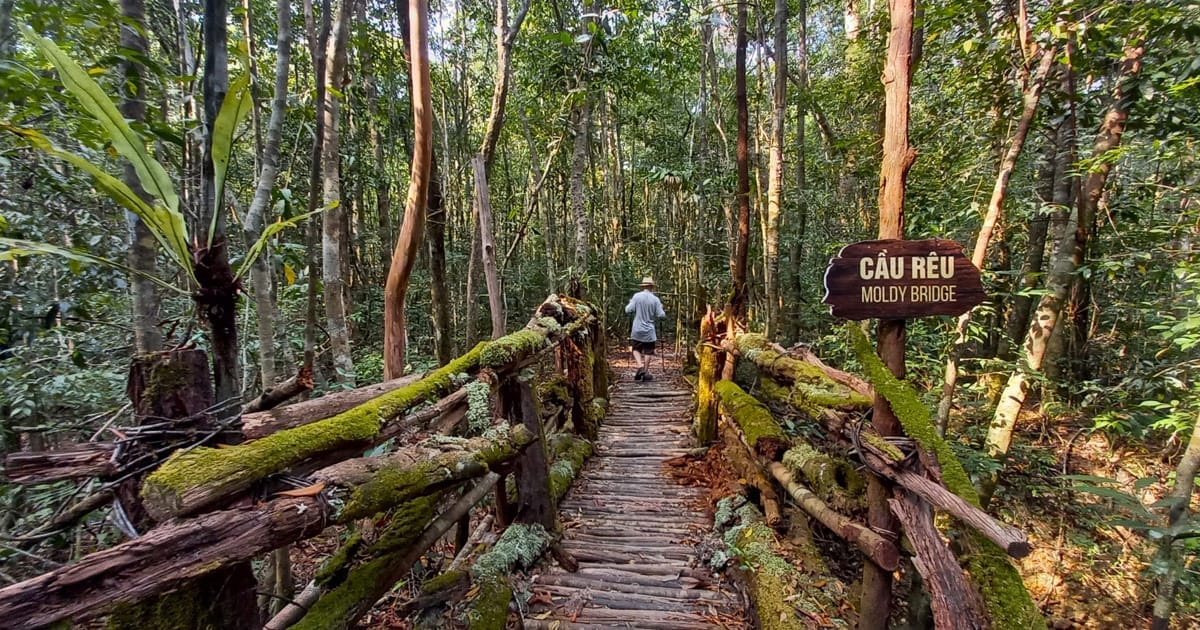
From Nature Reserve to a Larger Forest-Management Landscape
Phu Quoc National Park was established under Prime Ministerial Decision No. 91/2001/QD-TTg on 8 June 2001, upgrading the earlier North Phu Quoc Nature Reserve.
The original establishment decision is the source of the widely quoted 31,422-hectare national-park figure. The park authority’s current management overview now reports 36,262 hectares, including both special-use and protection forest.
In 2006, Phu Quoc National Park became part of the core conservation landscape of the Kien Giang Coastal and Marine Biosphere Reserve recognized under UNESCO’s Man and the Biosphere Programme.
The park today combines forest protection, biodiversity conservation, scientific research, environmental education and the gradual development of ecotourism under its sustainable forest-management plans.
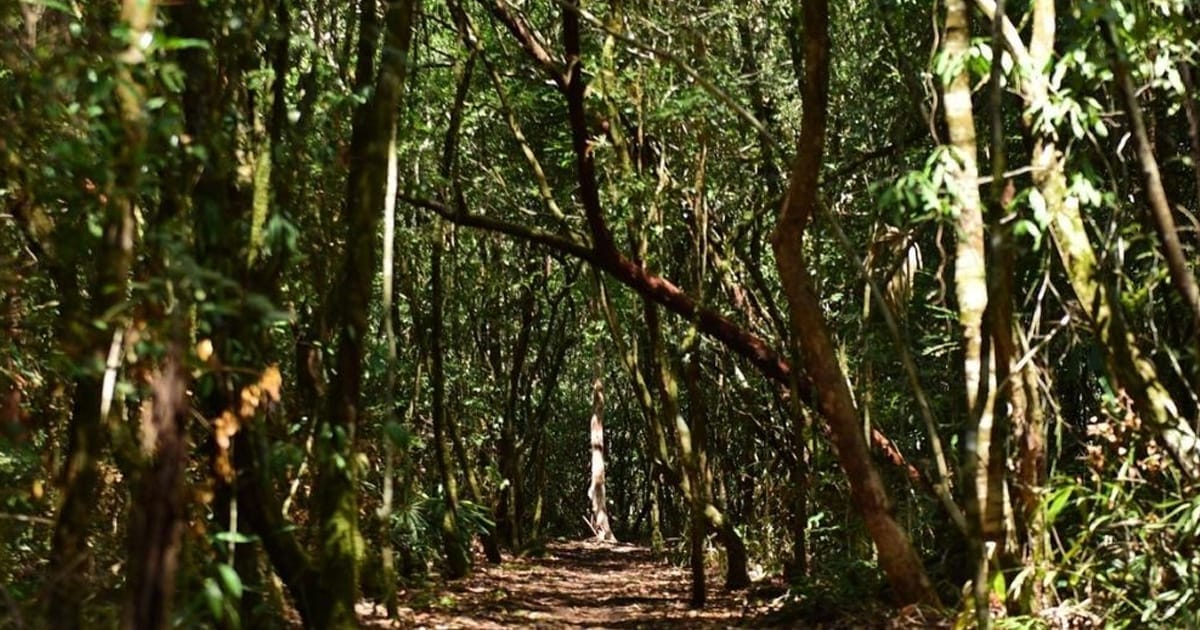
Practical Decisions Before You Enter the Forest
- Choose the experience before the map pin. A road drive, guided trek and Mount Chua attempt do not start from one universal entrance.
- Arrange deeper trekking in advance. Access and trail conditions are too inconsistent to rely on turning up at a random gate.
- Carry your own water. Do not assume shops, toilets or food services will exist once you leave populated roads.
- Wear covered shoes and use insect repellent. Mud, roots, mosquitoes and leeches are normal wet-forest considerations.
- Use extra caution after heavy rain. Secondary roads and forest paths can change much faster than main island roads.
- Do not chase wildlife off-trail. The biodiversity is real, but sightings are incidental and protected areas are not open wildlife parks.
- Keep individual waterfalls separate in your planning. Their access rules and fees may not match the wider National Park.
Why Travel With Us?
Tailored to You: Custom itineraries matching your exact pace and passions.
Go Local: Authentic experiences guided by native experts.
Zero Stress: We handle all logistics—transport, tickets, and stays.
24/7 Support: Round-the-clock local assistance, whenever you need it.
Exceptional Value: Premium quality at fair, transparent prices.
Nearby Attractions


Let's plan your next vacation
A hundred years from now, no one in this world will remember you or me. We only come to this world once — to leave our footprints on new lands and to etch every moment deep into our memory.
Live for the experience. Start your journey today — book your tour and make memories that last a lifetime!
View Our Business & Travel Licenses
Book your holidayGallery
FAQ
Q: Is Phu Quoc National Park free to enter?
Q: What are the opening hours for Phu Quoc National Park?
Q: Is Phu Quoc National Park a UNESCO World Heritage Site?
Q: Can I explore Phu Quoc National Park without a guide?
Q: How long should I spend in Phu Quoc National Park?
Q: Can I climb Mount Chua independently?
Q: Will I see wild animals in Phu Quoc National Park?
Q: What is the best season for Phu Quoc National Park?
BOOKING

Phong Nha–Ke Bang Named Asia’s Leading National Park 2026
Phong Nha–Ke Bang won Asia’s Leading National Park 2026 and Vietnam’s Leading Nature Destination 2026. [...]
Sep

Hue to Dong Hoi by Train: Schedules, Tickets & Phong Nha Connection
Choose the right Hue–Dong Hoi train by arrival window, seat or berth, luggage, HQ2 vs [...]
Sep

Da Nang to Phong Nha: Bus, Train, Private Car & Best Route
Compare direct buses, train via Dong Hoi, private cars and Da Nang Airport connections by [...]
Sep

Hue to Phong Nha: Bus, Train, Private Car & Best Way to Travel
Compare direct buses, Hue Northern Bus Station coaches, the HQ1/HQ2 heritage train, Grab and private [...]
Sep

Da Nang vs Hue: Which City Should You Stay In?
Compare Da Nang and Hue by trip anchor, daily pace, usable nights and transfer friction [...]
Sep

Hoi An Lantern Festival Guide: 2026 Dates & Evening Plan
Plan Hoi An's monthly Lantern Festival around the 14th lunar night, verified 2026 dates, an [...]
Sep

Hoi An Tailor Guide: What to Make, Fittings & Buying Tips
Learn how to get clothes made in Hoi An: choose a tailor, compare fabrics and [...]
Sep

Where to Stay in Hue: Best Areas by Trip Style
Compare the best areas to stay in Hue, from the central south bank and Citadel [...]
Sep
Let's get in touch!