
Da Nang works best when you stop treating it as a checklist of attractions and start planning it by area, weather and the kind of day you want. For a first visit, the strongest mix is usually one coastal experience, one cultural or historical stop, one scenic outing and time around the Han River after dark. The key is not to fit everything in: Ba Na Hills, Son Tra Peninsula, Marble Mountains and the city centre pull you in different directions and reward different amounts of attention.
Best Things to Do in Da Nang at a Glance
If you are deciding what deserves priority, start with these choices rather than a long ranking:
- For a first-time overview: combine My Khe Beach, Marble Mountains, the Han River and one major cultural stop.
- For nature and viewpoints: focus on Son Tra Peninsula or Hai Van Pass rather than trying to squeeze both into a packed city day.
- For a full-day attraction: treat Ba Na Hills as the main event, not a quick add-on.
- For culture: give the Museum of Cham Sculpture, Marble Mountains and local markets more attention than a photo-stop itinerary would.
- For an easy evening: use the Han River, Dragon Bridge, riverside dining and a cruise or walk as one connected night-time experience.
This guide focuses on the urban and coastal Da Nang travel core. Since Da Nang expanded through the 2025 administrative merger with Quang Nam, some places that travelers still think of as separate destinations are now administratively inside the larger municipality. For practical trip planning, Hoi An and My Son are still better treated as separate excursions rather than folded into a list of city attractions.

The Experiences Worth Building Your Da Nang Stay Around
My Khe Beach: Use It as Part of Your Day, Not the Whole Itinerary
My Khe is the easiest beach experience to add to a Da Nang stay because it sits directly along the main hotel and restaurant corridor east of the Han River. It works especially well at the beginning or end of the day, when the beachfront feels more comfortable for walking, swimming or simply slowing down.
The planning mistake is assuming that a famous beach needs an entire sightseeing day. Unless beach time is one of your main reasons for coming to Da Nang, My Khe is more useful as a flexible block around other plans: early beach time before the city gets busy, a break after sightseeing, or a late-afternoon return before dinner.
Beach conditions change with weather and sea state, so treat swimming and water activities as condition-dependent rather than guaranteed. On rough or rainy days, keep the beach as a visual stop and move the main part of your day to indoor or city-centre activities.
Son Tra Peninsula and Linh Ung Pagoda: Scenic, but Choose Your Motorbike Carefully
Son Tra Peninsula gives you a very different sense of Da Nang from the beach strip below. Forested roads, coastal viewpoints and Linh Ung Pagoda at Bai But make this one of the strongest outings for travelers who want nature without committing to a full day outside the city.
If your main goal is Linh Ung Pagoda and the coastal outlook, keep the visit simple. The pagoda can be the main stop before you continue south through Da Nang. If you plan to ride farther into the peninsula for higher viewpoints, road gradient, weather and vehicle choice matter much more.
A useful local rule is to avoid treating an automatic scooter as the default vehicle for the steeper Son Tra sightseeing roads. For riders who are experienced and legally able to ride, a semi-automatic underbone motorbike — the type commonly called xe so in Vietnam — gives better control on steep sections. Local operators regularly see visitors struggle or stall automatic scooters on the peninsula, and official access rules also restrict automatic scooters on some designated Son Tra routes.
Do not assume every route shown on a map is open to every motorbike. Check the current Son Tra access rules before riding beyond Linh Ung Pagoda, and do not force a route if weather, visibility or road conditions are poor.
Marble Mountains: Go for the Caves, Pagodas and Viewpoints, Not Just the Photo
Marble Mountains is one of the most complete cultural-and-landscape experiences close to central Da Nang. The appeal is the combination: limestone formations, cave spaces, pagodas and elevated viewpoints in one compact area.
It is also a place where timing changes the quality of the visit. Starting earlier in the day is usually more comfortable than arriving in the strongest midday heat, especially if you plan to explore the caves and upper sections rather than stop briefly at the entrance area. Expect stair climbing and uneven surfaces if you explore beyond the easiest sections.
Geographically, Marble Mountains belongs with the southern side of Da Nang. It combines naturally with Non Nuoc and, for travelers continuing farther south, a later move toward Hoi An. It does not combine efficiently with Ba Na Hills or a deep Son Tra outing on the same tightly scheduled day.

Dragon Bridge, Love Bridge and Son Tra Night Market: Build One Connected Evening
The Han River is where Da Nang becomes easiest to explore after dark. Dragon Bridge is the obvious landmark, but the stronger evening plan is to treat the east-bank riverfront, Love Bridge and Son Tra Night Market as one connected cluster rather than separate attractions.
If you arrive before the fire-and-water show, use that waiting time well. Walk around Love Bridge and the riverside, then browse Son Tra Night Market for snacks, casual food and souvenirs before moving back toward Dragon Bridge. This avoids the common problem of reaching the bridge too early and then spending an hour with nothing planned.
At the time of our latest verification, official Da Nang tourism information listed the Dragon Bridge fire-and-water show at 9:00 p.m. on Friday, Saturday and Sunday, with selected holiday schedules as well. Confirm the current official schedule for your exact date before building the evening around it.
A river cruise can still work, but it should be an alternative rather than an obligation. If the show is your priority, first choose where you want to watch from and then fit dinner, the night market or a cruise around that decision.
Ba Na Hills and the Golden Bridge: Treat It as a Full-Day Resort Experience
Ba Na Hills is frequently listed beside city attractions, but it functions differently. It is a large mountaintop entertainment complex reached by cable car, with the Golden Bridge as its most recognisable landmark. The experience is closer to a destination day than a short sightseeing stop.
That distinction matters. If you mainly want urban Da Nang, beaches, food and heritage, Ba Na Hills is optional rather than compulsory. If the Golden Bridge, themed attractions and the cooler mountain setting are high priorities, give the outing enough space and avoid stacking important city sights around it.
Mountain weather can also be different from conditions along the coast. Cloud, rain and reduced visibility can change the experience even when central Da Nang looks clear, so weather should influence the day you choose.
Culture, Food and Everyday Da Nang
Museum of Cham Sculpture: The Best Context Before Seeing More Cham Heritage
The Museum of Cham Sculpture is one of the most useful cultural stops in Da Nang because it gives historical context to the wider Central Vietnam region. Rather than treating the museum as a rainy-day backup, consider visiting before My Son or other Cham-related sites if those are part of your wider trip.
It is also an efficient city-centre stop. You can pair it with the Han River, Dragon Bridge area and central markets without crossing the city repeatedly. That makes it especially valuable on arrival or departure days when you want meaningful sightseeing without committing to a long excursion.
Han Market or Con Market: Choose Based on What You Want From a Market
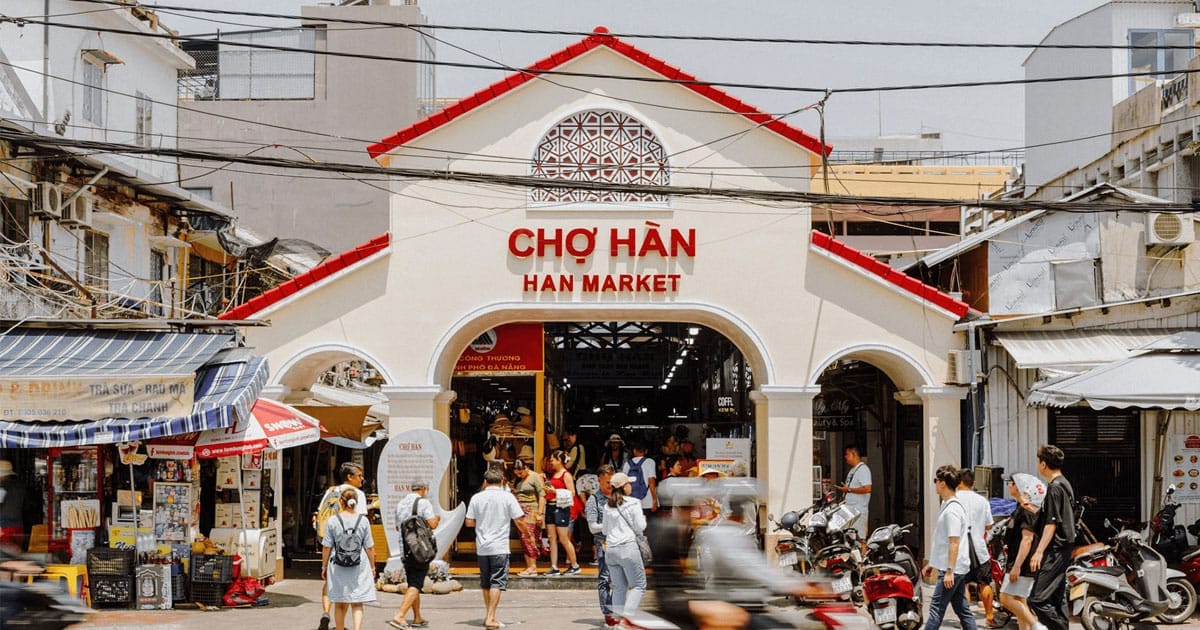
Han Market and Con Market are often placed on the same generic list, but they serve different traveler needs. Han Market is easier to fold into central sightseeing near the river and works well for visitors looking for souvenirs, dried products and a quick market experience. Con Market makes more sense when food and local market atmosphere are the priority.
You do not need to visit both unless markets are a genuine interest. Choosing one based on location and purpose saves time and prevents the common pattern of visiting two similar stops just because both appear on a list.
Eat Mi Quang, Bun Cha Ca and Da Nang Local Food
Food should be part of the itinerary rather than a separate evening project. Da Nang gives travelers access to Central Vietnamese staples such as mi Quang, bun cha ca and banh trang cuon thit heo, alongside seafood and a broad café culture.
The practical approach is to match food to where you already are. Use the city centre and markets for casual local dishes, the beach corridor for convenient dining near hotels, and the river area when you want dinner to lead naturally into an evening walk. This keeps meal planning from creating unnecessary cross-city transfers.
Walk the Han River and Bach Dang Waterfront
Bach Dang Street and the Han River waterfront are not attractions that require tickets or a fixed schedule, which is exactly why they are useful. They provide a low-effort transition between museums, cafés, dinner and the bridge area.
For first-time visitors, the riverfront is also a good orientation tool. Once you understand the river, the beach side to the east and the older city grid to the west, Da Nang becomes much easier to plan geographically.
Slow Down in Da Nang’s Coffee Culture
A café break can be more useful than adding another minor sight, especially during the hottest or wettest part of the day. Da Nang has everything from simple Vietnamese coffee shops to modern specialty cafés, and the city-centre and beach districts both make it easy to build a break into sightseeing.
Use coffee strategically: after a market, between a museum and the river, or during weather that makes an outdoor stop less appealing. A good Da Nang itinerary should have room to slow down instead of treating every hour as sightseeing inventory.
Experiences for Travelers Who Want More Than the City
Hai Van Pass: Choose It for the Journey and Views
Hai Van Pass is a scenic route rather than a single attraction. Its value comes from the changing coastal and mountain views as you move north from Da Nang, which makes it especially appealing to travelers who enjoy road journeys and landscape photography.
Because the route pulls you away from the city and toward the Hue direction, it should be planned as a deliberate outing. It is not an efficient add-on after a long southern route to Marble Mountains or Hoi An. If Hue is your next destination, the pass can also make more sense as part of the transfer north rather than a separate out-and-back sightseeing trip.
Beach Water Sports: Keep Them Flexible
Water sports can add variety to a beach day, but they should sit below weather and sea conditions in your planning hierarchy. Availability can change, and the fact that an activity is advertised near the beach does not mean it will run every day.
If a water activity matters to you, keep some flexibility in the schedule and confirm locally on the day rather than building the entire trip around a fixed beach session.
Han River Cruise: Best as an Evening Alternative, Not an Obligation
A Han River cruise gives you a different view of Da Nang’s illuminated bridges and skyline, but it is not essential for every visitor. Choose it if you enjoy being on the water or want a seated evening experience. Skip it if you would rather explore restaurants, cafés and the riverfront on foot.
If you are targeting a Dragon Bridge show night, check the current event schedule and cruise timing before booking. Avoid assuming that every boat or departure will provide the same view.
Non Nuoc Stone-Carving Heritage: Add It When You Are Already in the South
The Non Nuoc stone-carving area sits naturally in the Marble Mountains part of a Da Nang day. It is most worthwhile for travelers interested in craft traditions, workshops and the long relationship between the area and stone carving.
Its main planning advantage is location. If you are already visiting Marble Mountains, it can deepen the cultural context without sending you across the city. If you are not interested in craft or local production, there is no need to add it purely for completeness.
Da Nang Cathedral: Pair the Pink Church With Han Market
Da Nang Cathedral is one of the easiest cultural stops to add to a city-centre afternoon. Built in 1923, the Gothic-style church is widely known by travelers as the Pink Church and locally as the Rooster Church because of the rooster symbol above the steeple.
Look beyond the pink facade. The pointed arches, rose-window details and tall central tower give the church a very different architectural character from Da Nang’s pagodas and modern riverfront. Behind the church is a Marian grotto inspired by Lourdes, another feature that many quick photo stops miss.
The practical reason to include the cathedral is its location. Han Market is close enough that most visitors can walk between the two in about 5–7 minutes, so there is little reason to arrange separate transport for each stop. A simple sequence is Pink Church first, then Han Market, then continue toward the Han River and Dragon Bridge area for the evening.
Da Nang Cathedral remains an active Catholic church. Dress and behave respectfully, keep noise low around worshippers, and avoid treating a service as a sightseeing performance.
How to Combine Da Nang Attractions Without Wasting Half the Day
The biggest efficiency gain in Da Nang comes from grouping by geography. The city is not difficult to navigate, but repeated north-south and east-west crossings quickly turn an attractive itinerary into a transport-heavy one.
North and Northeast: Son Tra and Linh Ung Need a Transport Decision
Keep Son Tra-focused sightseeing together, but decide in advance whether you only want Linh Ung Pagoda at Bai But or a deeper peninsula ride. The first option fits much more easily into a wider sightseeing day. The second deserves extra time and a more careful vehicle choice because some upper roads are steep and some routes restrict automatic scooters.
If you ride independently, a semi-automatic underbone motorbike is the more practical local choice for steeper Son Tra roads than an automatic scooter. If you are not comfortable with steep riding, use a driver or keep the visit to the easier Linh Ung area instead of turning the peninsula into a riding challenge.
Central Da Nang: Pink Church, Han Market, Riverfront and Dragon Bridge
This is the most walk-and-short-transfer-friendly part of a first visit. Da Nang Cathedral and Han Market sit close enough to combine on foot, while the Han River, Dragon Bridge, Love Bridge and Son Tra Night Market create a natural continuation into the evening.
The Museum of Cham Sculpture also fits this central cluster, but do not add it automatically if you already have a full morning at Son Tra and Marble Mountains. On a long sightseeing day, the cathedral-and-market pairing is the easier afternoon stop before you slow the pace for the riverfront.
Beach Corridor: My Khe, Cafés and an Easy Evening
The beach side works well when you want a lower-intensity day. Use My Khe as the anchor, then add dining, coffee or the river at night. This is also a useful recovery day after Ba Na Hills or a longer road excursion.
South: Marble Mountains and Non Nuoc
Marble Mountains and Non Nuoc belong together geographically. Travelers continuing to Hoi An can also use this side of the city as a natural transition south, but Hoi An should still be planned as its own destination experience rather than another Da Nang attraction to tick off quickly.
Standalone Days: Ba Na Hills or a Dedicated Hai Van Outing
Ba Na Hills and Hai Van Pass each make more sense when they are treated as the main purpose of the day. Trying to combine one of them with Son Tra, Marble Mountains and multiple city stops usually creates more time in transit and less time enjoying the places you came to see.
Related Tours
 10 Hours

 3 Hours

A Practical First-Time Da Nang Day: Son Tra to Dragon Bridge
This route works well for travelers who want a broad first look at Da Nang in one long day without adding Ba Na Hills or Hai Van Pass. It is still a busy itinerary, so use well-planned transport and be willing to drop one stop if heat, rain or traffic slows the day.
- Morning — Linh Ung Pagoda at Bai But, Son Tra Peninsula: Start with the pagoda and coastal views while energy is high. If you are riding independently and plan to continue onto steeper Son Tra roads, use the vehicle guidance above rather than assuming an automatic scooter is suitable.
- Late morning — Marble Mountains and Non Nuoc: Continue south for caves, pagodas and viewpoints. This is the most physically demanding stop of the day, so do it before the city-centre walking section.
- Lunch: Take a proper break after Marble Mountains instead of treating lunch as another rushed transfer. The afternoon and evening are easier if you reset before returning to central Da Nang.
- Afternoon — Da Nang Cathedral, then Han Market: Visit the Pink Church first, then walk roughly 5–7 minutes to Han Market. The pairing is compact and avoids unnecessary transport between two central landmarks.
- Early evening — Dragon Bridge, Love Bridge and Son Tra Night Market: Move toward the river, walk around Love Bridge and use Son Tra Night Market for food or a casual browse while waiting for the bridge show.
- 9:00 p.m. — Dragon Bridge fire-and-water show on a confirmed show night: The regular verified schedule is Friday, Saturday and Sunday at 9:00 p.m., with selected holiday schedules. Check the official schedule for your date before relying on the show as the final stop.
This sequence is useful because the day gradually shifts from scenic and physically active stops to compact city sightseeing and then an easy evening around the river. If you prefer a slower trip, keep Son Tra and Marble Mountains on separate mornings rather than forcing every highlight into one day.
What Counts as Da Nang After the 2025 Administrative Merger?
This is now an important planning question. From July 2025, the new Da Nang municipality expanded through the merger of the former Da Nang and Quang Nam administrative areas. On a map of current administrative boundaries, places such as Hoi An and My Son fall inside the larger Da Nang municipality.
Travel search intent has not changed as quickly as administrative boundaries. International visitors still plan Hoi An as a heritage town experience and My Son as a separate archaeological excursion. For that reason, this guide keeps “things to do in Da Nang” focused on the traditional urban, beach, Son Tra and immediate surrounding travel area, while treating Hoi An and My Son as next-step excursions. This distinction prevents a city guide from becoming so broad that it stops being useful.
Choose Activities by Weather, Heat and Energy Level
Da Nang is easier to enjoy when you let conditions change the order of the day. On hot, clear days, put more exposed outdoor activities earlier or later and keep museums, markets, cafés and long lunches for the middle of the day. On wet days, reduce the number of scenic stops that depend on visibility and use the city centre more heavily.
- Clear morning: Son Tra, Marble Mountains or beach time before moving indoors later.
- Hot midday: museum, market, café or a slower meal rather than adding another exposed viewpoint.
- Rainy or low-visibility day: central culture, markets, food and cafés are usually more reliable than forcing a scenic route.
- Clear evening: Han River, Dragon Bridge area and the beachfront are easy to combine without long transfers.
Weather also changes mountain experiences. Ba Na Hills and Hai Van Pass can feel very different from the coast on the same day, so check conditions for the specific area rather than relying only on a city forecast.
Common Planning Mistakes in Da Nang
- Trying to visit every famous place in two days. Da Nang looks compact on a map, but Ba Na Hills, Hai Van Pass, Son Tra and Marble Mountains sit in different directions and serve different kinds of day.
- Using a ranking as an itinerary. The most popular attractions are not automatically the ones that combine well geographically.
- Doing exposed outdoor stops at the worst time of day. Shift flexible beach, viewpoint and climbing-style sightseeing away from the strongest heat when conditions allow.
- Taking an automatic scooter onto steep Son Tra routes without checking the road. A semi-automatic underbone motorbike is the better local choice for steeper sections, and some designated routes restrict automatic scooters.
- Arriving at Dragon Bridge too early with nothing planned. Use Love Bridge and Son Tra Night Market as part of the same evening, then return for the 9:00 p.m. show on a confirmed show night.
- Treating the expanded administrative city as one sightseeing zone. Hoi An and My Son may now be administratively within Da Nang, but they still deserve separate planning decisions.
- Adding both Han Market and Con Market without a reason. Choose the one that best matches your location and interest.
Nearby Attractions



Frequently Asked Questions About Things to Do in Da Nang
Q: What are the best things to do in Da Nang for a first-time visitor?
Q: How many days do you need in Da Nang?
Q: Is Hoi An part of Da Nang now?
Q: Can I visit Ba Na Hills and Marble Mountains on the same day?
Q: Can I explore Son Tra Peninsula by scooter?
Q: When does Dragon Bridge breathe fire and water?
Q: What should I do in Da Nang when it rains?
A Better Way to Plan Da Nang
The best Da Nang trip is not the one with the longest attraction list. It is the one that matches the city’s geography to your interests: coast when you want to slow down, Son Tra or Hai Van when scenery matters, Marble Mountains and Cham heritage when culture matters, and the Han River when you want an easy evening.
Start with two or three experiences that genuinely matter to you, group nearby stops around them, and keep enough flexibility for heat, rain, mountain cloud or changing access rules. That approach gives Da Nang room to feel like a destination rather than a sequence of transfers between pins on a map.
Practical travel planning and local operations knowledge for Central Vietnam.
About our local teamRelated Travel Guides


Planning a Da Nang trip?
Tell us your travel dates, destinations and group size. Our local team can help you plan the next practical step.
Plan My Trip