

Plan the Ngo Dong River boat and Bich Dong Pagoda as two different halves of one Ninh Binh visit.
Tam Coc Bich Dong: Boat Ride, Tickets & Visitor Guide
A Great choice for Central VietNam Tour
Share your details and our travel experts will call you back with personalized packages.
We'll call you soon


An amazing journey to explore local culture awaits you
QUICK FACTS
Rating Score: 4.5☆(2,655)GoogleMap

What Makes Tam Coc–Bich Dong Worth Planning Properly
- Rice fields grow directly beside the river: Tam Coc feels most distinctive when the seasonal crop becomes part of the landscape rather than just a background to limestone cliffs.
- Three caves punctuate one continuous river journey: Hang Ca, Hang Hai and Hang Ba are part of the same out-and-back boat experience rather than separate route choices.
- Bich Dong changes the pace completely: after sitting low in the sampan, you move onto stone paths and stairs through a Buddhist complex built into the karst slope.
- Late May to early June can transform the photography: the Ngo Dong rice fields turn yellow before harvest, creating the best-known seasonal view of Tam Coc.
- The experience is simpler than Trang An but more season-sensitive: you do not need to choose among multiple boat routes, but the quality of the rice landscape changes much more visibly through the year.
Opening hours:
Tam Coc visitor/boat area: 07:30–17:00. Bich Dong Pagoda: 07:30–16:30. These are current public operating listings; the final Tam Coc boat departure may be earlier than the site closing time, so confirm locally before a late-afternoon arrival.Entrance Ticket:
250,000 VNDStart with the Ngo Dong River While the Day Is Still Cool
For most travelers, the boat should come first.
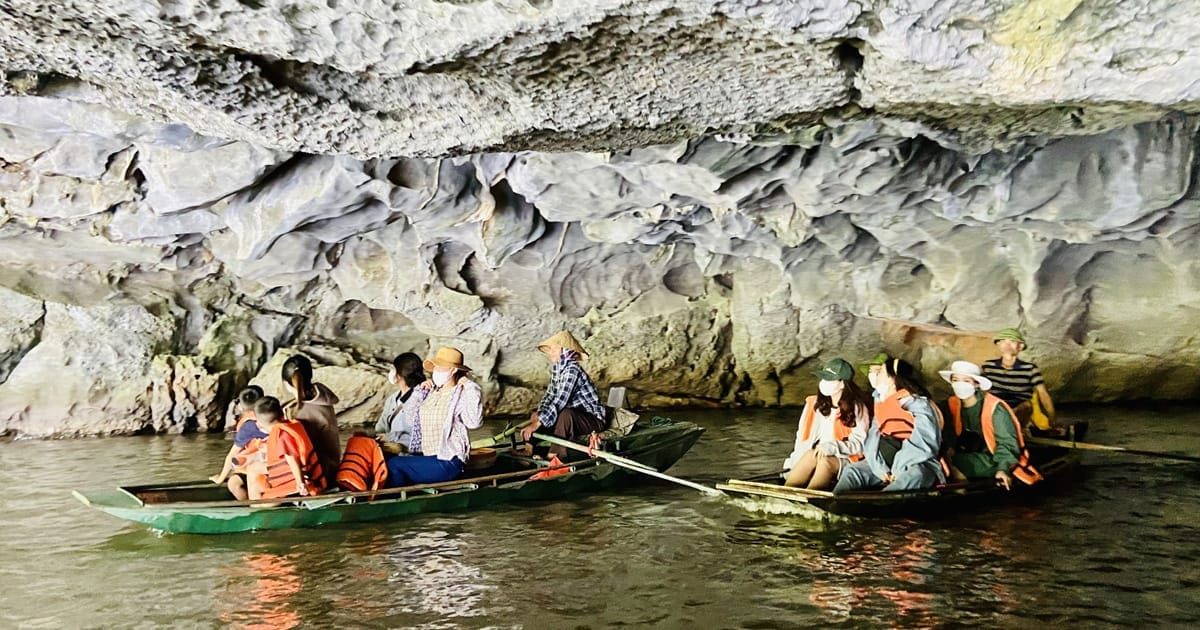
The Tam Coc journey is exposed for much of its length, and the sampan gives limited shade. Starting earlier gives you cooler conditions, softer light and more flexibility before moving on to Bich Dong.
The current public listing for the Tam Coc visitor area is 07:30–17:00. Because the boat itself can take around 1.5–2 hours, do not interpret 17:00 as a guaranteed last-boat departure. If you arrive late in the afternoon, confirm the final boarding time before buying or arranging anything else.
Understand the 250k and 350k Ticket Before You Arrive
The published 2026 adult price for the Tam Coc–Thai Vi–Tien Cave–Bich Dong sightseeing route is 250,000 VND without electric-shuttle transport.
A second adult option is 350,000 VND with electric-shuttle service included. For children from 1 metre to 1.3 metres, the corresponding published prices are 120,000 VND and 190,000 VND; children under 1 metre are free.
The practical point is to ask what your ticket includes before you move away from the sales area. Recent visitor reports show that ticketing and electric-shuttle directions can feel less obvious than expected when the site is busy.
The Three Caves Are Simple — the Rice Corridor Is the Real Variable
Tam Coc literally means “three caves”, and the boat passes through Hang Ca, Hang Hai and Hang Ba.
Unlike Trang An, you are not choosing among several cave-heavy routes. The larger visual difference from one Tam Coc visit to another is often the condition of the rice fields lining the Ngo Dong River.
Outside the rice season, the same limestone scenery remains attractive, but the valley can look very different from the golden images used in tourism campaigns.
Choose Late May to Early June for the Golden Rice Landscape
If photography is a major reason for choosing Tam Coc over another Ninh Binh boat trip, timing matters.
The local tourism calendar identifies late May into early June as the golden-rice period, when fields beside the Ngo Dong River mature before harvest.
This is also a popular period, so the trade-off is straightforward: better seasonal colour usually means more visitors. Go early if you want the best chance of combining golden fields with calmer water and less boat traffic.
Keep Your Camera Ready — but Not at the Expense of Balance
The river is narrow enough that the limestone cliffs and rice fields often feel close to the boat, which makes a phone camera surprisingly effective.
The most useful photo strategy is to work with the direction of the river rather than constantly turning around in a small sampan. Secure your phone when entering the caves and avoid leaning far over the side for a lower angle.
If you use a larger camera, keep it in a small protective bag between shots. The combination of water, cramped seating and other boats passing nearby makes an open camera bag less practical than it looks from shore.
Use the Toilet Before You Board
The Tam Coc visitor area has public visitor facilities, including restrooms, and current location listings also confirm toilets around the main tourism zone.
Use them before joining the boat queue. Once you are on the Ngo Dong River, the trip is continuous enough that a toilet break is not something to plan around.
This is one of those small decisions that matters more than another paragraph about limestone scenery when the boat ride lasts close to two hours.
Parking Is Available, but Check the Posted Fee
The Tam Coc tourism zone has formal parking around the visitor and boat-wharf area, so arriving by motorbike, car or private driver is straightforward.
What is less reliable online is the exact parking price. Do not treat an old review or photo of a fee board as current policy. Use the designated parking area and confirm the displayed fee when you arrive.
The same caution applies at Bich Dong, where visitor reviews sometimes disagree about parking charges or informal collection practices. Use clearly designated parking and ask for the current posted price rather than arguing from an old online comment.
Souvenirs and Tips Are Separate from the Official Ticket
Some recent travelers report being offered embroidery, small souvenirs or being asked for a gratuity by individual boat rowers near the end of the trip.
These interactions vary by boat and should not be confused with the official sightseeing ticket. If you do not want to buy something, a polite refusal is enough. A gratuity is a personal decision rather than a second admission fee.
Knowing this in advance is useful because it prevents an optional interaction at the end of an otherwise quiet boat ride from feeling like an unexpected charge.
Move to Bich Dong for a Completely Different Second Half
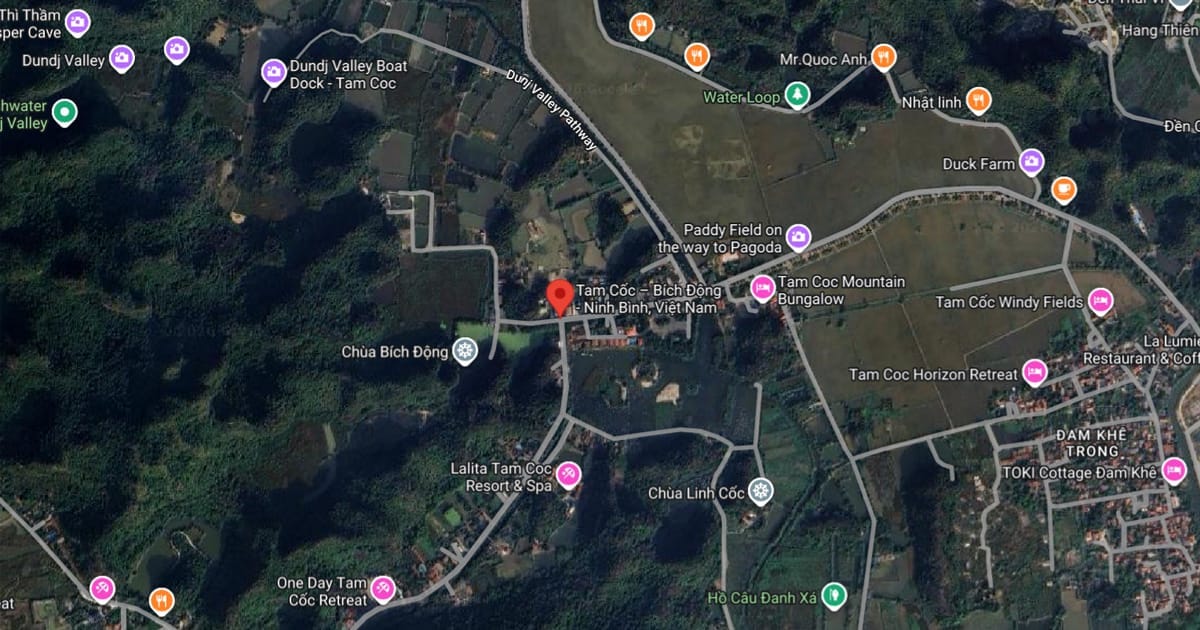
Bich Dong is not a continuation of the boat route. Treat it as a fresh visit after leaving Tam Coc.
The current public listing for Bich Dong Pagoda is 07:30–16:30, which is slightly earlier than the Tam Coc visitor-area closing time. If you want both experiences on the same day, do not leave the pagoda until the very end of the afternoon.
The pagoda complex rises through three levels — Ha, Trung and Thuong — with part of the architecture integrated into the limestone and cave environment.
Wet Stone Steps Matter More Than the Number of Stairs
Bich Dong is not a technical hike, but the experience involves uneven stone steps and climbing between pagoda levels.
After rain, stone and shaded surfaces can become slick. Shoes with useful grip make more difference here than fashionable footwear chosen for photographs.
The contrast with Tam Coc is important for families and older travelers: sitting in a boat for close to two hours and then climbing damp stone steps can be tiring even though neither activity seems difficult on its own.
Dress for a Pagoda, Not Only for a Boat Ride
A light outfit works well on the river, but Bich Dong remains an active Buddhist heritage site.
Choose clothing that is comfortable in the heat while still appropriate for entering temple spaces. This avoids having to plan a clothing change between two attractions that are commonly visited together.
Tam Coc and Trang An Are Not Interchangeable Boat Trips
If you are deciding between them, think about what you want to remember.
Tam Coc is the stronger choice when the seasonal rice landscape, open river corridor and a simpler out-and-back boat journey appeal to you. Trang An places more emphasis on choosing among cave-and-temple routes through enclosed karst valleys.
Doing both is worthwhile for travelers with enough time, but they should not be described as duplicate versions of the same experience.
Best Time for the Boat, Rice Fields and Pagoda
Early morning is the most practical time for the Tam Coc boat because the temperature is lower, the light is softer and you have more margin before the final departures.
If the classic golden-rice scenery is your priority, target late May to early June. The fields along the Ngo Dong River normally reach their strongest yellow colour around this pre-harvest period.
For Bich Dong, avoid leaving the visit too late: its current public listing closes at 16:30, and damp stone steps are easier to handle with good daylight.
From a River Landscape to a UNESCO Cultural Landscape
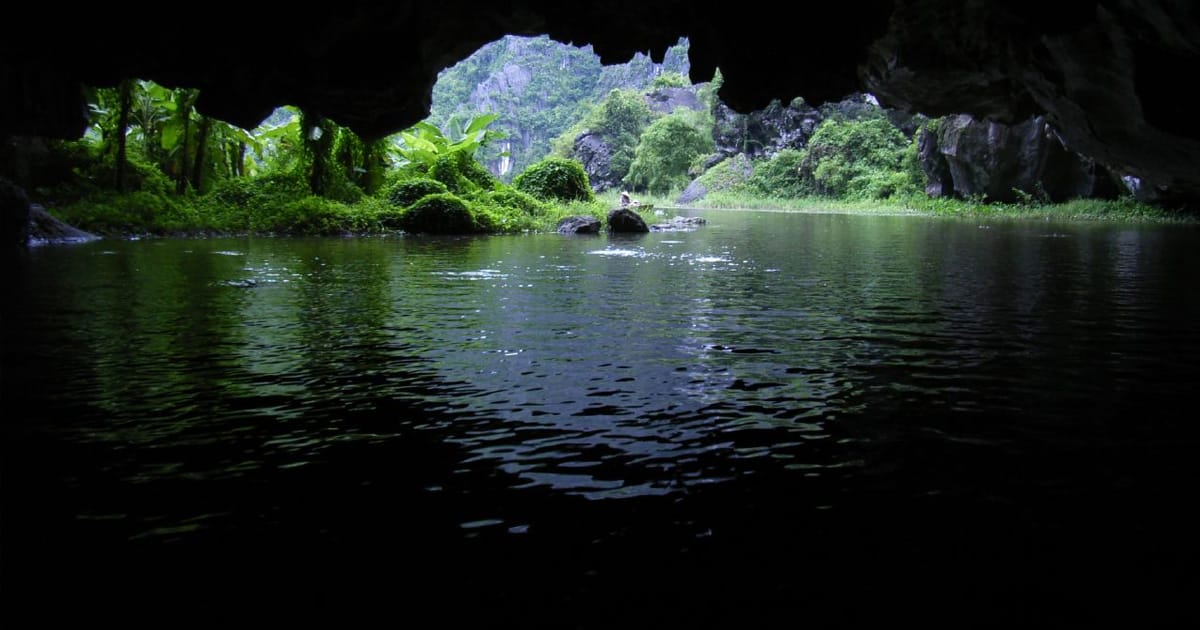
Tam Coc–Bich Dong belongs to the Trang An Landscape Complex, which UNESCO inscribed in 2014 as a mixed cultural and natural World Heritage property.
The Ngo Dong River cuts through a limestone karst landscape where water, caves, farmland and settlement have developed together rather than as isolated scenic elements.
Bich Dong adds a religious layer to that landscape. Its pagoda complex climbs through lower, middle and upper levels on the limestone slope, showing how Buddhist architecture was adapted to the same caves and karst formations that define the surrounding scenery.
For visitors, this is why the combined attraction works best when the river and pagoda are treated as related landscapes but different experiences.
Small Choices That Make Tam Coc–Bich Dong Easier
- Go early for the boat. Morning gives better heat, light and queue margin than starting close to the end of the operating day.
- Know which ticket you are buying. The published 2026 adult options are 250,000 VND without the electric shuttle and 350,000 VND with it.
- Use the restroom before boarding. Do not count on interrupting a 1.5–2 hour boat ride for a toilet stop.
- Protect your phone or camera. A small waterproof pouch is more useful than carrying a large loose bag in the sampan.
- Treat tips and souvenirs as optional. They are separate from the official sightseeing ticket.
- Do Bich Dong before its current 16:30 closing time. The pagoda closes earlier than the current 17:00 listing for the Tam Coc visitor area.
- Wear shoes with grip after rain. Bich Dong’s shaded stone steps can be slippery when wet.
Why Travel With Us?
Tailored to You: Custom itineraries matching your exact pace and passions.
Go Local: Authentic experiences guided by native experts.
Zero Stress: We handle all logistics—transport, tickets, and stays.
24/7 Support: Round-the-clock local assistance, whenever you need it.
Exceptional Value: Premium quality at fair, transparent prices.
Nearby Attractions


Let's plan your next vacation
A hundred years from now, no one in this world will remember you or me. We only come to this world once — to leave our footprints on new lands and to etch every moment deep into our memory.
Live for the experience. Start your journey today — book your tour and make memories that last a lifetime!
View Our Business & Travel Licenses
Book your holidayGallery
FAQ
Q: How much is the Tam Coc–Bich Dong ticket in 2026?
Q: What are the Tam Coc opening hours?
Q: What are Bich Dong Pagoda opening hours?
Q: How long does the Tam Coc boat ride take?
Q: When are the rice fields at Tam Coc golden?
Q: Are there toilets at Tam Coc?
Q: Is parking available at Tam Coc and Bich Dong?
Q: Is tipping the Tam Coc boat rower mandatory?
BOOKING

Phong Nha–Ke Bang Named Asia’s Leading National Park 2026
Phong Nha–Ke Bang won Asia’s Leading National Park 2026 and Vietnam’s Leading Nature Destination 2026. [...]
Sep

Hue to Dong Hoi by Train: Schedules, Tickets & Phong Nha Connection
Choose the right Hue–Dong Hoi train by arrival window, seat or berth, luggage, HQ2 vs [...]
Sep

Da Nang to Phong Nha: Bus, Train, Private Car & Best Route
Compare direct buses, train via Dong Hoi, private cars and Da Nang Airport connections by [...]
Sep

Hue to Phong Nha: Bus, Train, Private Car & Best Way to Travel
Compare direct buses, Hue Northern Bus Station coaches, the HQ1/HQ2 heritage train, Grab and private [...]
Sep

Da Nang vs Hue: Which City Should You Stay In?
Compare Da Nang and Hue by trip anchor, daily pace, usable nights and transfer friction [...]
Sep

Hoi An Lantern Festival Guide: 2026 Dates & Evening Plan
Plan Hoi An's monthly Lantern Festival around the 14th lunar night, verified 2026 dates, an [...]
Sep

Hoi An Tailor Guide: What to Make, Fittings & Buying Tips
Learn how to get clothes made in Hoi An: choose a tailor, compare fabrics and [...]
Sep

Where to Stay in Hue: Best Areas by Trip Style
Compare the best areas to stay in Hue, from the central south bank and Citadel [...]
Sep
Let's get in touch!