

A large Buddhist complex where route planning matters more than simply following the crowd.
Bai Dinh Pagoda: Electric Car, Ancient Pagoda & Visitor Guide
A Great choice for Central VietNam Tour
Share your details and our travel experts will call you back with personalized packages.
We'll call you soon


An amazing journey to explore local culture awaits you
QUICK FACTS
Rating Score: 4.9☆(25,441)GoogleMap
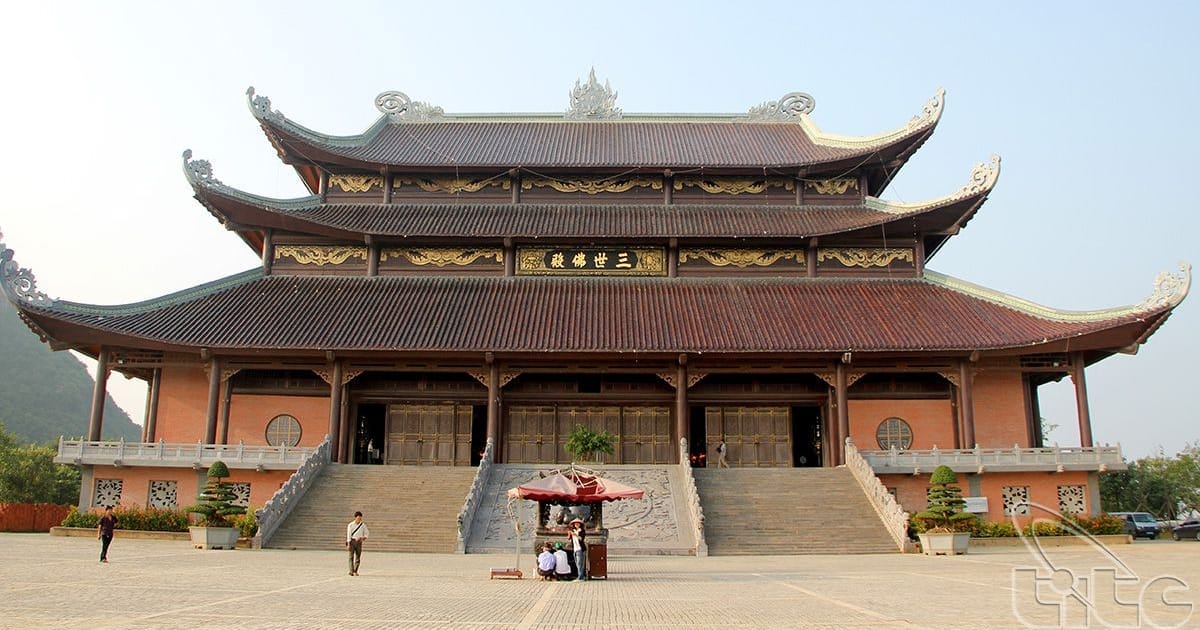
What Makes Bai Dinh Different from Other Ninh Binh Temples
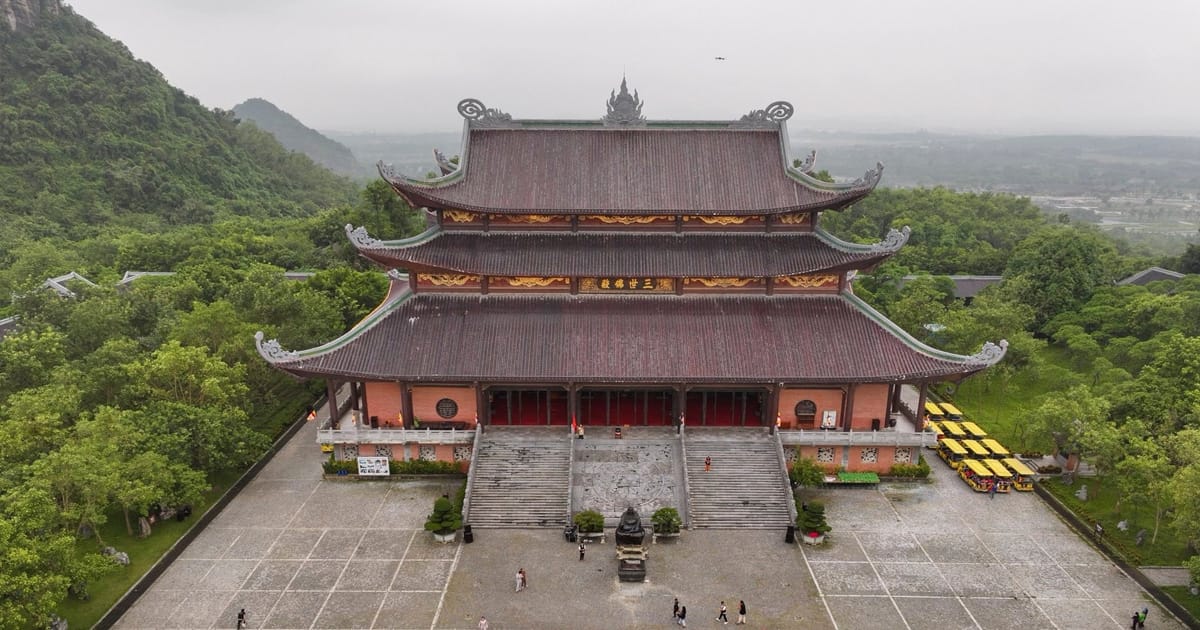
- Scale: the modern complex is spread across a broad hillside campus, so the visit feels more like moving through a religious precinct than entering one pagoda.
- Arhat Corridor: the long covered passage lined with stone Arhat statues creates one of the clearest processional experiences in the complex.
- Bao Thien Stupa: the 13-storey tower gives the most useful overview of how the halls, courtyards and surrounding karst landscape fit together.
- Ancient Bai Dinh: the older cave-and-hillside section adds a quieter historical layer that feels completely different from the monumental modern campus.
- Festival atmosphere: during the early lunar-year pilgrimage season, Bai Dinh changes from a spacious architectural visit into a much busier religious gathering place.
Opening hours:
07:00–18:00 daily.Entrance Ticket:
Free admissionDecide How Much Walking You Want Before Buying the Electric-Car Ticket
Do not wait until you are tired to think about transport.
The new Bai Dinh complex is large enough that the electric car can change the character of the visit. From 15 February 2026, the published round-trip electric-car fare is 150,000 VND per adult and 100,000 VND for children from 1 metre to 1.3 metres.
A second adult package is listed at 300,000 VND, combining internal electric transport with Bao Thien Stupa access and a foot-soak service. This is a service package rather than an entrance fee to the pagoda itself.
If the weather is cool and you enjoy walking, you can skip some transport and take more time along the ceremonial routes. In hot or humid weather, or for older travelers, the electric car can preserve energy for the parts that still require walking.
Follow the New Pagoda from the Arhat Corridor Upward
The modern complex makes the most sense when you treat it as a progression rather than a checklist of record-sized structures.
Move through the main entrance zone toward the Arhat Corridor, then continue through the bell tower and major worship halls. The long route helps explain why visitors who arrive expecting a quick temple stop often underestimate the time required.
Do not rush every hall simply because they are large. The better approach is to notice how the courtyards, corridors and stairs create a gradual ascent through the complex.
Use Bao Thien Stupa to Understand the Scale
Bao Thien Stupa is one of the few places where the full layout becomes visually clear.
The tower rises 13 storeys and provides a high viewpoint over the pagoda complex and surrounding limestone landscape. If photography matters to you, this is more useful than trying to photograph the whole campus from ground level.
The best images are usually not just wide panoramas. Look for the relationship between temple roofs, the long axes of the complex and the karst hills beyond.
Do Not Leave Without Knowing There Is an Ancient Bai Dinh
The modern complex dominates most photographs, but Ancient Bai Dinh is a separate historical experience.
The older sacred area sits on the mountain and includes cave spaces associated with Buddhist and local religious worship. It is reached by climbing more than 300 stone steps.
If you are interested in history or religious continuity, this section often adds more depth than another large modern hall. If your priority is convenience, photography or limited walking, it is reasonable to focus on the modern complex instead.
The Ancient Pagoda Adds 300+ Steps and a Different Atmosphere
Ancient Bai Dinh is not simply a smaller version of the new pagoda.
The route includes Bright Cave, Dark Cave and the shrine associated with Saint Nguyen, with the mountain itself shaping the sacred spaces. The atmosphere is more enclosed and intimate than the wide plazas of the modern complex.
Because of the stairs, this section should be treated as a separate physical commitment. Travelers with knee, balance or mobility issues should not assume that taking the electric car makes the entire attraction easy.
Use the Service Hubs for Toilets and Rest Stops
Current visitor information and recent traveler feedback confirm that restrooms and service facilities are available around the complex, including the reception and transport areas.
Use them before starting a long walking section rather than assuming every hall will have nearby facilities. The complex is large enough that backtracking for a toilet can waste more time than expected.
Carry water as well. Drinks and services are available in visitor areas, but the distance between stops can feel longer during the hottest part of the day.
Parking Is Easy Once You Understand the Arrival Flow
Bai Dinh has large parking areas designed for high visitor volumes, especially during festival periods.
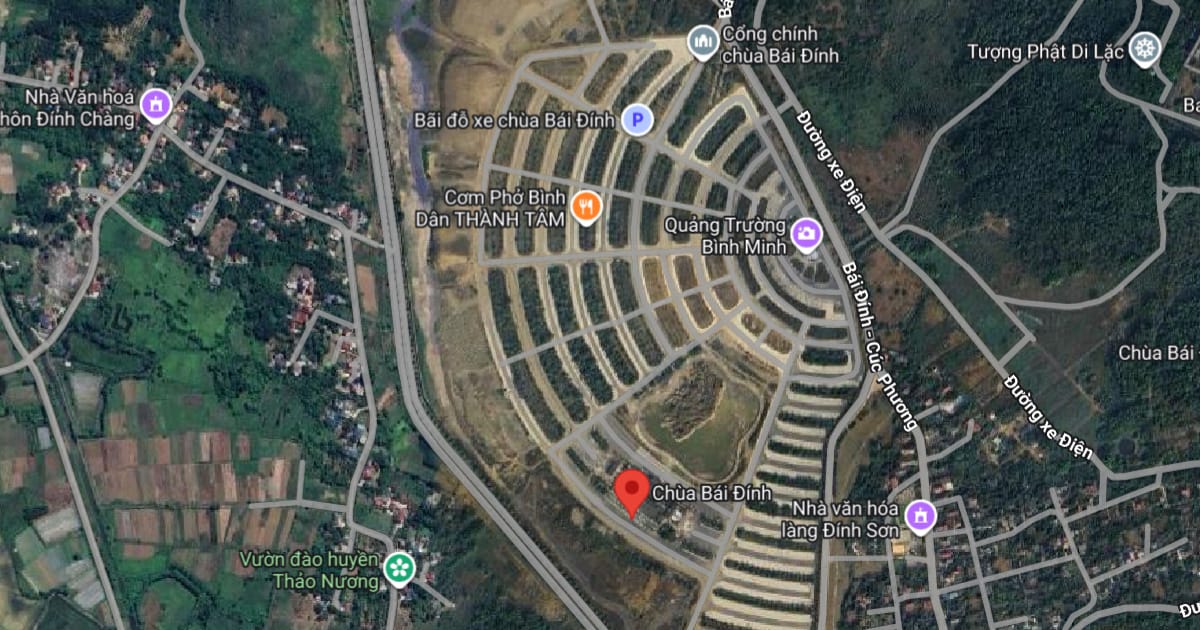
The important planning detail is that the parking and reception area is separate from the main religious complex. After leaving your vehicle, you still need to decide whether to continue by electric car or on foot.
This is why travelers should not judge the remaining walking distance from the car park alone. Follow the official visitor reception flow first, then choose transport based on the route you actually want to cover.
Festival Season Changes the Experience Completely
Bai Dinh is both a tourist attraction and a major pilgrimage site.
The annual festival opens on the sixth day of the first lunar month, and visitor numbers around the Tet period can be extremely high. The same courtyards that feel spacious on an ordinary weekday can become crowded with pilgrims, tour groups and religious activity.
If your goal is quiet architecture, easy photography and less waiting, visit on a weekday morning outside the main festival period. If your goal is to witness pilgrimage culture, the busy season offers a different experience but requires more patience.
What to Photograph Beyond the Giant Buddha
The most useful photography plan has three layers.
First, use the Arhat Corridor for strong leading lines and repeating stone figures. Second, photograph the main halls for scale and ceremonial architecture. Third, use Bao Thien Stupa for the panorama that shows how the entire complex sits within the Ninh Binh landscape.
Late afternoon light can be attractive, but the current closing time is 18:00. Do not plan a long sunset session so late that you still have significant walking or transport to complete before leaving.
When 3 Hours Is Enough — and When It Is Not
Three hours can work if you use the electric car, focus on the main modern complex and keep stops reasonably short.
Allow closer to 4 hours if you want Bao Thien Stupa, a slower walk through the main halls and time for photographs.
If you also include Ancient Bai Dinh, climb the 300-plus steps and spend time in the cave sanctuaries, a longer half-day visit is more realistic. Recent visitors who explore slowly often spend well beyond three hours even when they use electric transport.
Best Time for Walking, Photography and Fewer Crowds
Weekday mornings outside the main lunar-new-year festival season are the easiest time for most independent visitors.
Morning reduces heat on the long walking routes and makes it easier to photograph the Arhat Corridor and major courtyards before large tour groups arrive.
The early-year festival period offers stronger pilgrimage atmosphere but much heavier visitor numbers. Late afternoon can give warmer light, but the current 18:00 closing time limits how late you can remain in the complex.

Two Bai Dinhs in One Religious Complex
Bai Dinh is best understood as two historical layers.
Ancient Bai Dinh is associated with a much older sacred landscape on the mountain, where cave spaces and local religious traditions developed around the hillside.
The new Bai Dinh complex began developing in the early 2000s on a much larger scale, with monumental halls, long corridors, courtyards and Bao Thien Stupa.
Seeing both layers explains why Bai Dinh can feel simultaneously historic and very new. The modern architecture provides scale and ceremonial space, while the ancient section preserves the older mountain-based religious character.
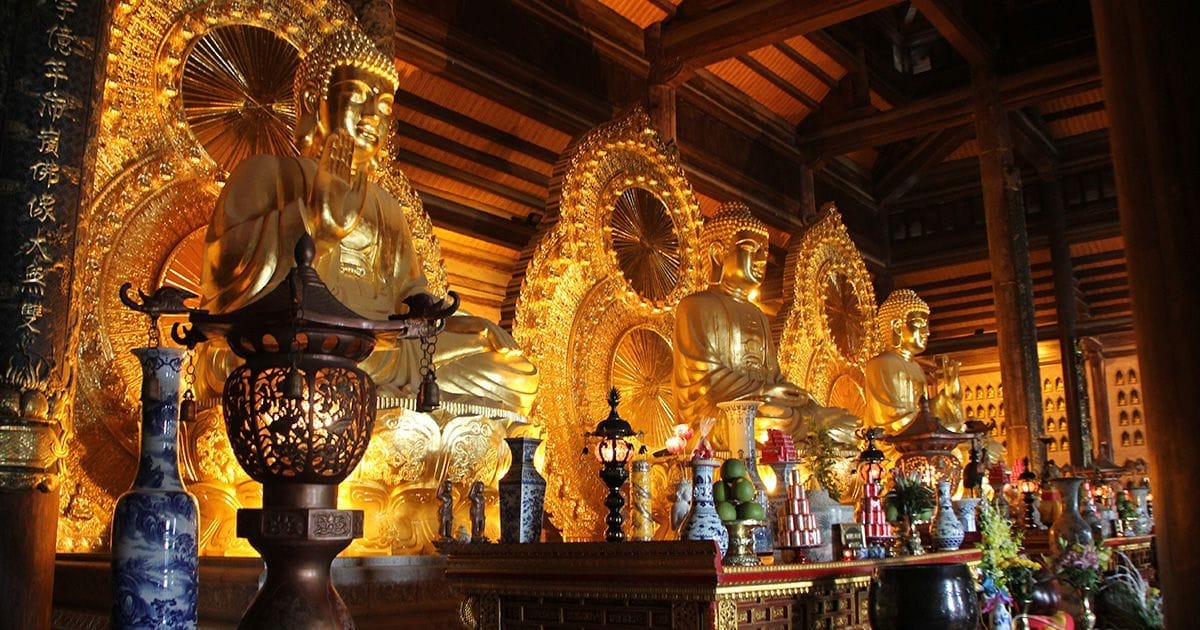
Practical Decisions That Save Time and Energy
- Choose transport before you start. The 150,000 VND round-trip electric-car ticket is most useful in hot weather, for older travelers or when your itinerary is tight.
- Do not confuse free entry with a free visit. Pagoda admission is free, but electric cars and optional service packages cost extra.
- Use a toilet before a long walking section. Facilities are available around service hubs, but the complex is too large to assume one is always close.
- Carry water and sun protection. Much of the modern complex involves exposed walking between large halls and courtyards.
- Allow extra time for Ancient Bai Dinh. The old section adds more than 300 steps and should not be squeezed into the final 20 minutes.
- Visit outside festival season for easier photography. Early lunar-year pilgrimage crowds can dramatically change walking speed and queue conditions.
Why Travel With Us?
Tailored to You: Custom itineraries matching your exact pace and passions.
Go Local: Authentic experiences guided by native experts.
Zero Stress: We handle all logistics—transport, tickets, and stays.
24/7 Support: Round-the-clock local assistance, whenever you need it.
Exceptional Value: Premium quality at fair, transparent prices.
Nearby Attractions


Let's plan your next vacation
A hundred years from now, no one in this world will remember you or me. We only come to this world once — to leave our footprints on new lands and to etch every moment deep into our memory.
Live for the experience. Start your journey today — book your tour and make memories that last a lifetime!
View Our Business & Travel Licenses
Book your holidayGallery
FAQ
Q: Is Bai Dinh Pagoda free to enter?
Q: What are Bai Dinh Pagoda opening hours?
Q: How much is the Bai Dinh electric car in 2026?
Q: How long should I spend at Bai Dinh Pagoda?
Q: Are there toilets at Bai Dinh Pagoda?
Q: Is Bai Dinh Pagoda suitable for older travelers?
Q: When is Bai Dinh Pagoda most crowded?
BOOKING

Phong Nha–Ke Bang Named Asia’s Leading National Park 2026
Phong Nha–Ke Bang won Asia’s Leading National Park 2026 and Vietnam’s Leading Nature Destination 2026. [...]
Sep

Hue to Dong Hoi by Train: Schedules, Tickets & Phong Nha Connection
Choose the right Hue–Dong Hoi train by arrival window, seat or berth, luggage, HQ2 vs [...]
Sep

Da Nang to Phong Nha: Bus, Train, Private Car & Best Route
Compare direct buses, train via Dong Hoi, private cars and Da Nang Airport connections by [...]
Sep

Hue to Phong Nha: Bus, Train, Private Car & Best Way to Travel
Compare direct buses, Hue Northern Bus Station coaches, the HQ1/HQ2 heritage train, Grab and private [...]
Sep

Da Nang vs Hue: Which City Should You Stay In?
Compare Da Nang and Hue by trip anchor, daily pace, usable nights and transfer friction [...]
Sep

Hoi An Lantern Festival Guide: 2026 Dates & Evening Plan
Plan Hoi An's monthly Lantern Festival around the 14th lunar night, verified 2026 dates, an [...]
Sep

Hoi An Tailor Guide: What to Make, Fittings & Buying Tips
Learn how to get clothes made in Hoi An: choose a tailor, compare fabrics and [...]
Sep

Where to Stay in Hue: Best Areas by Trip Style
Compare the best areas to stay in Hue, from the central south bank and Citadel [...]
Sep
Let's get in touch!