

A vast royal landscape of tombs, pine-covered hills and quiet roads.
Gia Long Tomb: History, Cycling & Visitor Guide
A Great choice for Central VietNam Tour
Share your details and our travel experts will call you back with personalized packages.
We'll call you soon


An amazing journey to explore local culture awaits you
QUICK FACTS
Rating Score: 4.7☆(1,421)Google
Highlights
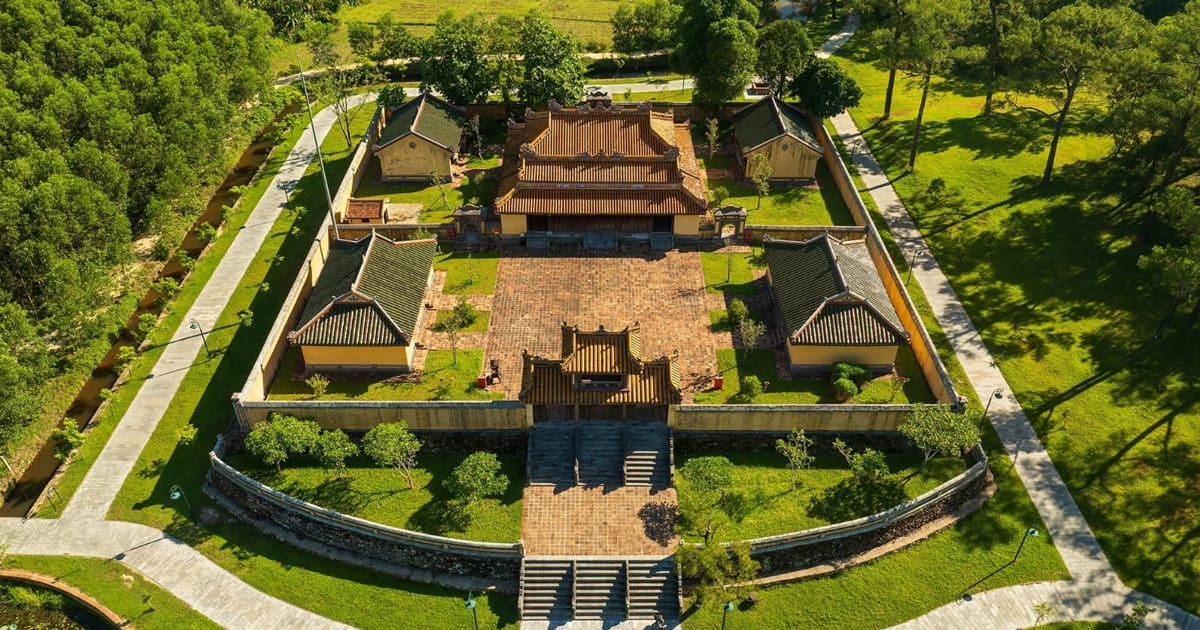
- See the unusually simple paired tombs of Emperor Gia Long and Thua Thien Cao Hoang Hau, placed side by side within the central burial area.
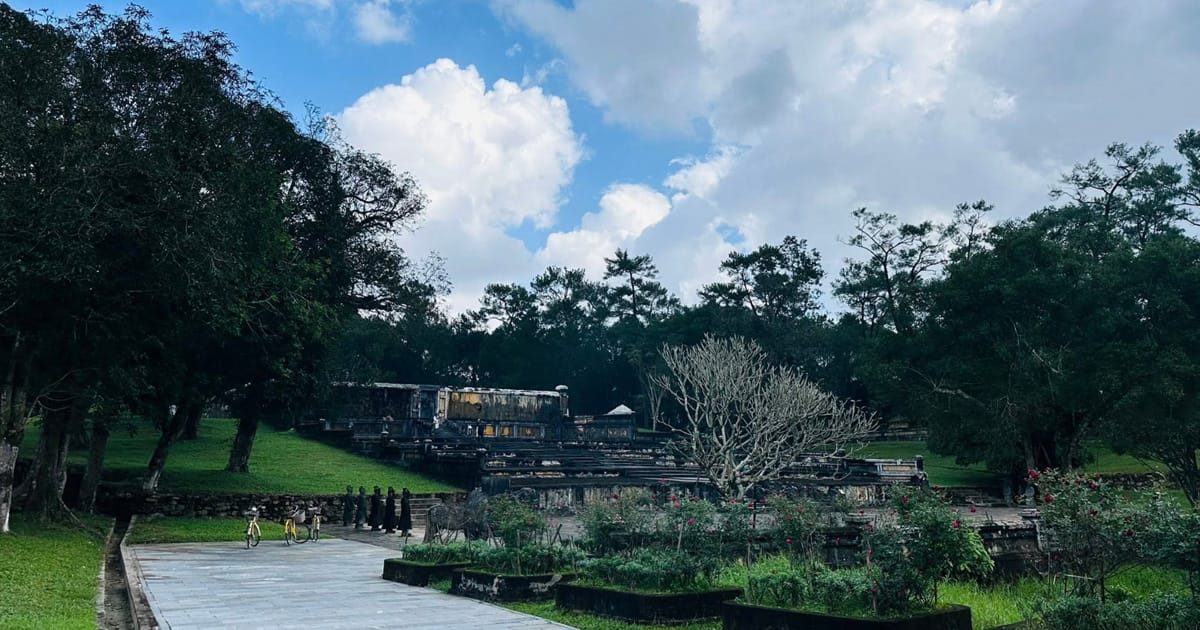
- Experience one of Hue’s most landscape-driven royal complexes, where hills, pine trees and open space matter as much as individual buildings.
- Explore by bicycle rather than treating the site only as a walk from the ticket gate to the emperor’s grave.
- Visit Minh Thanh Temple, the principal worship space associated with Gia Long and his first empress.
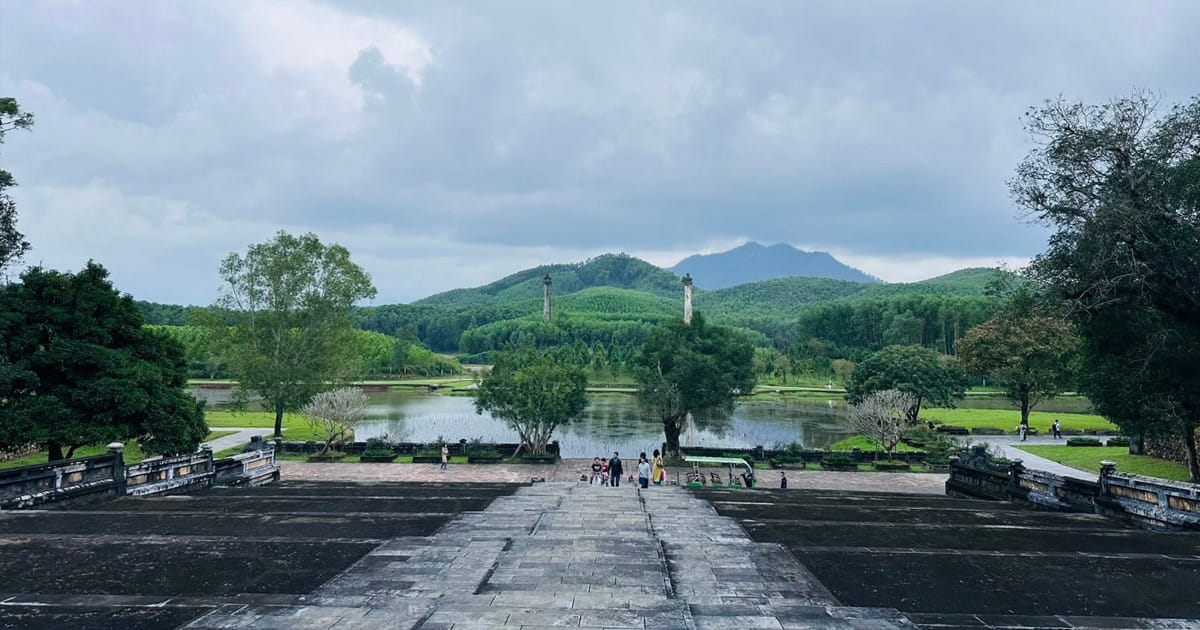
- Walk through the stone ceremonial area and stele landscape while looking outward toward the surrounding hills instead of focusing only on architectural details.
Opening hours:
March 16–October 15: 06:30–18:00. October 16–March 15: 07:00–17:30. Ticket sales end 30 minutes before closing.Entrance Ticket:
150,000 VNDRelated Tours
 Half Day
 Full Day
 3.5 Hours

Do not treat Gia Long as a tomb you simply walk into and out of
At Gia Long, getting from one part of the complex to another is part of the attraction.
Private visitor vehicles are left in the designated parking area, about 900 metres from Minh Thanh Temple. From there, visitors can walk or use internal electric-vehicle and bicycle services.
This distance is not a problem if you know about it before arriving.
In fact, the approach road is one of the most pleasant parts of the site. The surrounding hills, trees and open views gradually replace the normal traffic and urban scenery of Hue. That transition helps explain why the tomb feels more isolated and solemn than its distance from the city would suggest.
For many visitors, a bicycle is the best way to experience the site
If the weather is comfortable and you are happy cycling, Gia Long is one of the Hue tombs where renting a bicycle genuinely changes the visit rather than functioning as a novelty.
The reason is simple: the spaces between attractions matter.
Instead of sitting inside an electric vehicle and moving directly between stops, a bicycle allows you to slow down on the quieter stretches, stop when the landscape opens up and photograph the tomb from different distances.
During a CVT visit in April 2026, the observed bicycle rental was around 30,000 VND for 90 minutes, while an electric-vehicle transfer was quoted at around 20,000 VND per person each way. Treat those numbers as recent local reference prices, not permanent tariffs.
Older CVT observations recorded lower bicycle rates, which is why rental prices are better kept out of Quick Facts as fixed visitor data.
Walking is possible, but know what you are choosing
You do not need to rent anything.
If you enjoy quiet walks, the approach can be a good way to enter the complex.
But understand the scale before choosing it. Walking from the parking area into the principal zones and then continuing among the wider monuments adds considerably more distance than simply walking around the central tomb itself.
For older travelers, families with very young children or anyone visiting during strong heat, the electric transport may be a better practical choice.
Photograph the site map before you start
This is another place where the simple habit of photographing the entrance map can save time.
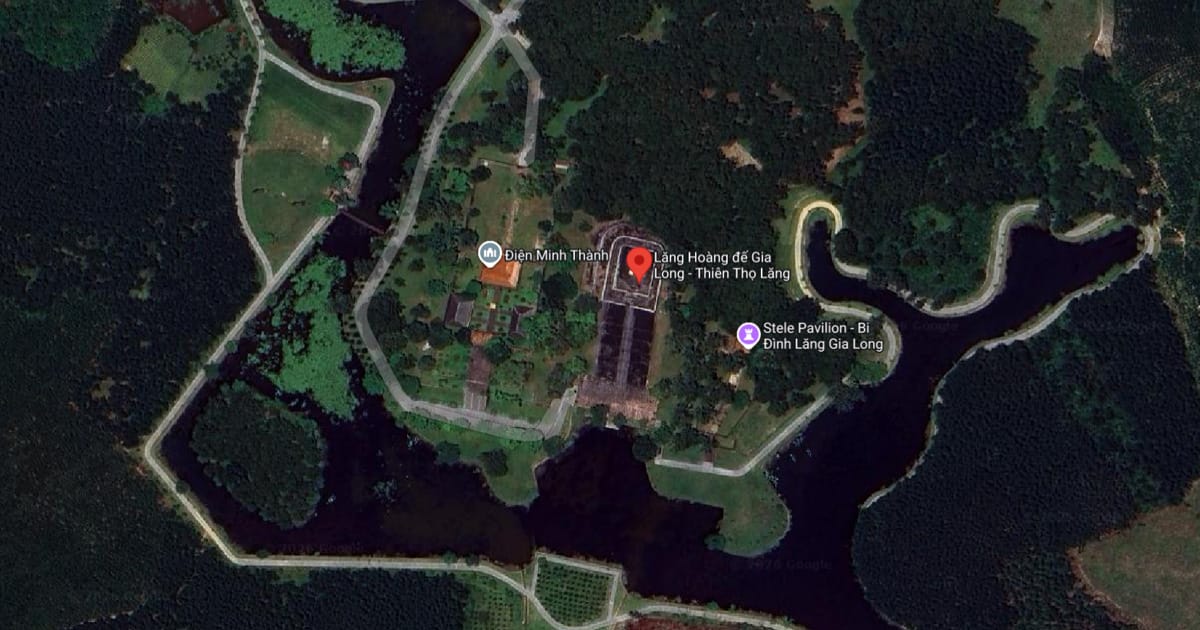
Gia Long is a wider burial landscape containing several historically related but physically separated zones. Having the map on your phone helps you understand whether you are looking at the emperor’s burial area, a worship building or another royal-family tomb.
It also reduces the temptation to follow whichever road happens to look attractive and then wonder later which part of the complex you missed.
The paired tombs are simple because the landscape does the work
Visitors expecting elaborate decoration may initially find the emperor’s burial area surprisingly restrained.
That is part of the point.
The two stone graves of Gia Long and Thua Thien Cao Hoang Hau sit beside one another within the burial enclosure.
Stand back before moving close to the tombs.
The stronger composition is not one decorative detail. It is the tomb platform, stone figures, open terrain and mountains beyond it.
This is why photographs from Gia Long often work better when you include much more landscape than you normally would at a royal monument.
Minh Thanh Temple changes the tone of the visit
The burial area is open and monumental; Minh Thanh Temple feels more intimate.
The temple served as the principal worship space for Gia Long and Thua Thien Cao Hoang Hau. Its decoration is comparatively restrained beside some later Nguyen royal buildings.
This is also where respectful behavior matters most.
CVT local experience indicates that access expectations can be stricter in worship spaces than in the outdoor landscape. Wear clothing that comfortably covers shoulders and knees, speak quietly, and follow staff instructions or temporary signs rather than assuming every room is open for photography or worship.
A recent local visit also encountered stricter attire expectations at one worship space. Because such rules may change by room, ceremony or operating period, this should not be treated as a universal rule requiring traditional ao dai for every visitor.
The quiet atmosphere is real, but do not sell it as an empty attraction
Gia Long often feels quieter than Hue’s most visited royal tombs.
Its distance from central Hue and its dispersed layout naturally spread visitors over a much larger area.
That makes it particularly good for travelers who enjoy stopping rather than continuously moving through crowds.
CVT’s local impression is that even conversation feels naturally quieter once you enter the burial and worship zones.
That atmosphere is one of the strongest reasons to visit, but it should not be described as guaranteed solitude. Weekends, holidays, tour groups and special heritage events can still change crowd levels.
The parking area is useful, but do not treat it like guarded storage
Visitors arriving by car or motorbike leave their vehicles outside the principal monument area before continuing into the complex.
CVT local experience found the parking area convenient and free at the time of visit, but there was no reason to treat the vehicle as secure storage.
Do not leave passports, cash, cameras or other valuables visibly inside the vehicle.
Parking operation is a dynamic local detail, so any future claim about fees or attendants should be re-checked rather than treated as a permanent policy.
Cycling also solves the photography problem
Gia Long is one of the easier Hue tombs to photograph without searching for one famous angle.
The road itself gives you changing compositions: pine trees, grass, rolling hills, temple roofs and occasional open views toward the wider burial landscape.
A bicycle makes it easy to stop without forcing the whole group to stop with you.
For the central tomb, move farther away than your instinct suggests. The monument becomes more distinctive when the mountains and open foreground remain visible.
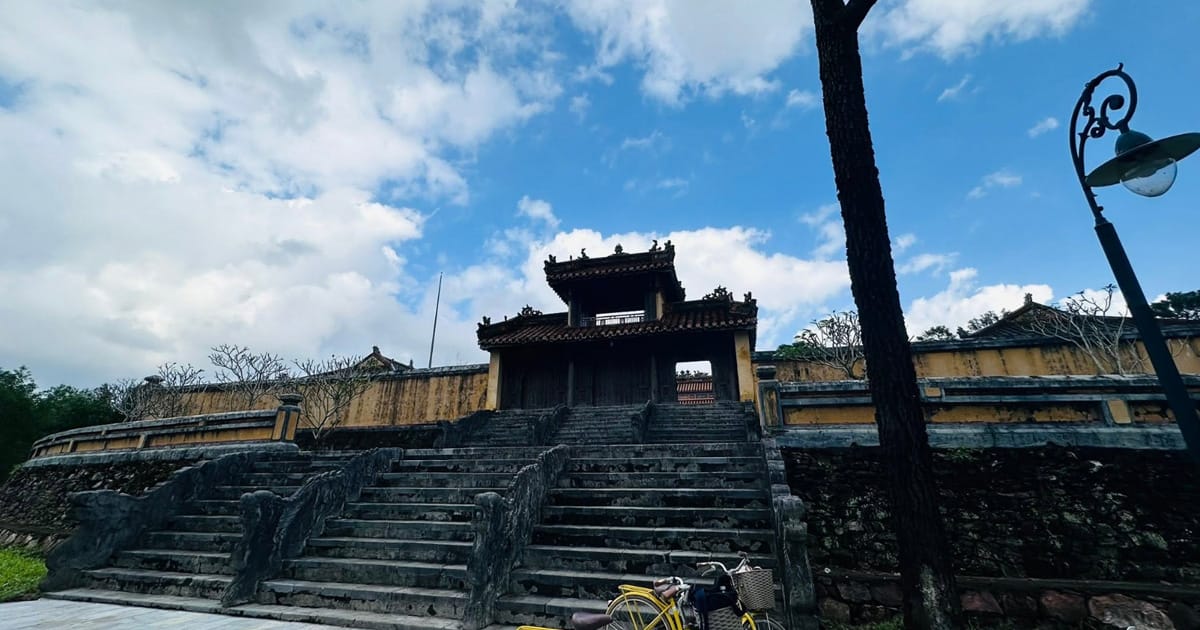
Near the temple areas, work more carefully with gates, tiled roofs and the contrast between yellow walls and the surrounding green landscape.
How long should you spend at Gia Long Tomb?
For a normal first visit, plan around 1–2 hours.
That is enough time to reach the main burial and worship areas without rushing, especially if you use a bicycle or electric vehicle for part of the internal route.
If you want to cycle slowly, stop frequently for landscape photography or explore the wider royal setting rather than only the main monuments, a full morning or afternoon is more realistic.
The important point is that Gia Long rewards extra time better than a compact visit. The distance between the monuments is part of what makes the site distinctive.
How to get there from central Hue
Gia Long Tomb lies roughly 16–20 km southwest of central Hue, depending on your starting point and route.
For most international visitors, a taxi, private car or motorbike is the simplest way to reach the entrance. Allow roughly 30–45 minutes in normal conditions rather than treating it as a quick stop immediately outside the city.
Cycling from Hue is possible and the countryside approach is attractive, but it turns the visit into a much longer excursion. If your main goal is cycling inside the tomb landscape, it is usually more practical to reach the attraction by vehicle and rent a bicycle on site.
Once you arrive, remember that your private vehicle stays outside the principal monument area; walking, bicycle or electric transport then becomes part of the on-site experience.
If you are choosing only one royal tomb, know what Gia Long does best
Gia Long is strongest for a traveler who wants space, landscape, cycling and early-Nguyen history.
It is less suitable if your main priority is dense decorative detail and you want to complete a royal tomb quickly.
The attraction becomes rewarding when you stop treating the distance between monuments as wasted time.
Here, that distance is the experience.
Best Time to Visit
For Gia Long specifically, early morning is the safest choice in hot weather.
The site is spread out and much of the appeal comes from moving through open roads, lawns and the spaces between monuments. That makes midday heat more noticeable here than at a compact attraction where you spend most of the visit moving directly from one building to another.
Based on CVT local experience in April, arriving before 09:00 makes cycling and photography considerably more comfortable. If an early start does not fit your itinerary, late afternoon is the next good option.
Bring a hat or umbrella on bright days. Gia Long’s open landscape is part of its beauty, but it also means you should not rely on continuous shade.
History & Architecture
Gia Long, born Nguyen Phuc Anh, established the Nguyen Dynasty in 1802 and became the first emperor of Vietnam’s final imperial dynasty. The burial landscape that now bears his name began taking shape in 1814, when his principal wife, Thua Thien Cao Hoang Hau Tong Thi Lan, died. Gia Long ordered officials to search for an appropriate burial site and personally approved the location in the Thien Tho mountain area.
The complex continued developing until 1820. After Gia Long died that year, Emperor Minh Mang buried him beside Thua Thien Cao Hoang Hau. The two stone tombs stand next to each other at similar scale rather than placing the emperor in an overwhelmingly dominant position.
The main Gia Long ensemble is arranged across separate parts of the landscape rather than compressed onto one strict monumental axis. The central burial zone contains the emperor and empress; Minh Thanh Temple forms the main worship area; and the stele pavilion stands separately on the opposite side. The larger royal complex extends beyond these core areas to other family burial sites.
The mountains are not decorative background. The burial landscape is structured within a system of surrounding hills, with Dai Thien Tho acting as a major frontal mountain feature. This makes Gia Long one of the clearest examples in Hue of architecture being deliberately subordinated to a much larger natural setting.
A substantial conservation program began in 2020 after deterioration affected several components of the complex. Conservation has improved parts of the site, but temporary access restrictions can still change by area, so follow current signs and staff instructions during your visit.

Visitor Tips
- Choose your internal transport before you start. Walk if you enjoy a longer approach, cycle if you want freedom to stop, or use the electric vehicle if heat or walking distance is a concern.
- Photograph the site map. The complex is dispersed and much easier to understand when you can check which royal zone you are approaching.
- Go before 09:00 on hot days. The open landscape can become tiring in strong sun.
- Dress conservatively for worship areas. Outdoor photography is one experience; entering a royal worship space is another.
- Do not leave valuables in your parked vehicle. Treat parking as a place to leave the vehicle, not personal belongings.
- Do not rush the road between monuments. Some of Gia Long’s strongest views are found between the named historical structures.
Why Travel With Us?
Tailored to You: Custom itineraries matching your exact pace and passions.
Go Local: Authentic experiences guided by native experts.
Zero Stress: We handle all logistics—transport, tickets, and stays.
24/7 Support: Round-the-clock local assistance, whenever you need it.
Exceptional Value: Premium quality at fair, transparent prices.
Nearby Attractions




Let's plan your next vacation
A hundred years from now, no one in this world will remember you or me. We only come to this world once — to leave our footprints on new lands and to etch every moment deep into our memory.
Live for the experience. Start your journey today — book your tour and make memories that last a lifetime!
View Our Business & Travel Licenses
Book your holidayGallery

FAQ
Q: What are the opening hours of Gia Long Tomb?
Q: How long should I spend at Gia Long Tomb?
Q: How do I get to Gia Long Tomb from central Hue?
Q: Should I walk, rent a bicycle or use the electric vehicle?
BOOKING

Phong Nha–Ke Bang Named Asia’s Leading National Park 2026
Phong Nha–Ke Bang won Asia’s Leading National Park 2026 and Vietnam’s Leading Nature Destination 2026. [...]
Sep

Hue to Dong Hoi by Train: Schedules, Tickets & Phong Nha Connection
Choose the right Hue–Dong Hoi train by arrival window, seat or berth, luggage, HQ2 vs [...]
Sep

Da Nang to Phong Nha: Bus, Train, Private Car & Best Route
Compare direct buses, train via Dong Hoi, private cars and Da Nang Airport connections by [...]
Sep

Hue to Phong Nha: Bus, Train, Private Car & Best Way to Travel
Compare direct buses, Hue Northern Bus Station coaches, the HQ1/HQ2 heritage train, Grab and private [...]
Sep

Da Nang vs Hue: Which City Should You Stay In?
Compare Da Nang and Hue by trip anchor, daily pace, usable nights and transfer friction [...]
Sep

Hoi An Lantern Festival Guide: 2026 Dates & Evening Plan
Plan Hoi An's monthly Lantern Festival around the 14th lunar night, verified 2026 dates, an [...]
Sep

Hoi An Tailor Guide: What to Make, Fittings & Buying Tips
Learn how to get clothes made in Hoi An: choose a tailor, compare fabrics and [...]
Sep

Where to Stay in Hue: Best Areas by Trip Style
Compare the best areas to stay in Hue, from the central south bank and Citadel [...]
Sep
Let's get in touch!