

A colorful roadside craft village of incense, family shops and photo displays.
Thuy Xuan Incense Village Hue: Visitor Guide
A Great choice for Central VietNam Tour
Share your details and our travel experts will call you back with personalized packages.
We'll call you soon


An amazing journey to explore local culture awaits you
QUICK FACTS
Rating Score: 4.3☆(1,211)Google
Highlights
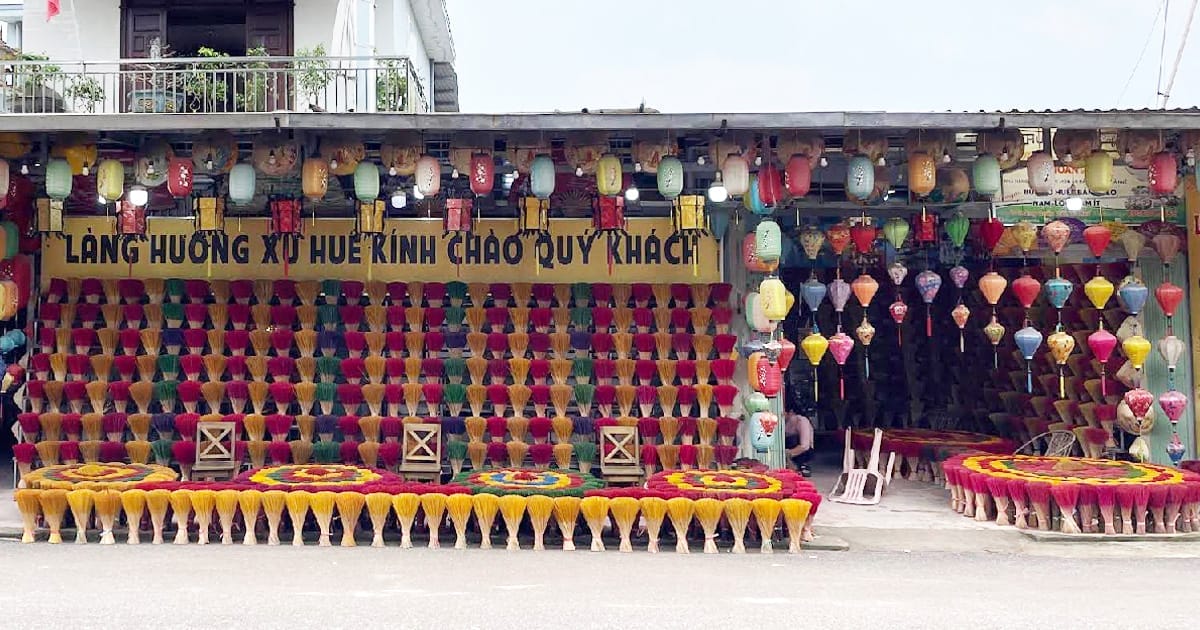
- Photograph the striking fan-shaped displays of colored incense that have made Thuy Xuan one of Hue’s most recognizable photo stops.
- See how a long-established incense craft has adapted to tourism, with family businesses combining traditional production, souvenir sales and photography.
- Talk with local vendors about incense, scents and how their families have worked with the craft rather than treating the displays only as a background.
- Rent an ao dai or traditional-style costume at selected shops if you want a more elaborate photo session.
- Use the visit as a short introduction to the cultural role incense continues to play in Vietnamese family worship and Buddhist practice.
Opening hours:
24/7Entrance Ticket:
Free admissionRelated Tours
 Half Day
 Full Day
 3.5 Hours

Understand what the village experience actually looks like
Do not expect a fenced heritage village with a visitor centre, one entrance and a fixed route.
The tourism-facing experience is a stretch of road with multiple family businesses displaying incense outside their homes and shops.
Only a subset of local incense-making households are set up specifically for tourism, which explains why several shops may initially look similar while others remain more focused on normal production or retail.
You do not need to stop at all of them.
Walk or ride slowly along the road, look at the displays and choose the one whose colors, lighting and space suit the photographs you want.
Choose the light before choosing the decoration
The biggest display does not always produce the best photograph.
CVT local experience suggests looking first at the direction of the sun.
Take a test photograph from the road. Check whether the face is evenly lit and whether shadows from roofs or displays fall across the subject.
If another shop across the road has better light, use that one instead.
This is particularly useful in late afternoon because sunlight becomes more directional and two shops only a short distance apart can photograph very differently.
Ask how the photo arrangement works before you start
This is probably the most useful practical tip for Thuy Xuan.
Different shops operate differently.
Some vendors may invite visitors to take ordinary photographs without a formal fee and hope they will buy incense or a souvenir afterward. Other shops may charge for props, costume use or prepared photo spaces.
If you want to use a prepared photo area, props or costumes, simply ask before shooting: “Is there a photo fee, or should I buy something?”
That one question avoids an awkward conversation afterward.
If the owner says photographs are free and then spends time helping you pose or lending items, buying a small product is a reasonable way to support the family — but it is much better when both sides understand the arrangement from the beginning.
Costume and prop prices are shop-specific
Traditional clothes have become part of the photography experience at several tourist-facing shops.
Recent CVT observations found simple arrangements ranging from roughly 30,000 VND per person for selected props to around 50,000–100,000 VND for ao dai or traditional-style clothing, with some approximately 100,000 VND packages including hair styling or accessories.
These are local reference prices, not a village tariff.
Ask what is included before changing clothes or using the props.
There is no reason to negotiate aggressively if the price is clear and you are happy with the setup. The problem is usually not the amount; it is uncertainty about whether the photo space, hat, fan, costume or styling is included.
The vendors can be part of the experience
The most pleasant visits are often not about getting the perfect photograph.
When a shop is quiet, local owners may explain what they sell, talk about the craft or help visitors arrange a photograph.
CVT local experience has generally found many vendors friendly and willing to help without making the interaction feel like a hard sales pitch.
That said, remember that these are family businesses.
The colorful incense fans occupy commercial space that residents have prepared specifically for visitors. Treat the display as someone’s workplace rather than a free public photo installation.
Do not assume every shop offers a deep craft lesson
This is where expectations need to be realistic.
Thuy Xuan genuinely preserves an old incense-making profession. But a casual tourist stop along the main road is often much more focused on photography, souvenirs and short interactions than on a structured explanation of every manufacturing stage.
If your main goal is learning exactly how incense is prepared, rolled and dried, ask the shop directly whether someone is making incense that day and whether you can watch or try the process.
Some families may be happy to demonstrate. Others may simply be selling products or handling tourists when you arrive.
Do not assume that walking into the most colorful stall automatically gives you a formal craft workshop.
If someone offers to let you try making incense, take the opportunity
A short hands-on attempt can add more cultural value than another ten photographs.
CVT local experience includes friendly artisans allowing visitors to watch or try a simple stage of incense making and record a short video.
If that opportunity appears, ask first, follow the artisan’s instructions and do not interrupt actual production purely to create content.
The difference between watching somebody work and using a staged photo display is useful: one shows the craft, while the other shows how the village has adapted that craft for tourism.
Incense here is more than a colorful souvenir
The bright reds, yellows, greens and purples are what first attract most visitors.
But incense itself is culturally familiar throughout Vietnam.
At a family altar, a person may light incense to remember parents or ancestors, express gratitude or symbolically communicate an important event. In a Buddhist setting, incense may be offered respectfully before the Buddha and the Three Jewels.
This does not mean every Vietnamese person interprets incense in exactly the same theological way.
Its meaning changes between household tradition, folk belief and Buddhist practice.
What they share is the idea that lighting incense is usually an intentional act of remembrance, reverence or spiritual attention — not merely a way to produce a pleasant smell.
You probably do not need more than an hour
For most visitors, Thuy Xuan works best as a 30–60 minute stop.
That gives enough time to look at several shops, choose one photo setup, browse incense or souvenirs and talk briefly with a vendor.
If you rent clothing, spend time styling photographs or actually get a craft demonstration, stay longer.
But I would not schedule several hours here unless photography is one of the main purposes of your day.
How to get there from central Hue
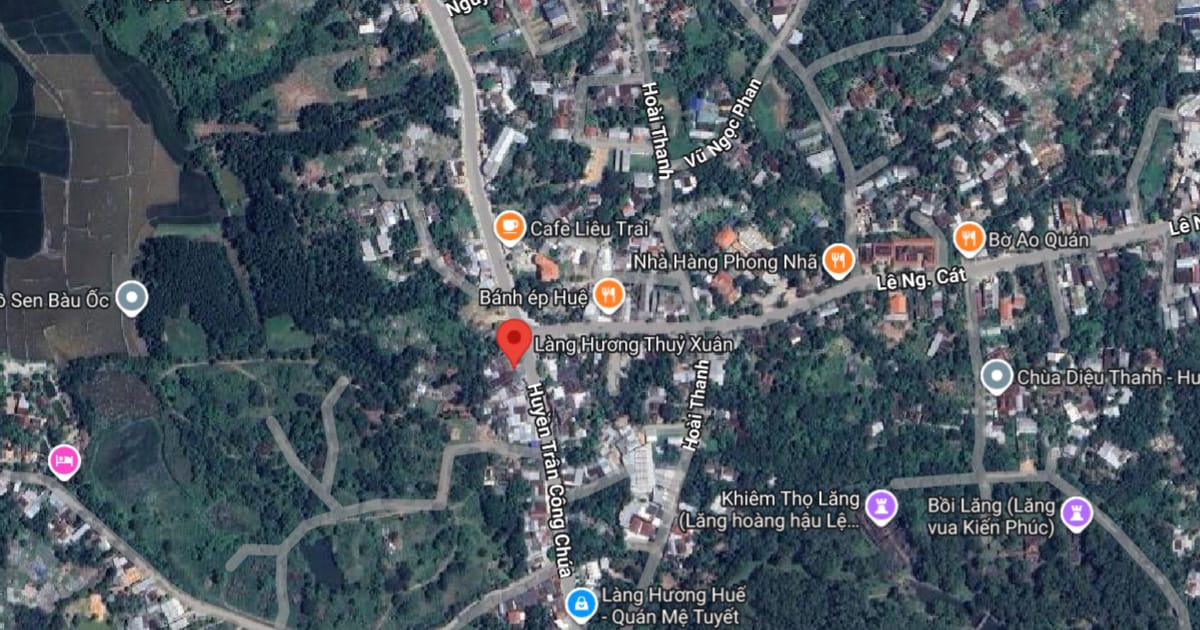
Thuy Xuan is around 7 km southwest of central Hue along the Huyen Tran Cong Chua area. A taxi, private car or motorbike is the simplest option for most visitors.
The location works especially well as a short stop when you are already traveling toward the western and southwestern heritage area of Hue rather than making a separate long journey only for the incense displays.
If you are visiting independently, search for the Thuy Xuan incense area rather than assuming there is one central ticket gate. The tourism activity is distributed between several shops along the road.
Best Time to Visit
For photography, prioritize either morning light or late afternoon rather than simply arriving at midday.
CVT local experience around 16:00–17:00 found the village relatively quiet, making it easier to take photographs without constantly waiting for other visitors to move out of the frame.
However, the best shop is not automatically the shop with the most elaborate display.
The stalls face different directions, and afternoon sunlight can make one side of the road much easier to photograph than the other. Before choosing where to spend time, take one quick phone photo and check the light on your face. If you are backlit or squinting into the sun, look at another shop across the road.
This small decision can improve your photographs much more than choosing the biggest incense arrangement.

History & Cultural Meaning
The precise starting date of incense making in Thuy Xuan is not firmly documented. Local tradition remembers the craft as being many generations old, while historical context supports that the area was already producing incense during the Nguyen period.
For many families, this was not simply a product made for tourists. Incense belonged to the everyday religious and domestic life of Vietnamese communities.
In Vietnamese ancestor worship, lighting incense is closely associated with remembrance, gratitude and continued connection with deceased family members. This is why incense smoke is sometimes described as a symbolic bridge between the visible world and the spiritual world.
That idea should be understood as a cultural and religious belief rather than a literal historical fact.
In Vietnamese Buddhist practice, the emphasis is somewhat different. Offering incense before the Three Jewels — the Buddha, Dharma and Sangha expresses reverence and spiritual attention.
Understanding these traditions makes Thuy Xuan more meaningful. The colorful displays are contemporary tourism presentation, but the product behind them still belongs to a much older ritual culture.
Visitor Tips
- Check the light before choosing a shop. A quick phone photo will tell you which side of the road is working better for portraits.
- Agree on the photo arrangement first. Ask whether photographs are free, require a purchase, or have a separate prop or costume charge.
- Do not treat costume prices as standardized. Recent local rates vary by shop and what is included.
- Ask directly if you want to see incense making. The most colorful shop is not necessarily the shop offering the best craft explanation.
- Late afternoon can be quieter. CVT’s 16:00–17:00 visit was relatively uncrowded, although crowd levels and light naturally vary.
- Ask before photographing artisans closely. The stalls are tourist-facing, but the people working there are not simply part of the decoration.
Why Travel With Us?
Tailored to You: Custom itineraries matching your exact pace and passions.
Go Local: Authentic experiences guided by native experts.
Zero Stress: We handle all logistics—transport, tickets, and stays.
24/7 Support: Round-the-clock local assistance, whenever you need it.
Exceptional Value: Premium quality at fair, transparent prices.
Nearby Attractions



Let's plan your next vacation
A hundred years from now, no one in this world will remember you or me. We only come to this world once — to leave our footprints on new lands and to etch every moment deep into our memory.
Live for the experience. Start your journey today — book your tour and make memories that last a lifetime!
View Our Business & Travel Licenses
Book your holidayGallery
FAQ
Q: Does Thuy Xuan Incense Village have official opening hours?
Q: Do I have to pay to take photos at Thuy Xuan?
Q: How long should I spend at Thuy Xuan Incense Village?
Q: Is Thuy Xuan good for learning how incense is made?
BOOKING

Phong Nha–Ke Bang Named Asia’s Leading National Park 2026
Phong Nha–Ke Bang won Asia’s Leading National Park 2026 and Vietnam’s Leading Nature Destination 2026. [...]
Sep

Hue to Dong Hoi by Train: Schedules, Tickets & Phong Nha Connection
Choose the right Hue–Dong Hoi train by arrival window, seat or berth, luggage, HQ2 vs [...]
Sep

Da Nang to Phong Nha: Bus, Train, Private Car & Best Route
Compare direct buses, train via Dong Hoi, private cars and Da Nang Airport connections by [...]
Sep

Hue to Phong Nha: Bus, Train, Private Car & Best Way to Travel
Compare direct buses, Hue Northern Bus Station coaches, the HQ1/HQ2 heritage train, Grab and private [...]
Sep

Da Nang vs Hue: Which City Should You Stay In?
Compare Da Nang and Hue by trip anchor, daily pace, usable nights and transfer friction [...]
Sep

Hoi An Lantern Festival Guide: 2026 Dates & Evening Plan
Plan Hoi An's monthly Lantern Festival around the 14th lunar night, verified 2026 dates, an [...]
Sep

Hoi An Tailor Guide: What to Make, Fittings & Buying Tips
Learn how to get clothes made in Hoi An: choose a tailor, compare fabrics and [...]
Sep

Where to Stay in Hue: Best Areas by Trip Style
Compare the best areas to stay in Hue, from the central south bank and Citadel [...]
Sep
Let's get in touch!