
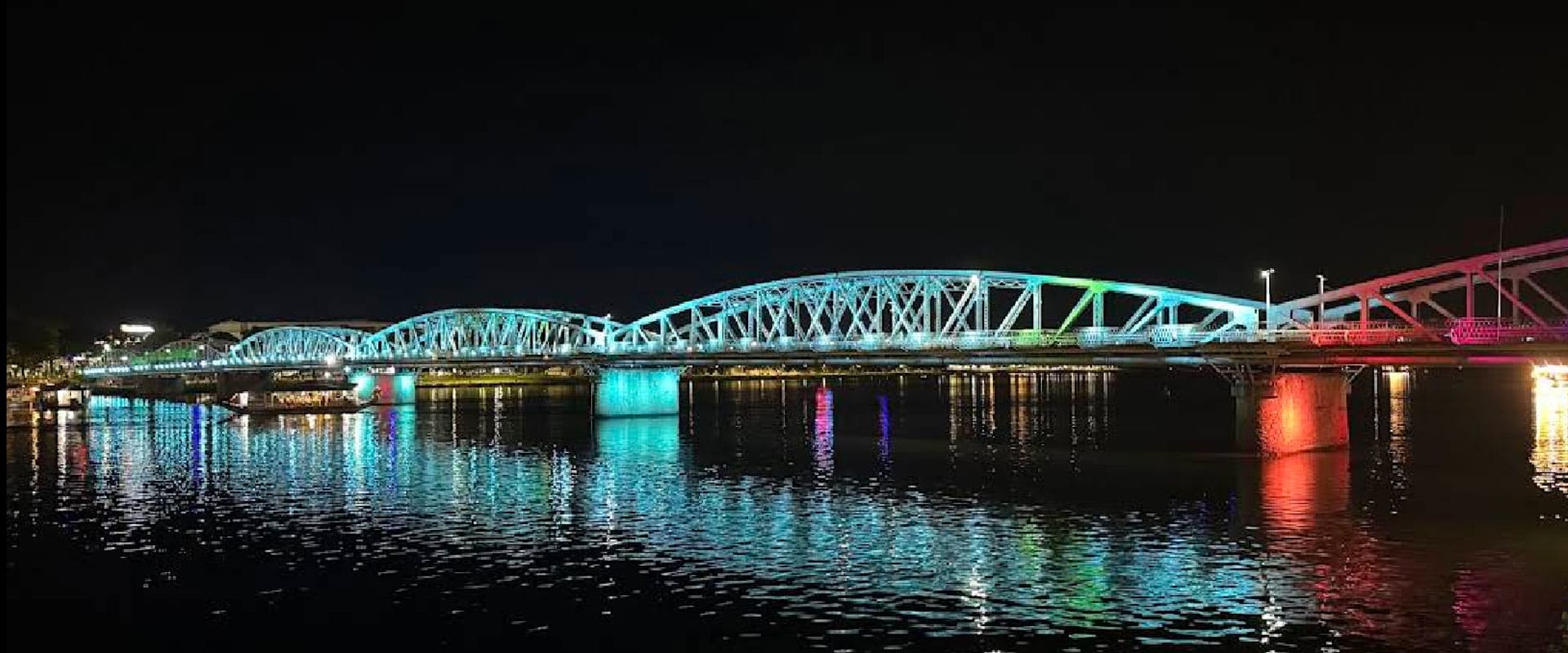
Hue's historic steel bridge across the Perfume River.
Truong Tien Bridge Hue: History, Sunset & Night Guide
A Great choice for Central VietNam Tour
Share your details and our travel experts will call you back with personalized packages.
We'll call you soon


An amazing journey to explore local culture awaits you
QUICK FACTS
Rating Score: 4.8☆(737)Google
Highlights
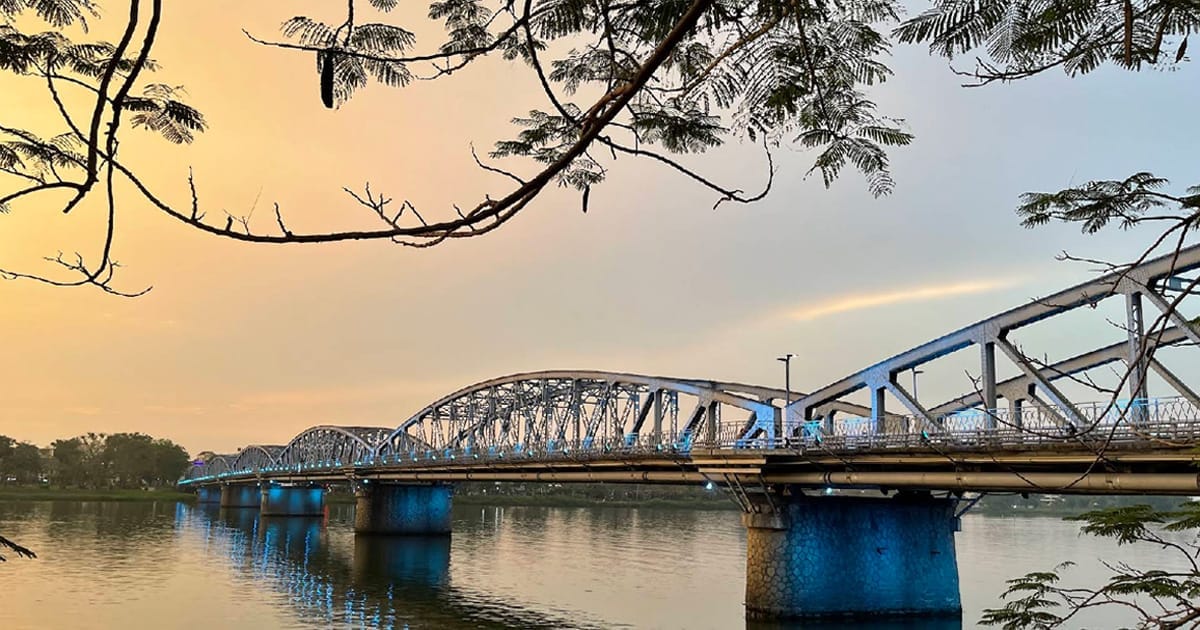
- See the bridge’s distinctive sequence of six curved steel spans stretching low across the Perfume River.
- Walk across around sunset, when the river light softens and the steel structure becomes easier to photograph from both banks.
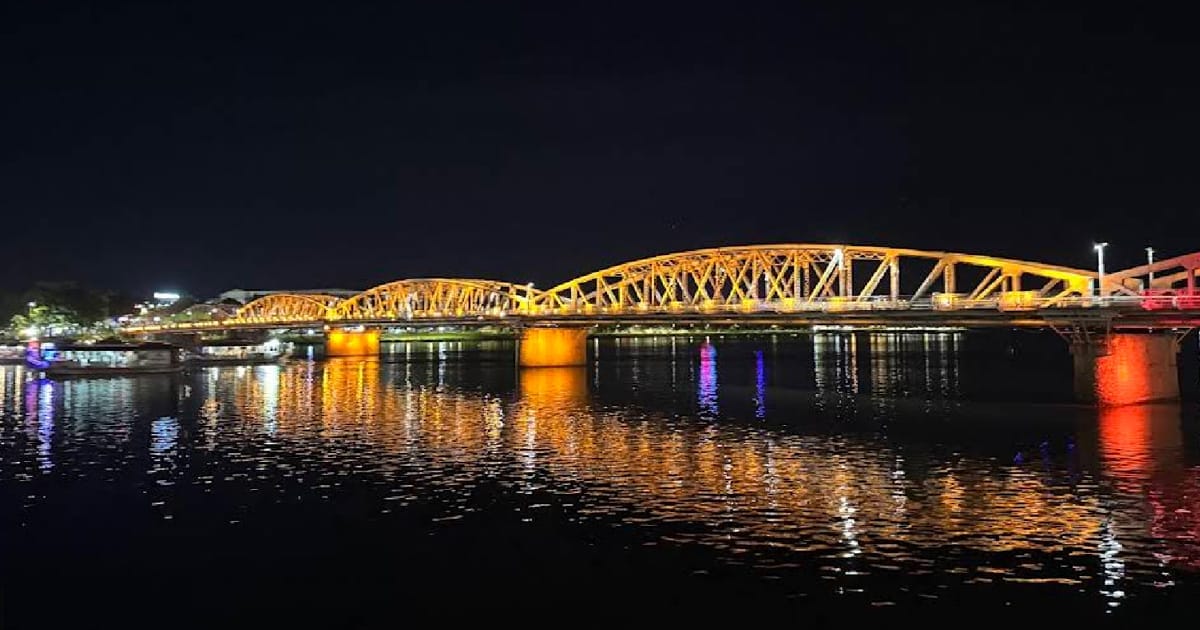
- Stay after dark to see the colour-changing illumination reflected on the water.
- Use the pedestrian side paths and widened lookout areas to pause without standing in the flow of traffic.
- Experience a landmark that is still part of everyday Hue rather than a monument isolated from the city’s daily movement.
Opening hours:
24/7Entrance Ticket:
Free admissionRelated Tours
 Half Day
 Full Day
 3.5 Hours

See the bridge from the riverbank before walking across it
The first thing I would not do is walk straight onto the bridge.
See the whole structure first.
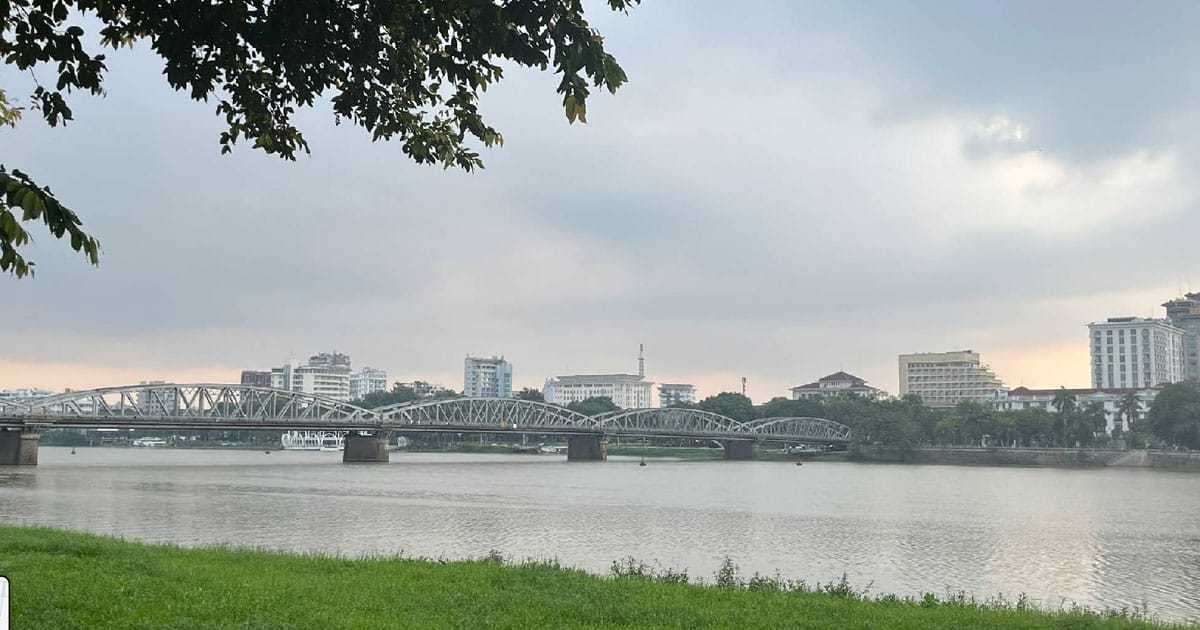
From either riverbank, the six steel arches make much more sense because you can see how low and evenly the bridge stretches across the Perfume River.
This is also where the proportions become obvious: the bridge is neither overwhelmingly large nor visually heavy. Its repeated curved spans soften what is otherwise a large riveted steel structure.
Once you have seen the bridge in profile, crossing it becomes more interesting because you understand the shape you are walking through.
Walking across is part sightseeing, part everyday Hue
Truong Tien Bridge is still busy.
Cars and motorbikes continue moving beside you, so do not expect the quiet atmosphere of a dedicated pedestrian bridge.
Based on CVT local experience, traffic density can be high, especially around busy evening periods. Stay within the pedestrian side area rather than stepping toward the roadway for a photograph.
This everyday traffic is not necessarily a negative part of the experience.
In fact, it explains something important about Truong Tien: Hue did not preserve the bridge by removing it from daily life. People still cross it to work, shop, meet friends and move between the two sides of central Hue.
As a visitor, you are sharing the bridge with the city rather than entering a separate heritage attraction.
Use the small lookout areas instead of stopping anywhere
The pedestrian sides include widened lookout points where you can pause without blocking the narrower walking sections.
These balconies have historical roots, and restored lookout sections remain useful today for photographs and short pauses above the river.
Use those areas if you want to stop for photographs or simply stand above the water for a few minutes. They are much more comfortable than repeatedly stopping in the middle of the pedestrian flow.
The best photograph may be from beside the bridge, not on it
Walking across Truong Tien is enjoyable, but the bridge itself is easier to photograph from the riverbank.
From the side, you get the repeating arches and the reflection together.
Around sunset, move along the bank rather than taking every photograph from one fixed position. Even a relatively small change in angle can determine whether the six spans appear cleanly separated or overlap visually.
After dark, include more water in the frame. The coloured illumination becomes much more effective when you capture its reflection on the Perfume River rather than filling the photograph entirely with the steel structure.
Night is when Truong Tien becomes a different attraction
The strongest difference between daytime and night is not simply that the bridge becomes brighter.
The lighting emphasizes the curves of the arches.
From the riverbank, changing colours can spread across both the steel structure and the water.
From the bridge itself, the experience is more intimate: moving traffic, pedestrians, wind from the river and changing light all happen together.
If you only have one opportunity to see Truong Tien, I would choose the period that lets you experience both sunset and the first part of the evening.
Flower lanterns are beautiful, but do not expect them every night
You may sometimes see hoa dang — floating lanterns on the Perfume River around Truong Tien.
They can transform the river at night, especially when the coloured bridge lights are already reflecting on the water.
But this is not a guaranteed nightly attraction. Larger lantern displays are more closely associated with festivals, ceremonies and particular cultural occasions.
So if you happen to see a lantern release, enjoy it as an additional experience rather than something the bridge promises every evening.
The surrounding riverfront is where you should slow down
Crossing the bridge itself is only part of the experience.
The areas along the Perfume River immediately around Truong Tien are better suited to actually sitting down, taking photographs or watching the bridge after dark.
The south-bank riverfront connects naturally with the Nguyen Dinh Chieu walking area and riverside wooden walkway, while the opposite bank also has landscaped public space.
This is where Hue’s slower pace becomes easier to feel.
Walk the bridge, then get away from the traffic. Sit beside the river, have a coffee or simply watch people crossing the bridge you have just walked over.
Paid parking exists nearby, but treat it as a local operating detail
Based on CVT local experience, there are paid vehicle-parking options around the central riverside area.
I would not publish a fixed parking fee because the exact location, operator and charge can change.
If you are staying in central Hue, walking or taking a short taxi ride can be easier than planning the entire visit around parking, particularly on busy evenings.
For motorbike users, ask the attendant for the price before leaving the vehicle if it is not clearly displayed.
Do not rush the crossing if you are here for the atmosphere
There is no reason to turn Truong Tien Bridge into a checklist attraction.
You can technically cross it and continue elsewhere.
But the better experience is to see it from the bank, cross slowly using the pedestrian side, pause at one of the lookout sections and then look back at the whole bridge from the opposite side.
At sunset or after dark, that simple sequence is enough.
The bridge works because the architecture, traffic, Perfume River and everyday city life all remain visible at the same time.
Best Time to Visit
For a first visit, late afternoon through early evening gives the strongest overall experience.
Around sunset, you still see the shape and riveted steel structure clearly while the Perfume River catches the changing light.
Stay after daylight fades if your schedule allows. The bridge changes character once its coloured lighting becomes visible. Instead of photographing mainly steel, river and sky, you begin working with reflections, traffic lights and the illuminated arches.
The two experiences are different enough that leaving immediately after sunset misses part of what makes Truong Tien distinctive.
History & Architecture
The modern Truong Tien Bridge was conceived during the reign of Emperor Thanh Thai, when Hue was beginning to modernize its transport infrastructure.
Archival research records that the emperor issued an order in 1896 supporting construction of an iron bridge across the Perfume River. The tender process followed in 1897, construction developed through the late 1890s, and the formal inauguration was held in October 1900. Some historical summaries use 1899 as the completion date, so the difference largely reflects whether completion or formal inauguration is being cited.
A popular shorthand often says the bridge was designed and constructed by Eiffel. The archival record is more complicated. Société Schneider et Cie et Letellier won the original construction contract, while Eiffel’s influence became more direct during major reconstruction and strengthening work in the 1930s.
The bridge has also survived an unusually turbulent history. A major storm in 1904 destroyed four spans. It was subsequently repaired, later enlarged in the 1930s, damaged again during warfare in 1946, and suffered further destruction during the fighting of 1968. Later reconstruction and conservation gradually returned the bridge to the form familiar today.
The bridge has carried several names through different political periods, including Thanh Thai, Clémenceau and Nguyen Hoang. Yet local people continued using the familiar name Truong Tien, associated with the former royal mint area near the bridge. In 2004, Truong Tien became the official name again.
That long history is one reason the bridge matters beyond its architecture. Truong Tien has become part of Hue’s cultural identity, appearing repeatedly in writing, music and visual representations of the city.

Visitor Tips
- See the whole bridge from the riverbank before crossing. The six-arch profile is much easier to appreciate from the side.
- Stay on the pedestrian path. Traffic can remain heavy, particularly in the evening.
- Use the widened lookout sections when stopping for photographs rather than blocking narrower parts of the pedestrian route.
- Arrive before sunset and stay into the evening if you want both the steel architecture and the coloured lights in one visit.
- Do not plan specifically around floating lanterns. They are more closely linked to festivals and special occasions than to a guaranteed nightly schedule.
- If you park nearby, confirm the fee first. Parking arrangements are a local operating detail and may change.
Why Travel With Us?
Tailored to You: Custom itineraries matching your exact pace and passions.
Go Local: Authentic experiences guided by native experts.
Zero Stress: We handle all logistics—transport, tickets, and stays.
24/7 Support: Round-the-clock local assistance, whenever you need it.
Exceptional Value: Premium quality at fair, transparent prices.
Nearby Attractions



Let's plan your next vacation
A hundred years from now, no one in this world will remember you or me. We only come to this world once — to leave our footprints on new lands and to etch every moment deep into our memory.
Live for the experience. Start your journey today — book your tour and make memories that last a lifetime!
View Our Business & Travel Licenses
Book your holidayGallery


FAQ
Q: Frequently Asked Questions
Q: No normal attraction opening schedule applies because Truong Tien is a functioning public road and pedestrian bridge. Temporary traffic management or event arrangements may occasionally affect access.
Q: Late afternoon into evening gives the best combination. You can see the steel structure around sunset and then stay to watch the coloured bridge lights reflect on the Perfume River.
Q: Yes. Pedestrian paths run along the bridge, with widened lookout areas where you can stop more comfortably. Remember that the bridge also carries regular city traffic.
BOOKING

Phong Nha–Ke Bang Named Asia’s Leading National Park 2026
Phong Nha–Ke Bang won Asia’s Leading National Park 2026 and Vietnam’s Leading Nature Destination 2026. [...]
Sep

Hue to Dong Hoi by Train: Schedules, Tickets & Phong Nha Connection
Choose the right Hue–Dong Hoi train by arrival window, seat or berth, luggage, HQ2 vs [...]
Sep

Da Nang to Phong Nha: Bus, Train, Private Car & Best Route
Compare direct buses, train via Dong Hoi, private cars and Da Nang Airport connections by [...]
Sep

Hue to Phong Nha: Bus, Train, Private Car & Best Way to Travel
Compare direct buses, Hue Northern Bus Station coaches, the HQ1/HQ2 heritage train, Grab and private [...]
Sep

Da Nang vs Hue: Which City Should You Stay In?
Compare Da Nang and Hue by trip anchor, daily pace, usable nights and transfer friction [...]
Sep

Hoi An Lantern Festival Guide: 2026 Dates & Evening Plan
Plan Hoi An's monthly Lantern Festival around the 14th lunar night, verified 2026 dates, an [...]
Sep

Hoi An Tailor Guide: What to Make, Fittings & Buying Tips
Learn how to get clothes made in Hoi An: choose a tailor, compare fabrics and [...]
Sep

Where to Stay in Hue: Best Areas by Trip Style
Compare the best areas to stay in Hue, from the central south bank and Citadel [...]
Sep
Let's get in touch!