

Hue's historic market for local food, specialties and everyday shopping.
Dong Ba Market Hue: Food, Shopping & Visitor Guide
A Great choice for Central VietNam Tour
Share your details and our travel experts will call you back with personalized packages.
We'll call you soon


An amazing journey to explore local culture awaits you
QUICK FACTS
Rating Score: 4.2☆(3,436)Google
Highlights
- Browse a wide range of Hue specialties, including sesame candy, fermented sauces, dried foods, royal-style tea and packaged gifts.
- Eat your way through the market with dishes such as bun bo Hue, banh beo, banh nam, banh bot loc and Hue sweet soups.
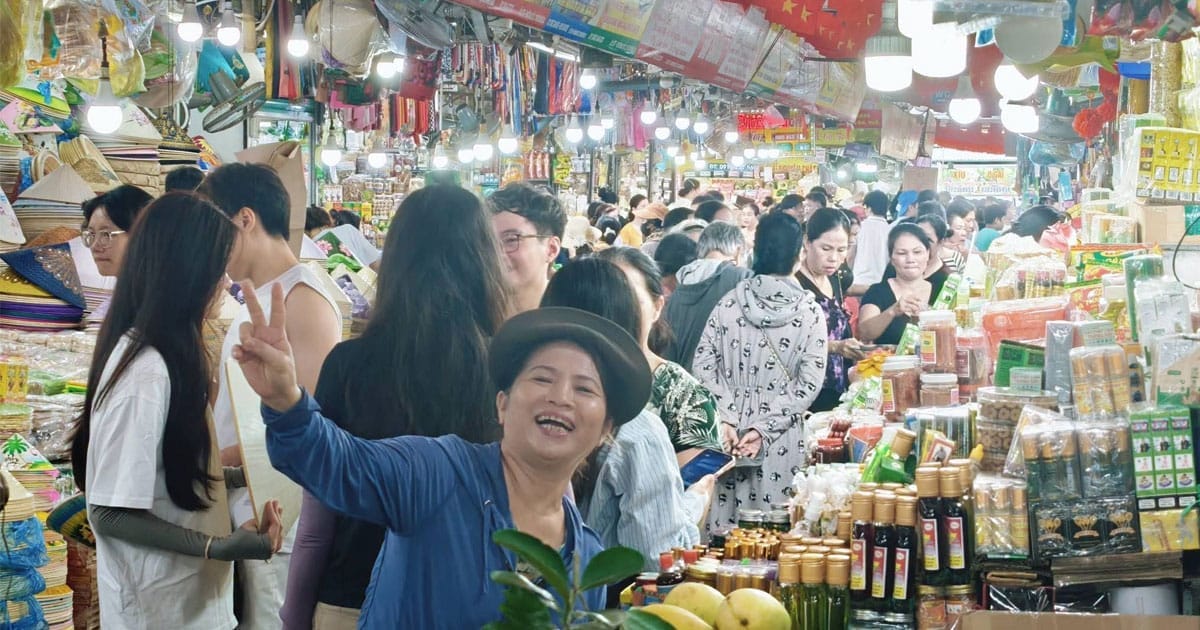
- Explore the inner market rather than stopping at the first souvenir stalls; different areas specialize in food products, handicrafts, textiles and everyday goods.
- Talk with vendors when the market is not too busy. Many traders are happy to explain products, how particular sauces are eaten or what makes a Hue specialty different.
- See a side of Hue that is more everyday and commercial than its palaces, pagodas and royal tombs.
Opening hours:
Regular visitor hours are commonly listed as around 07:00–19:00. Individual stalls—especially fresh-food vendors—may open earlier or close at different times.Entrance Ticket:
Free admissionRelated Tours
 Half Day
 Full Day
 3.5 Hours

Go inside before deciding what to buy
One of the easiest mistakes at Dong Ba Market is buying from the first stall that catches your attention.
If you genuinely want to shop, walk into the market first.
The front and outside-facing areas naturally receive a high concentration of visitors. Based on CVT’s local experience, quoted prices can sometimes be higher there, while going deeper inside gives you more stalls to compare and often a better sense of the normal price range.
This does not mean every outside seller overcharges or every inside stall is cheaper. Prices vary by product and seller. The useful habit is simple: ask the price before buying and compare two or three similar stalls if the purchase matters to you.
If you buy several jars, packages or souvenirs from the same seller, it is also reasonable to ask politely whether they can offer a better combined price.
A simple route through the market
Dong Ba is large enough to feel confusing during the first ten minutes, but the central building gives you a useful reference point.
The market has a three-storey central bell-tower building surrounded by additional trading sections. A practical route is to explore the central building and work gradually through the surrounding sections rather than circling the same aisles repeatedly.
You do not need to follow a rigid route. The main advantage is simply to keep track of where you have already been.
If food is your main reason for coming, browse the indoor market first and finish around the prepared-food stalls. That way your shopping does not become a problem while you are trying to hold bowls, plates or cups in a crowded aisle.
What to buy as a Hue specialty
Dong Ba is particularly useful when you want several kinds of Hue gifts in one place.
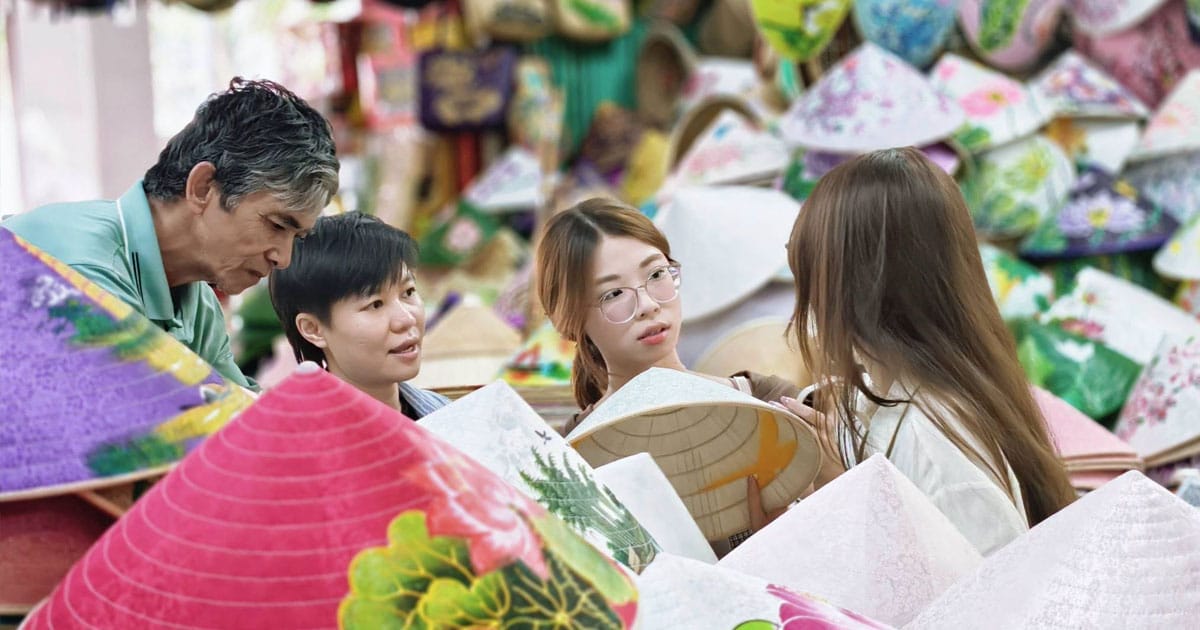
You will find me xung sesame candy, various fermented fish and shrimp products, dried seafood, tea, confectionery, handicrafts, conical hats and other regional products.
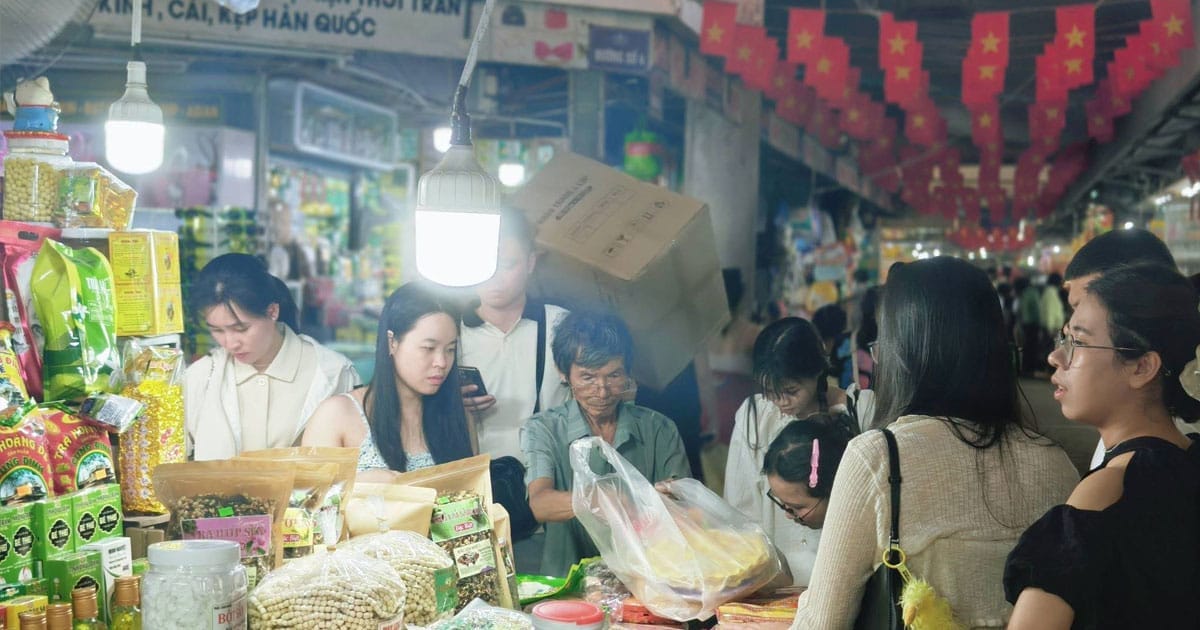
The fermented-sauce section is especially interesting if you enjoy strong Central Vietnamese flavors.
On a recent CVT visit, example quoted prices included approximately 50,000 VND for a jar of mam tom, 40,000 VND for mam ro and 50,000 VND for mam du du. Treat these only as a recent reference, not a fixed market price: jar size, producer, ingredients and seller can all change the price.
If you are flying afterward, think about packaging before buying strongly scented or liquid products. Ask the seller to seal jars carefully and check your airline’s baggage rules before placing sauces in cabin luggage.
The food section deserves its own time
Do not use Dong Ba only as a souvenir stop.
The food area is one of the strongest reasons to visit.
You can find familiar Hue dishes such as bun bo Hue, banh beo, banh nam, banh bot loc and numerous sweet soups, alongside smaller snacks that are easier to try here than to search for individually around the city.
The setup is usually simple: small stools or benches, compact food counters and dishes prepared in front of you. That is part of the experience, but it also means the area can feel crowded at busy times.
If several dishes appeal to you, order small portions where possible rather than filling up at the first stall. Dong Ba is more enjoyable as a place to sample multiple Hue flavors than as a destination for one large formal meal.
Prices are varied, so shop rather than assume
There is no single “Dong Ba price”.
CVT’s local experience is that many stalls offer perfectly reasonable prices, especially once you move into the inner market. At the same time, tourist-facing stalls may start higher on some souvenir or specialty products.
The best approach is not aggressive bargaining.
Ask the price clearly. If it seems high, check another stall. If you prefer the first seller, return and negotiate politely, particularly when purchasing several items.
This works better than entering the market assuming every vendor is trying to overcharge you.
Talk to the vendors when the market slows down
One of the more enjoyable parts of Dong Ba is not something you can schedule precisely.
When a stall is not busy, many vendors are willing to explain what they sell, how a particular fermented sauce is used or which product travels better as a gift.
These short conversations are useful because many Hue foods are difficult to understand from packaging alone.
They also show a more personal side of the market. Despite the crowds and tourist traffic, Dong Ba still operates through small individual businesses where sellers often have long experience with the products in front of them.
Allow around two hours if you want the full experience
A quick visitor can walk through Dong Ba in less than an hour.
But if your plan is to look through the central market, compare a few products, buy specialties and sit down for food, around 90–120 minutes is far more realistic.
Your visit becomes longer very easily: ten minutes comparing jars of sauces, another twenty looking through souvenirs, then several different Hue snacks.
There is no need to see every aisle. Two hours is useful because it lets you move without turning the market into a checklist.
How to get to Dong Ba Market
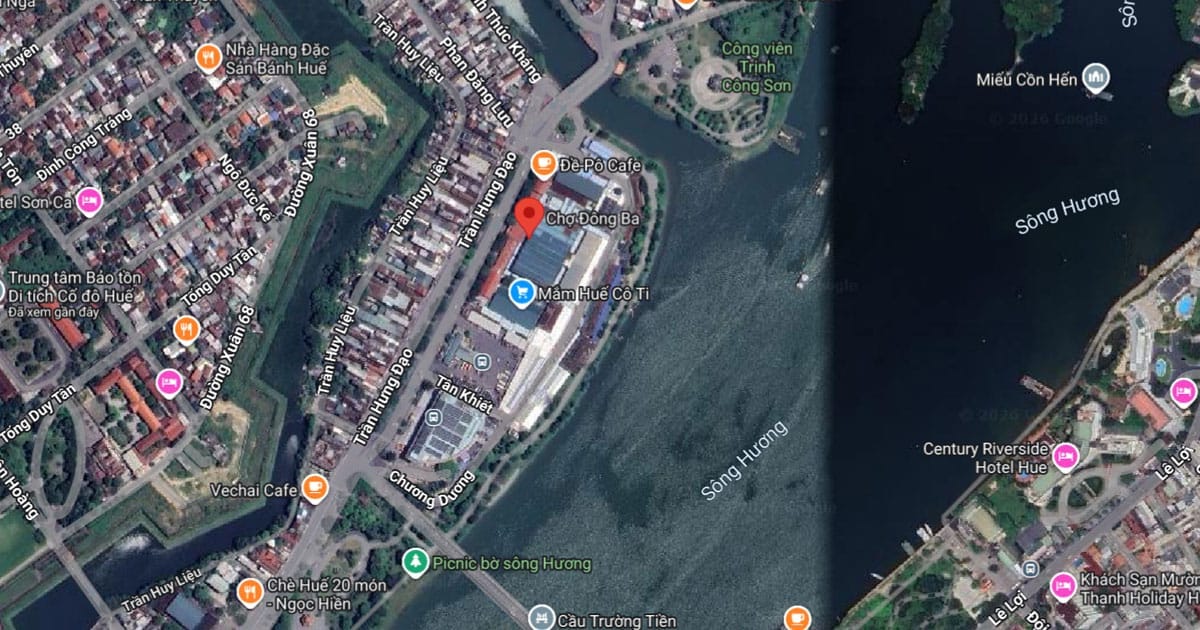
Dong Ba Market is at 2 Tran Hung Dao Street on the northern bank of the Perfume River, in central Hue. Its position between the Trang Tien and Gia Hoi bridge areas makes it straightforward to reach from the central tourist zone.
For most visitors, walking, taxi or motorbike are the simplest options depending on where you are staying. Because this is a busy central market rather than an isolated attraction, traffic and pedestrian activity around the entrances can be more of a consideration than the actual distance.
Best Time to Visit
If your priority is shopping plus Hue food, mid-to-late afternoon is a practical choice. The market remains lively while temperatures begin to ease, and the prepared-food section becomes a stronger part of the experience.
Early morning offers a different atmosphere, with fresh-food trading more active and the market feeling closer to its everyday commercial role. For a first-time international visitor who wants souvenirs, food and an easier walk through the market, the afternoon is usually the more convenient balance.
History & Development
Dong Ba Market’s history reaches back to the early Nguyen period. Its predecessor, known as Qui Gia Thi, stood near Chanh Dong Gate. The market was destroyed during the events surrounding the fall of the Hue capital in 1885.
Emperor Dong Khanh rebuilt the market in 1887 and it became known as Dong Ba Market. In 1899, during the reign of Emperor Thanh Thai, the market was moved to its present location as part of the modernization and reorganization of Hue’s urban area.
The modern market is organized around a distinctive three-storey central building commonly known as the bell tower, with additional trading areas surrounding it. The interior is broadly divided by merchandise, which is useful for visitors because the market initially feels much more complicated than it really is.
Dong Ba has been repaired and upgraded several times during its history, but it continues to function as a traditional market rather than being converted into a conventional shopping centre. That combination of historic identity and active trading is the main reason it remains culturally relevant to Hue today.
Visitor Tips
- Walk inside before buying. Compare a few stalls rather than accepting the first tourist-facing price you hear.
- Ask before ordering or buying. A quick price check avoids misunderstandings, especially for souvenirs, sauces and packaged specialties.
- Allow 90–120 minutes if you want both shopping and food; a rushed pass through the entrance misses much of the market.
- Come in the afternoon if food is your priority. More prepared-food stalls tend to be active toward the later part of the day.
- Pack fermented products carefully. Ask for secure sealing if you are carrying mam or other liquids in luggage.
Why Travel With Us?
Tailored to You: Custom itineraries matching your exact pace and passions.
Go Local: Authentic experiences guided by native experts.
Zero Stress: We handle all logistics—transport, tickets, and stays.
24/7 Support: Round-the-clock local assistance, whenever you need it.
Exceptional Value: Premium quality at fair, transparent prices.
Nearby Attractions



Let's plan your next vacation
A hundred years from now, no one in this world will remember you or me. We only come to this world once — to leave our footprints on new lands and to etch every moment deep into our memory.
Live for the experience. Start your journey today — book your tour and make memories that last a lifetime!
View Our Business & Travel Licenses
Book your holidayGallery

FAQ
Q: What are Dong Ba Market’s opening hours?
Q: Should I bargain at Dong Ba Market?
Q: What should I eat at Dong Ba Market?
BOOKING

Phong Nha–Ke Bang Named Asia’s Leading National Park 2026
Phong Nha–Ke Bang won Asia’s Leading National Park 2026 and Vietnam’s Leading Nature Destination 2026. [...]
Sep

Hue to Dong Hoi by Train: Schedules, Tickets & Phong Nha Connection
Choose the right Hue–Dong Hoi train by arrival window, seat or berth, luggage, HQ2 vs [...]
Sep

Da Nang to Phong Nha: Bus, Train, Private Car & Best Route
Compare direct buses, train via Dong Hoi, private cars and Da Nang Airport connections by [...]
Sep

Hue to Phong Nha: Bus, Train, Private Car & Best Way to Travel
Compare direct buses, Hue Northern Bus Station coaches, the HQ1/HQ2 heritage train, Grab and private [...]
Sep

Da Nang vs Hue: Which City Should You Stay In?
Compare Da Nang and Hue by trip anchor, daily pace, usable nights and transfer friction [...]
Sep

Hoi An Lantern Festival Guide: 2026 Dates & Evening Plan
Plan Hoi An's monthly Lantern Festival around the 14th lunar night, verified 2026 dates, an [...]
Sep

Hoi An Tailor Guide: What to Make, Fittings & Buying Tips
Learn how to get clothes made in Hoi An: choose a tailor, compare fabrics and [...]
Sep

Where to Stay in Hue: Best Areas by Trip Style
Compare the best areas to stay in Hue, from the central south bank and Citadel [...]
Sep
Let's get in touch!